







1. Introduction to Dextromethorphan Hydrobromide, Phenylephrine Hydrochloride & Chlorpheniramine Maleate Syrup – Batch Packing Record (BPR):
Dextromethorphan Hydrobromide, Phenylephrine Hydrochloride, and Chlorpheniramine Maleate Syrup is a combination pharmaceutical formulation used for the symptomatic relief of dry cough, nasal congestion, sneezing, and runny nose associated with common cold and allergic conditions. This formulation contains three active pharmaceutical ingredients with different therapeutic functions. Each 5 mL of syrup contains Dextromethorphan Hydrobromide IP 10 mg, Phenylephrine Hydrochloride IP 5 mg, and Chlorpheniramine Maleate IP 2 mg. Dextromethorphan acts as a cough suppressant, Phenylephrine functions as a nasal decongestant, and Chlorpheniramine provides antihistaminic activity. The Batch Packing Record (BPR) is an essential Good Manufacturing Practices (GMP) document that ensures proper documentation, traceability, and control throughout pharmaceutical packaging operations. It provides detailed instructions for packaging material dispensing, line clearance, bottle filling, sealing, labeling, coding, and final packing. Critical packaging controls include fill volume verification, container closure integrity, correct labeling, batch number printing, manufacturing and expiry date verification, and packaging material reconciliation. The BPR also ensures compliance with approved Standard Operating Procedures (SOPs), quality assurance requirements, and applicable regulatory guidelines. Proper execution and documentation help prevent packaging errors, product mix-ups, contamination, and labeling discrepancies while maintaining product quality, safety, and consistency throughout the packaging process.
Skip to PDF content2. Flow Diagram of Dextromethorphan Hydrobromide, Phenylephrine Hydrochloride & Chlorpheniramine Maleate Syrup – Batch Packing Process:
The flow diagram illustrates the systematic batch packing process of Dextromethorphan Hydrobromide, Phenylephrine Hydrochloride, and Chlorpheniramine Maleate Syrup under Good Manufacturing Practices (GMP). Each packaging stage is carefully controlled to ensure product quality, safety, traceability, and regulatory compliance. The process begins with the receipt and verification of approved bulk syrup from the manufacturing department. Packaging materials, including bottles, caps, labels, cartons, and shippers, are dispensed and verified against approved specifications.
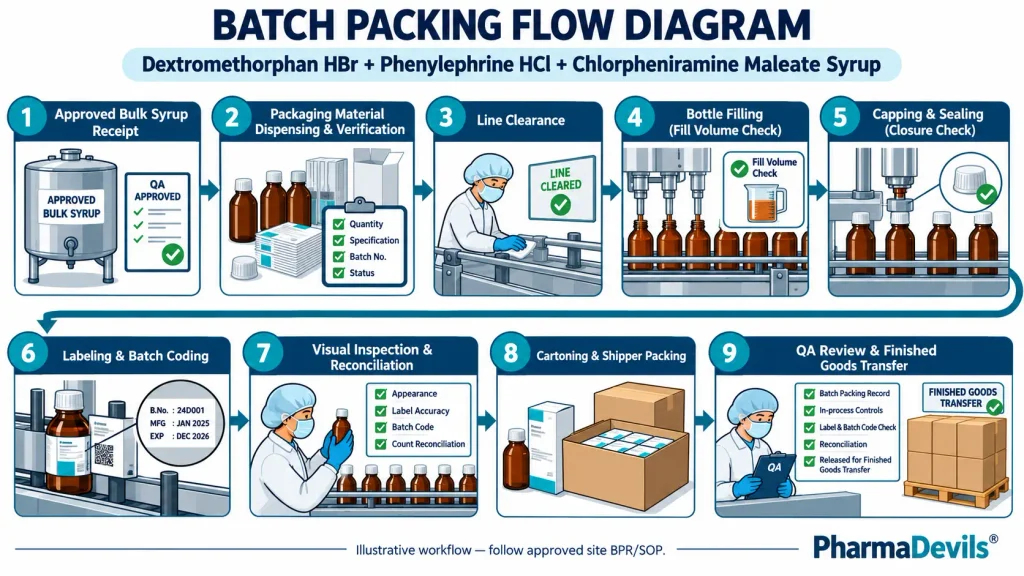
Before packaging operations commence, line clearance is performed by authorized personnel to prevent product mix-ups and cross-contamination. The approved syrup is transferred to the filling machine, where accurate fill volume is maintained through routine in-process checks. Filled bottles undergo capping and sealing to ensure container closure integrity and prevent leakage. Subsequently, labeling and batch coding are performed, including verification of batch numbers, manufacturing dates, and expiry dates. Visual inspection ensures proper filling, sealing, labeling, and overall packaging appearance. Packaging material reconciliation is conducted to identify discrepancies and maintain accountability. Finally, finished bottles are packed into cartons and shippers according to approved packaging instructions. Quality Assurance reviews the completed Batch Packing Record (BPR), ensuring compliance with established procedures before authorizing finished goods release or transfer, as applicable.
3. Critical Process Parameters (CPPs) and Critical Quality Attributes (CQAs) of Dextromethorphan Hydrobromide, Phenylephrine Hydrochloride & Chlorpheniramine Maleate Syrup:
Critical Process Parameters (CPPs) and Critical Quality Attributes (CQAs) play an essential role in ensuring the quality, safety, consistency, and regulatory compliance of Dextromethorphan Hydrobromide, Phenylephrine Hydrochloride, and Chlorpheniramine Maleate Syrup during pharmaceutical packaging operations. Critical Process Parameters (CPPs) are process variables whose variations may affect critical product quality attributes. Important packaging parameters include filling machine speed, filling volume settings, capping torque, sealing conditions, labeling accuracy, and batch coding settings. Proper control of these parameters helps prevent underfilling, overfilling, leakage, labeling errors, and packaging defects.
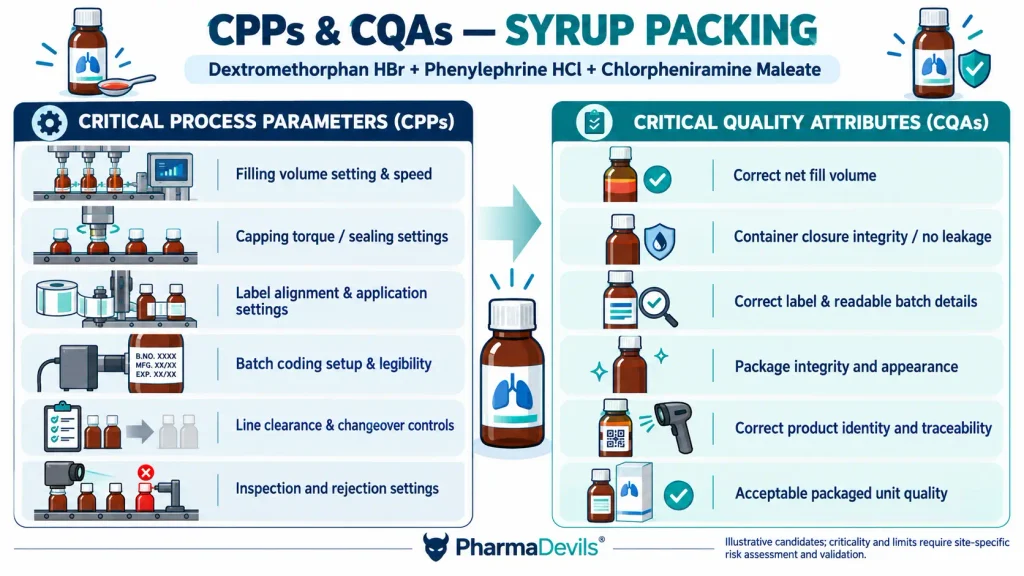
Line clearance, equipment verification, and packaging material reconciliation are essential GMP controls for preventing product mix-ups and ensuring traceability. Critical Quality Attributes (CQAs) are measurable physical, chemical, biological, or microbiological characteristics that must remain within established limits to ensure product quality. Important packaging-related quality attributes include accurate fill volume, container closure integrity, correct product identification, label legibility, packaging integrity, and acceptable product appearance. Routine in-process quality checks, visual inspections, and documented verification activities ensure compliance with approved specifications. Effective monitoring of CPPs and CQAs supports consistent packaging performance, minimizes quality deviations, reduces product rejection, and strengthens pharmaceutical quality assurance. Their criticality and acceptance limits should be established through documented quality risk assessment and appropriate validation studies.