
Chemical SOP
Microbiology SOP
Warehouse SOP
Manufacturing SOP
Information technology SOP

Category Documents

DECODING WAREHOUSE (CHAPTER 4 – STAGING AREA)

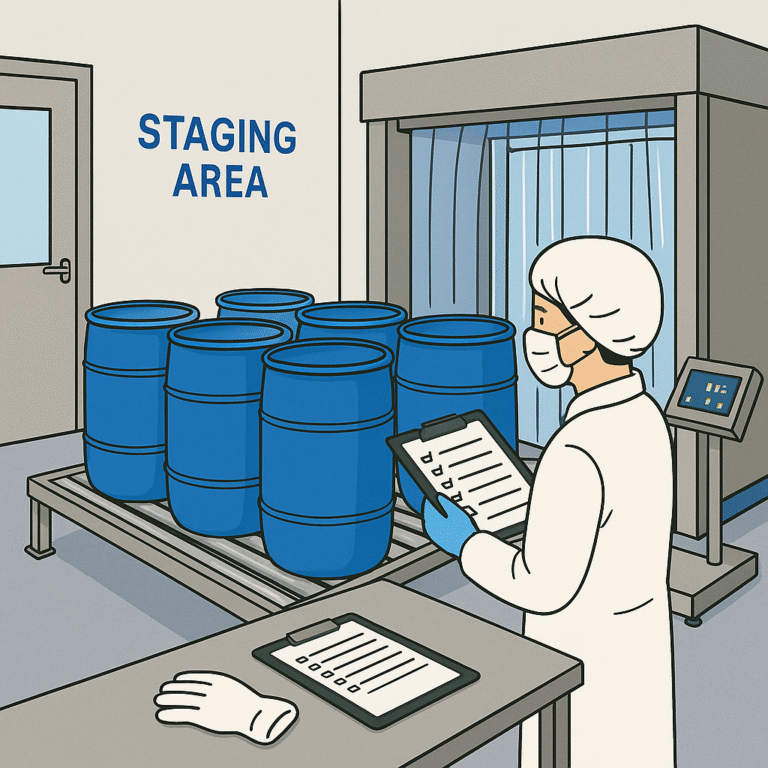
Staging Area

Material Receiving Checklist at Staging Area (Before Quarantine) 1. Material Receiving Verification: 2. Visual Inspection of Containers: 3. Identification & Labeling: 4. Segregation & Handling: 5. Documentation & Recordkeeping: 6. Environmental & Safety Checks: 7. Transfer to Quarantine Area: Final…

DECODING WAREHOUSE (CHAPTER 3 – QUARANTINE AREA)

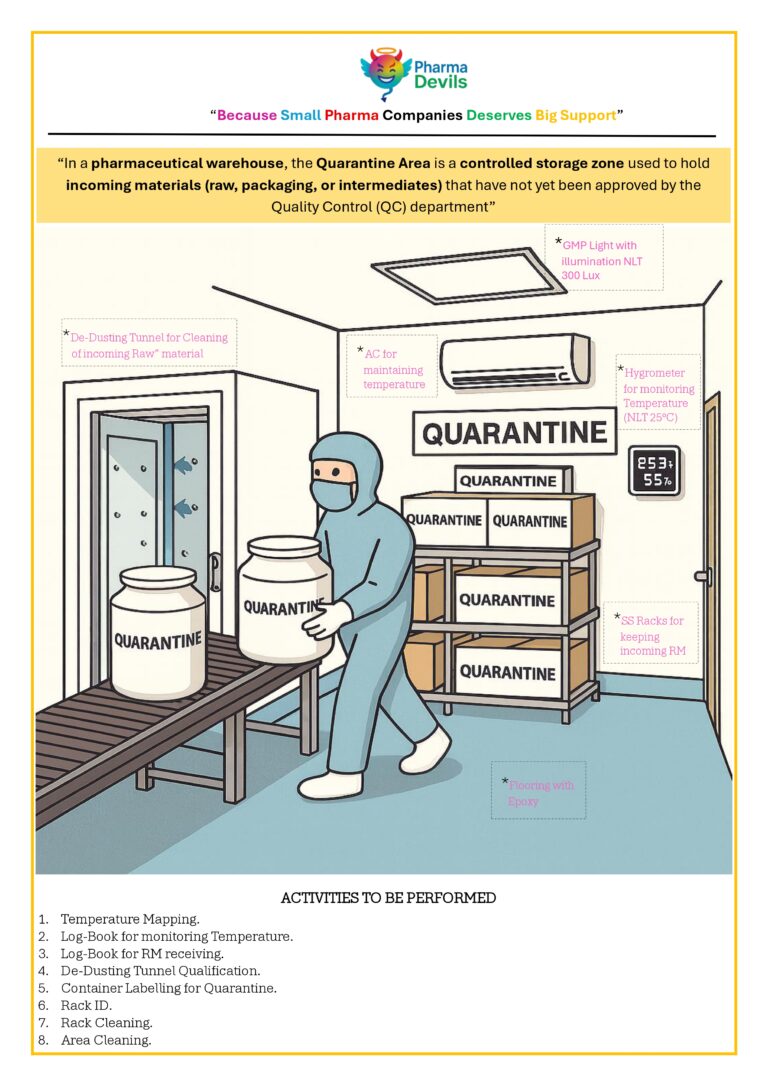
Quarantine Area

In a pharmaceutical warehouse, the quarantine area is a designated, clearly demarcated zone where all incoming materials and returned goods are held under controlled conditions until their quality status is decided. This includes APIs, excipients, packaging materials, printed components, and…

DECODING PHARMA PLANT & PREMISES (AS PER SCHEDULE M)

Pharma plant and Premises

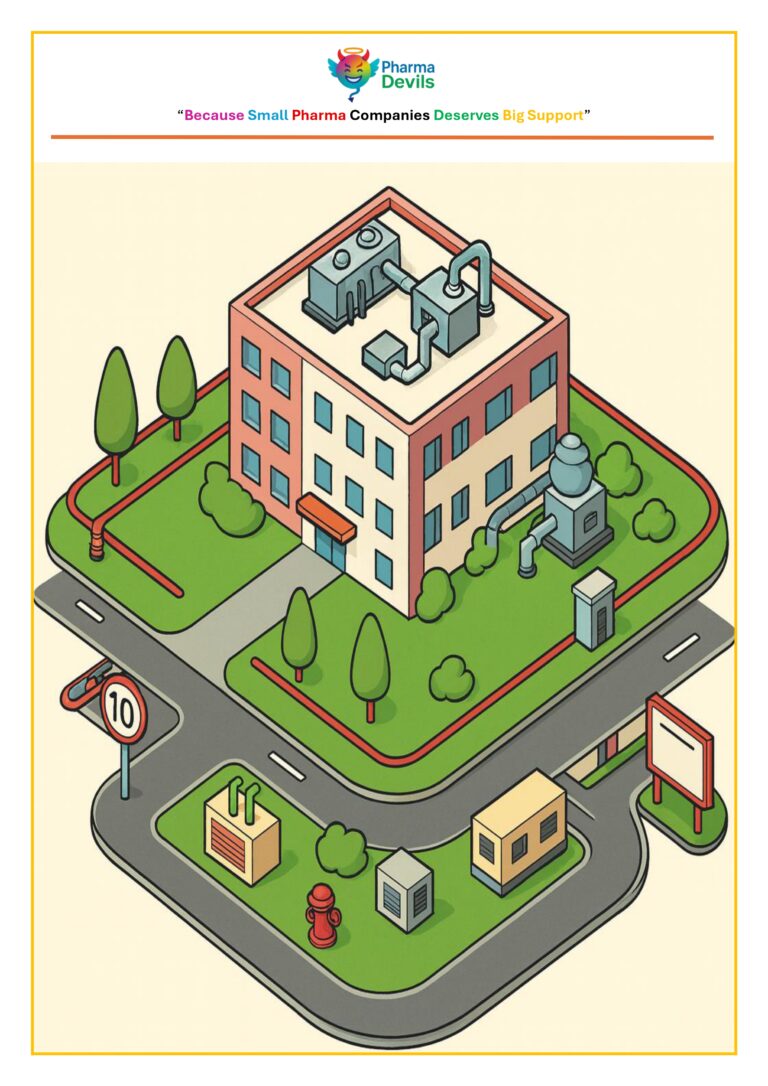
Pharma Plant & Premises (As per Schedule M) A pharmaceutical facility’s plant and premises form the backbone of GMP compliance. Schedule M (India) lays down clear requirements to ensure that buildings, layouts, and utilities consistently support product quality, patient safety,…

DECODING WAREHOUSE (CHAPTER 1: DE-DUSTING TUNNEL)

De-Dusting Tunnel

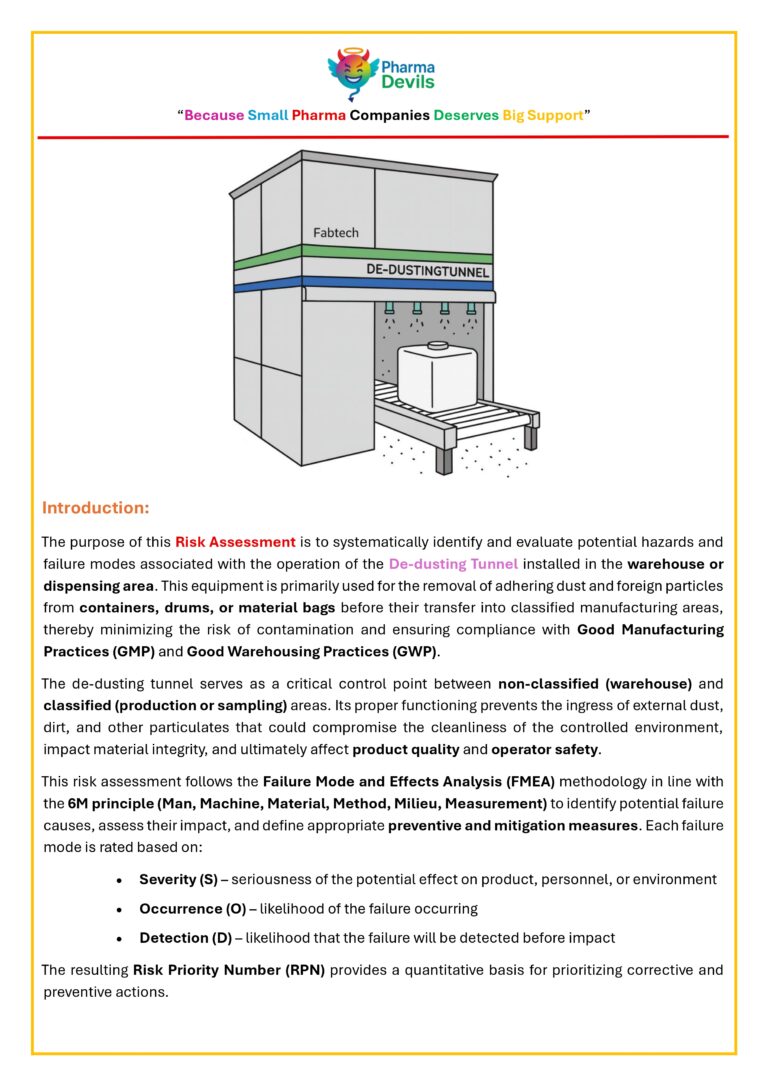
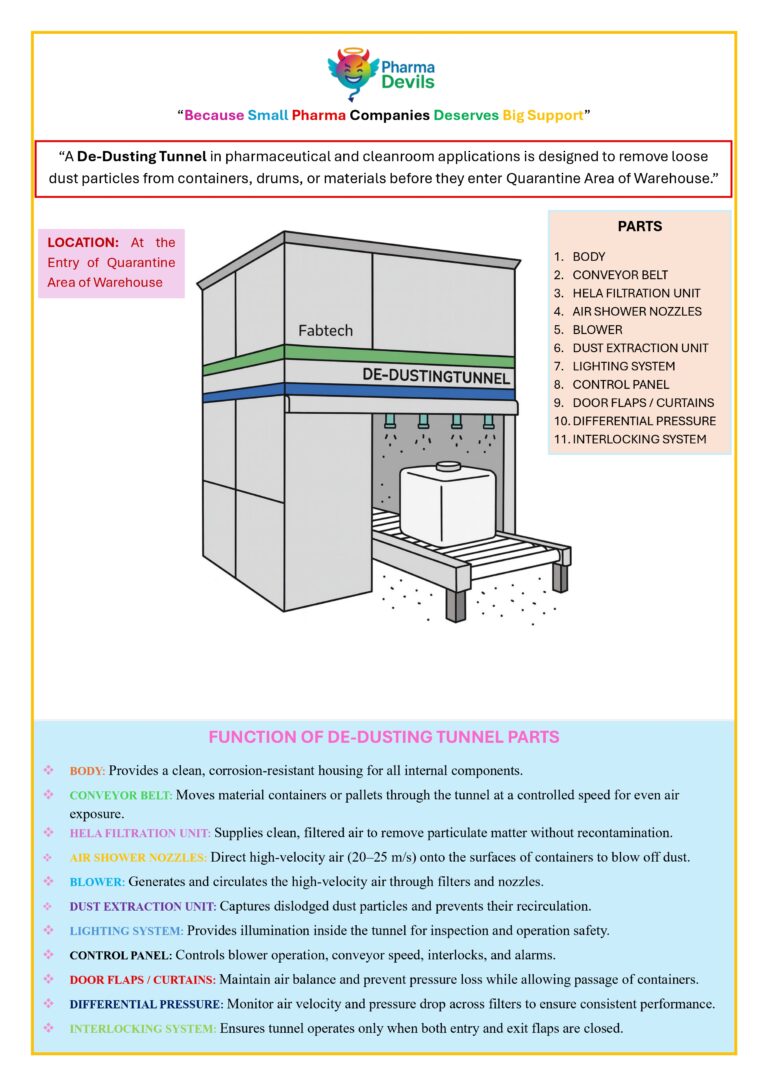
De-Dusting Tunnel in Pharmaceutical Warehouse A de-dusting tunnel in a pharmaceutical warehouse is a controlled system designed to remove loose dust, dirt, and external contamination from shipper cartons, drums, and other outer containers before they enter classified or controlled areas.…

Checklist for Cleaning Validation

Checklist for Cleaning Validation

Checklist for Cleaning Validation CLEANING VALIDATION CHECKLIST 🧾 1. Documentation & Planning 🏭 2. Equipment Selection 🧪 3. Sampling & Testing 📊 4. Execution of Cleaning Validation Runs 📈 5. Acceptance Criteria 📂 6. Review & Report 🔁 7. Revalidation…

MEDIA FILL INTERVENTIONS IN PHARMA

Media Fill Interventions

Media fill, also known as aseptic process simulation (APS), is a critical validation activity in sterile pharmaceutical manufacturing. It involves simulating the aseptic filling process using a sterile microbial growth medium (e.g., Tryptic Soy Broth) to assess the capability of…

FLOW DIAGRAMS IN PHARMA

Flow Diagrams in pharma

Flow Charts in Pharma – Overview & Key Examples Flow charts in the pharmaceutical industry are visual tools used to represent step-by-step processes, ensuring clarity, compliance, training, and audit readiness. They help standardize workflows across departments like Quality Assurance, Production,…

HR POLICIES IN PHARMA

HR POLICIES

HR Policies in Pharma are tailored to ensure regulatory compliance, employee safety, and operational efficiency in a highly controlled and quality-driven environment. Here’s a comprehensive overview: ✅ Key HR Policies in the Pharmaceutical Industry 1. Recruitment & Selection Policy 2.…

DESIGN OF EXPERIMENTS IN PHARMA

Design of Experiments in Pharma

Design of Experiments (DoE) is a structured, statistical method used in the pharmaceutical industry to determine the relationship between multiple input variables (factors) and the resulting outputs (responses). It is a cornerstone of Quality by Design (QbD) and is widely…

Non-Conformance in Pharma

Non-Conformance in Pharma

Non-Conformance in Pharma – Overview Non-conformance in the pharmaceutical industry refers to any deviation from approved specifications, procedures, or regulatory requirements that may impact product quality, safety, efficacy, or compliance. ❗ What Is a Non-Conformance? A non-conformance (NC) is any…

LAYOUTS IN PHARMA

LAYOUTS IN PHARMA

In the pharmaceutical industry, layouts play a critical role in ensuring compliance with GMP, product quality, operational efficiency, and contamination control. Different areas of a pharmaceutical facility require different types of layouts depending on the type of manufacturing (sterile vs.…

error: Content is protected !!