






Brief Description
The SOP for Entry/Exit Procedure in the Microbiology Lab describes the controlled method to be followed by microbiology personnel while entering and leaving the laboratory. Its main objective is to ensure disciplined movement, proper use of dedicated garments, and safe laboratory practices. The microbiologist is responsible for following the procedure, while the Manager-QC and Head-QA/QC are responsible for review and effective implementation. During entry, personnel remove outside slippers, cross the designated change-room bench, and wear an apron, cap, and dedicated slippers. After entering the QC laboratory, the microbiology laboratory is unlocked, lights and instruments are checked, and routine work is started only after confirming satisfactory conditions. A nose mask is required during handling of incubated materials, media preparation, and other critical activities. During exit, work areas are checked, lights are switched off, the laboratory is locked, and dedicated garments and slippers are stored in the assigned locker.
Skip to PDF content1. Flow Diagram:
The flow diagram explains the entry and exit procedure for the Microbiology Laboratory in a simple step-by-step sequence. During entry, personnel first remove their outside slippers, cross the S.S. crossover bench, and wear the dedicated apron, cap, and slippers in the common change room. They then enter the QC laboratory, unlock the microbiology laboratory, switch on the lights and instruments, and verify that all required conditions are satisfactory before starting routine work. A nose mask is required while handling incubated plates, tubes, media preparation, or other critical microbiological activities.
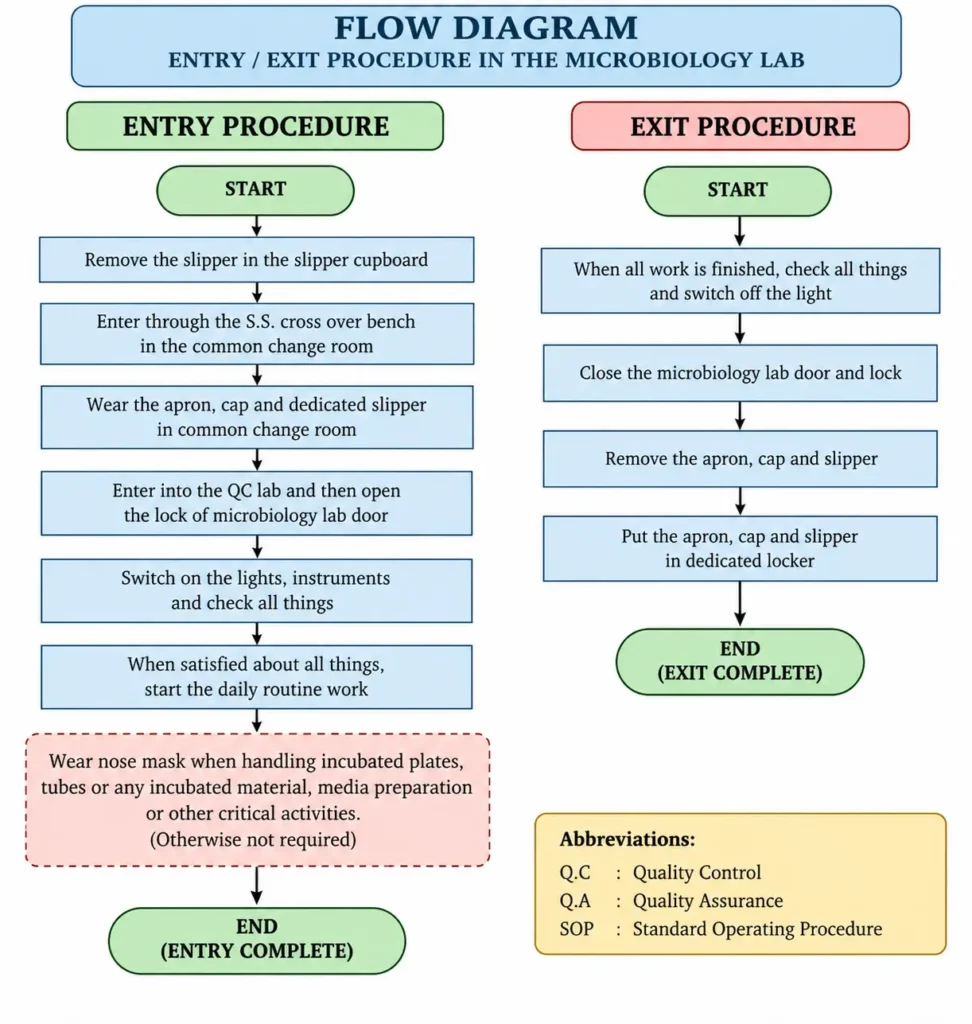
The exit sequence begins after completion of laboratory work. Personnel check the area, switch off the lights, close and lock the microbiology laboratory, remove the apron, cap, and dedicated slippers, and place them in the assigned locker. This flow diagram supports controlled personnel movement, good laboratory discipline, contamination control, and consistent compliance with the SOP.
2. Brainstorming for SOP Failure:
The brainstorming diagram identifies possible reasons for failure of the Entry/Exit Procedure in the Microbiology Laboratory SOP. The SOP requires controlled entry through the change room, use of an apron, cap and dedicated slippers, checking laboratory conditions before starting work, appropriate use of a nose mask during critical activities, and proper shutdown and locking of the laboratory during exit.
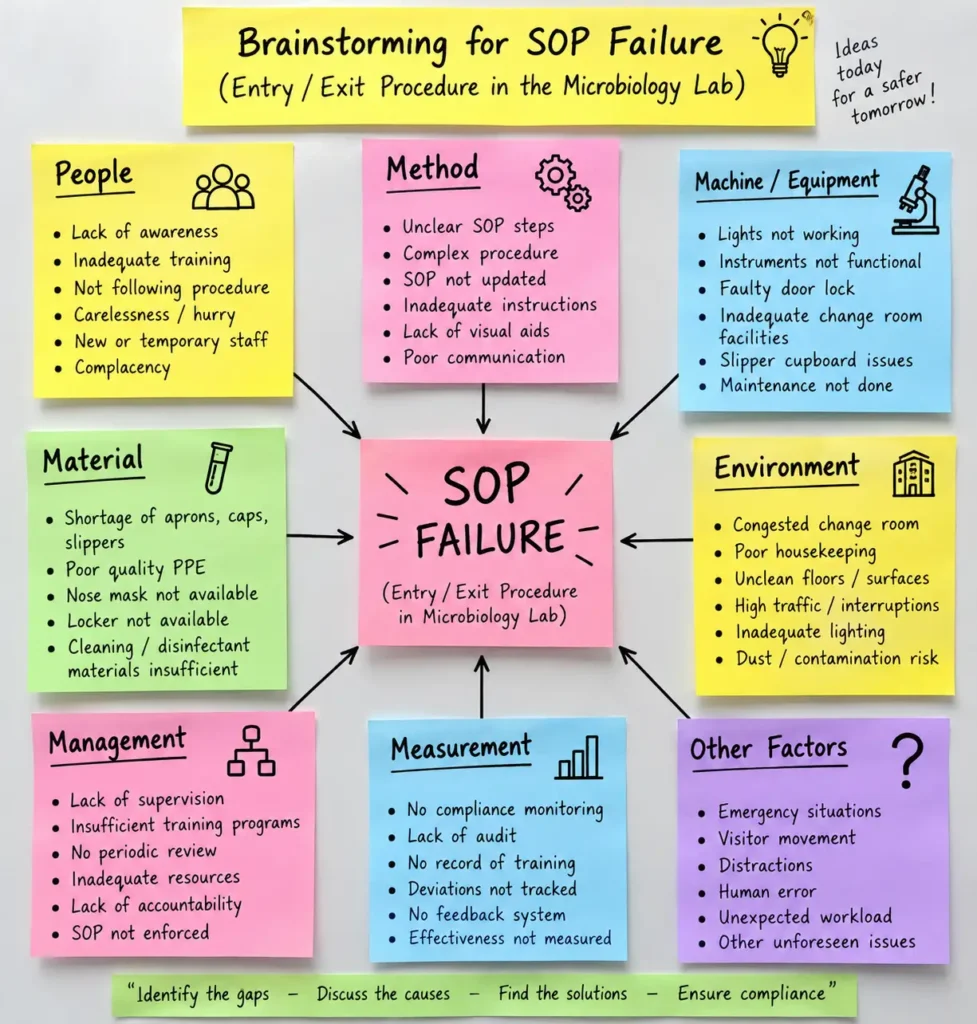
The sticky notes group potential causes under People, Method, Machine/Equipment, Material, Environment, Management, Measurement, and Other Factors. Examples include inadequate training, failure to follow instructions, unclear procedures, faulty door locks, shortage of PPE, poor housekeeping, insufficient supervision, lack of compliance monitoring, distractions and human error. This brainstorming approach helps the team openly identify possible gaps, evaluate contributing causes and select suitable corrective and preventive actions. It supports improved SOP compliance, safer personnel movement and better contamination control in the microbiology laboratory.
3. 5-Why Analysis for SOP Failure:
The 5-Why Analysis diagram explains the possible root cause of failure in the Entry/Exit Procedure of the Microbiology Laboratory. The SOP requires personnel to follow defined entry and exit steps, including use of an apron, cap and dedicated slippers, laboratory checks before starting work, appropriate mask use during critical activities, and proper closing and locking of the laboratory after completion of work.
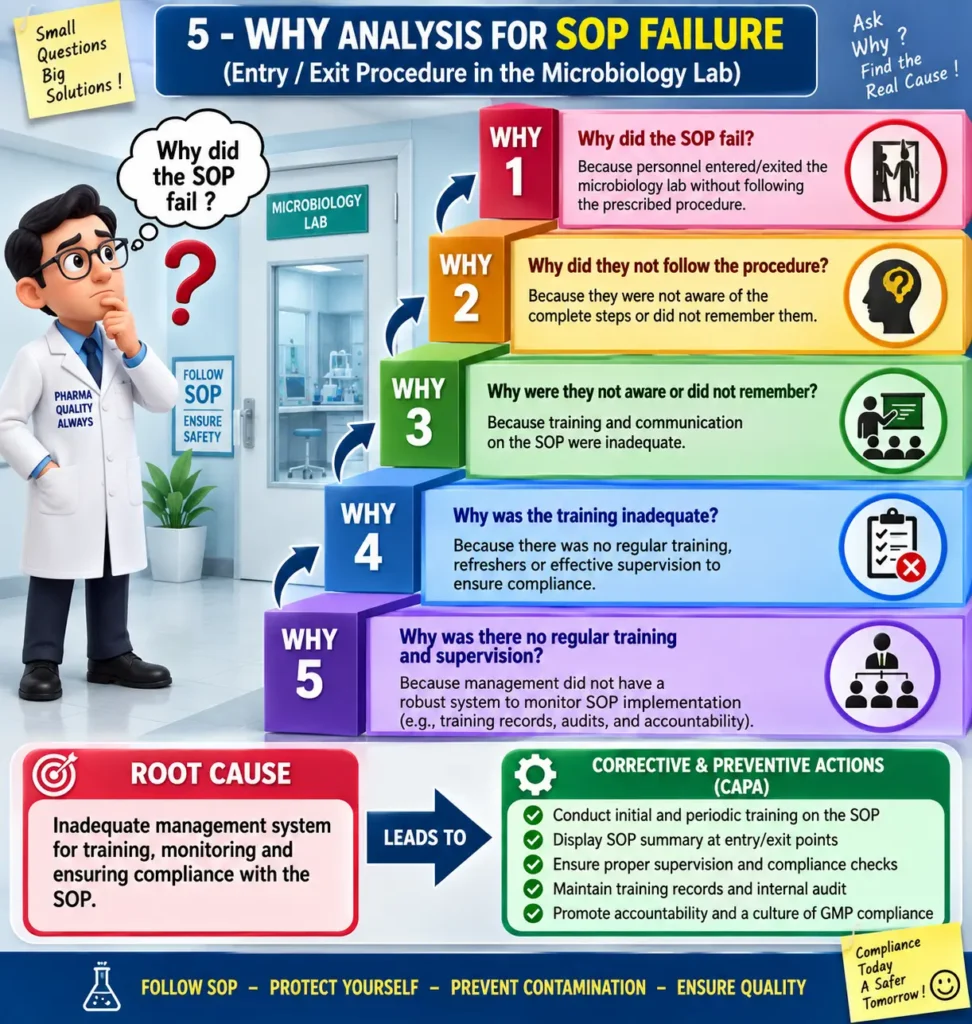
The diagram begins with the problem of personnel not following the prescribed procedure and progressively asks “Why?” to identify deeper contributing factors. It links the failure to poor awareness, inadequate SOP training, insufficient refresher training and supervision, and weak monitoring of SOP implementation. The analysis identifies an inadequate management system for training, monitoring and compliance as the potential root cause. Recommended CAPA includes periodic training, visible SOP instructions, improved supervision, maintenance of training records, internal audits and stronger accountability to ensure consistent GMP compliance and reduce contamination risk.
4. Fishbone Analysis for SOP Failure:
The Fishbone Analysis diagram is used to identify the possible causes of failure in the Entry/Exit Procedure of the Microbiology Laboratory. The SOP requires personnel to follow defined entry steps, wear an apron, cap and dedicated slippers, check laboratory conditions before starting work, use a nose mask during specified critical activities, and properly close and lock the laboratory during exit.
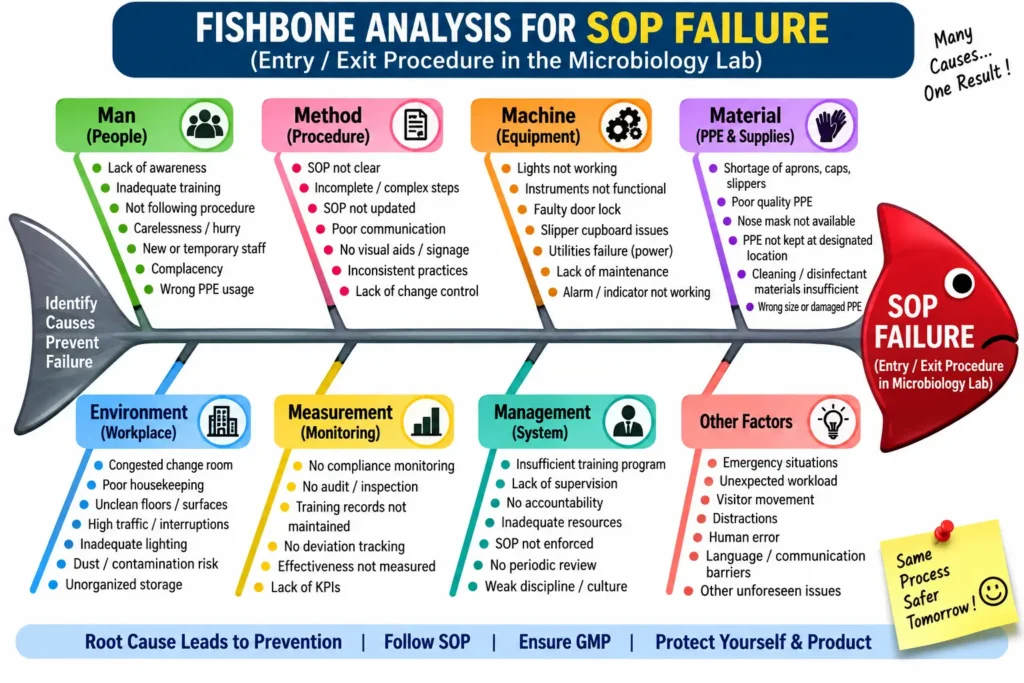
The diagram groups potential causes under major categories such as Man, Method, Machine, Material, Environment, Measurement, Management, and Other Factors. Possible causes include inadequate training, lack of awareness, unclear instructions, equipment or door-lock problems, PPE shortages, poor housekeeping, insufficient monitoring, weak supervision, distractions and human error. By arranging these causes systematically, the fishbone diagram helps the investigation team understand where failures may originate. It supports root-cause identification, appropriate CAPA, improved GMP compliance, better contamination control and more consistent adherence to microbiology laboratory entry and exit requirements.
5. Fault Tree Analysis for SOP Failure:
The Fault Tree Analysis (FTA) diagram identifies the possible causes that can lead to failure of the Entry/Exit Procedure in the Microbiology Laboratory. The SOP specifies important controls such as use of an apron, cap and dedicated slippers, checking laboratory conditions before beginning work, wearing a nose mask during specified critical activities, and properly closing and locking the microbiology laboratory during exit.
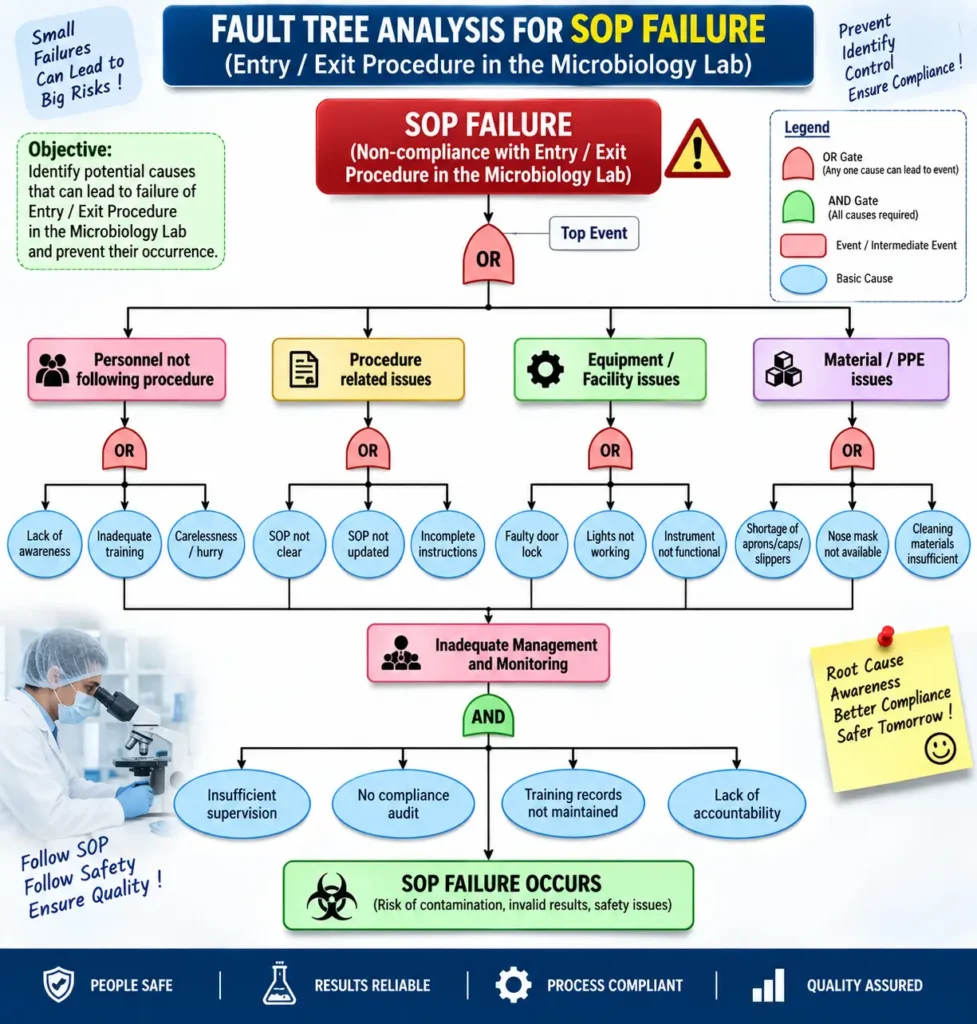
The FTA organizes potential failure causes into major branches such as personnel-related issues, procedure-related issues, equipment/facility problems, and material/PPE deficiencies. Basic causes may include lack of awareness, inadequate training, unclear instructions, faulty door locks, non-functional equipment, and shortage of required PPE. These factors may be further influenced by inadequate supervision, poor compliance monitoring, incomplete training records, or weak accountability. The analysis helps identify critical failure pathways so that appropriate corrective and preventive actions can be implemented to improve SOP compliance and contamination control.
Questions & Answers – Entry/Exit Procedure in the Microbiology Lab
- What is the objective of this SOP?
The objective is to define the procedure for entry and exit in the microbiology laboratory. - Who is responsible for following this SOP?
The Microbiologist is responsible for execution of the SOP, while Manager-QC and Head-QA/QC are responsible for review and effective implementation. - What should be done before entering through the crossover bench?
Slippers should first be removed and kept in the slipper cupboard before entering through the stainless-steel crossover bench. - What garments should be worn in the common change room?
Personnel should wear an apron, cap, and dedicated slippers. - What should be done after entering the QC laboratory?
The microbiology laboratory door should be unlocked before entering the laboratory. - What checks are required before starting routine work?
Lights, instruments, and laboratory conditions should be checked before starting daily routine work. - When is a nose mask required?
A nose mask is required while handling incubated plates, tubes, incubated material, media preparation, or other critical activities. - What should be done before leaving the microbiology laboratory?
After completing work, all things should be checked and the lights should be switched off. - What should be done with the laboratory door during exit?
The microbiology laboratory door should be closed and locked. - Where should the apron, cap, and slippers be kept after exit?
They should be removed and placed in the dedicated locker. - Who provides training on this SOP?
The Manager-QC is the trainer, and the Microbiologist is the trainee. - What is the specified training duration?
The training period is one hour. - What is the main risk if the entry/exit procedure is not followed?
Failure to follow the procedure may result in poor control of personnel movement and contamination risks within the microbiology laboratory. - What should be investigated if repeated SOP failures occur?
Possible causes such as inadequate training, lack of awareness, poor supervision, unclear instructions, PPE availability, and weak compliance monitoring should be evaluated. - What is the purpose of CAPA after an SOP failure?
CAPA should eliminate the identified root cause, prevent recurrence, strengthen training and supervision, and improve consistent SOP compliance.