





1. Introduction for Post Risk Assessment for FBD:
The Post Risk Assessment for the Fluid Bed Dryer (FBD) evaluates potential risks associated with its design, installation, operation, performance, and safety using the FMEA methodology. The assessment considers severity, occurrence, and detectability to calculate Risk Priority Numbers (RPN) and determine necessary controls. Key risks include inadequate qualification, calibration failures, improper equipment operation, ineffective fluidization, contamination, filter bag issues, safety deficiencies, and insufficient process monitoring. Existing controls, SOPs, qualification activities, preventive maintenance, training, and recommended corrective actions are reviewed to reduce residual risk and ensure consistent equipment performance, product quality, operator safety, and GMP compliance.
Skip to PDF content2. Flow Diagram of Fluid Bed Dryer (FBD):
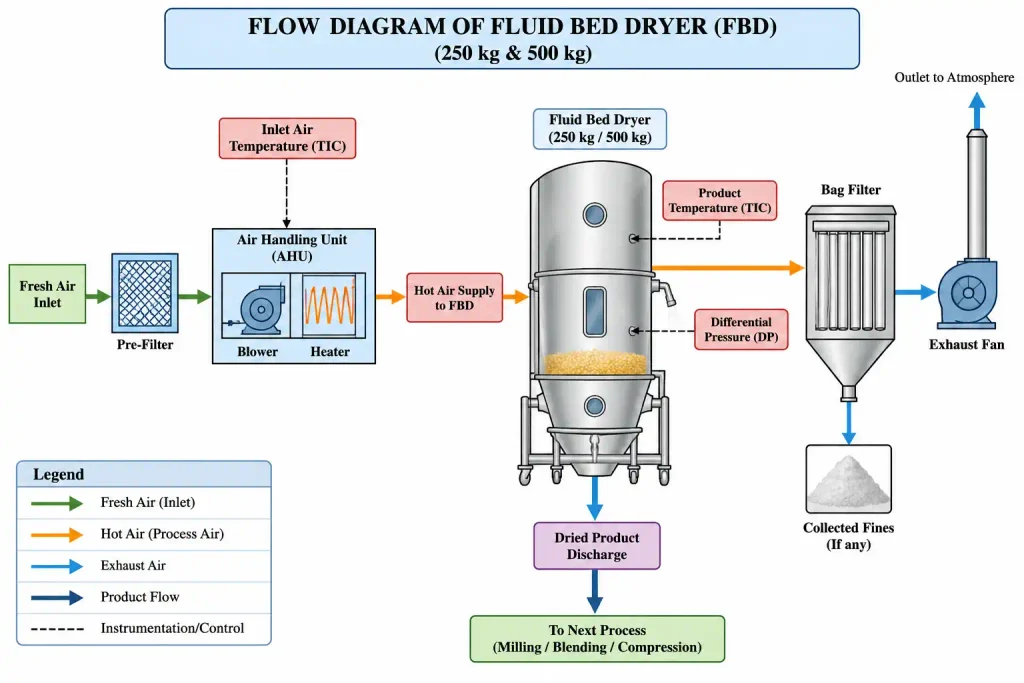
The flow diagram illustrates the operating sequence of a Fluid Bed Dryer used for drying pharmaceutical granules. Fresh air enters through a pre-filter and passes to the Air Handling Unit, where the blower and heater generate controlled hot process air. The heated air enters the FBD and fluidizes the wet material, promoting uniform drying. Inlet air temperature, product temperature, and differential pressure are monitored during operation. Exhaust air passes through the bag filter, where fines are retained, and then exits through the exhaust fan. After achieving the required drying endpoint, dried product is discharged for subsequent processing.
3. Brainstorming for Post Risk Assessment of Fluid Bed Dryer:
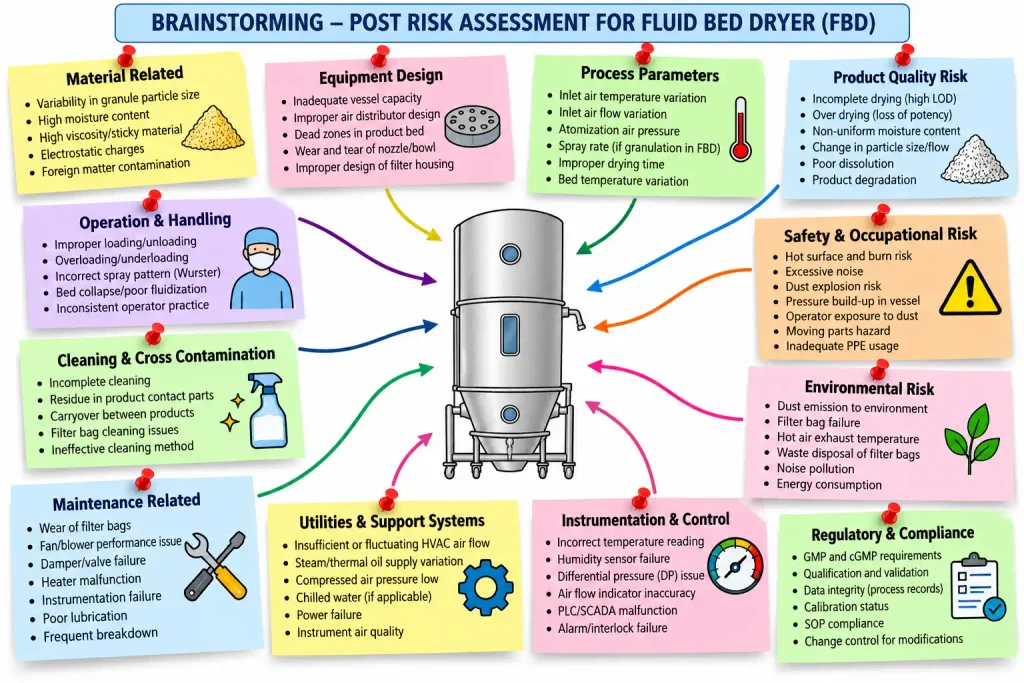
The brainstorming diagram summarizes potential risks considered during the post risk assessment of a Fluid Bed Dryer. Major areas include material characteristics, equipment design, process parameters, product quality, operation and handling, cleaning, maintenance, utilities, instrumentation, safety, environmental impact, and regulatory compliance. Identified concerns include moisture variation, inadequate airflow, temperature fluctuation, poor fluidization, filter bag failure, incomplete drying, contamination, equipment breakdown, sensor malfunction, utility interruption, operator errors, and dust hazards. This brainstorming approach supports systematic identification of failure modes, review of existing controls, and determination of additional mitigation measures required to maintain product quality, equipment reliability, operator safety, and GMP compliance.
4. 5 Why Analysis for Post Risk Assessment of Fluid Bed Dryer (FBD):
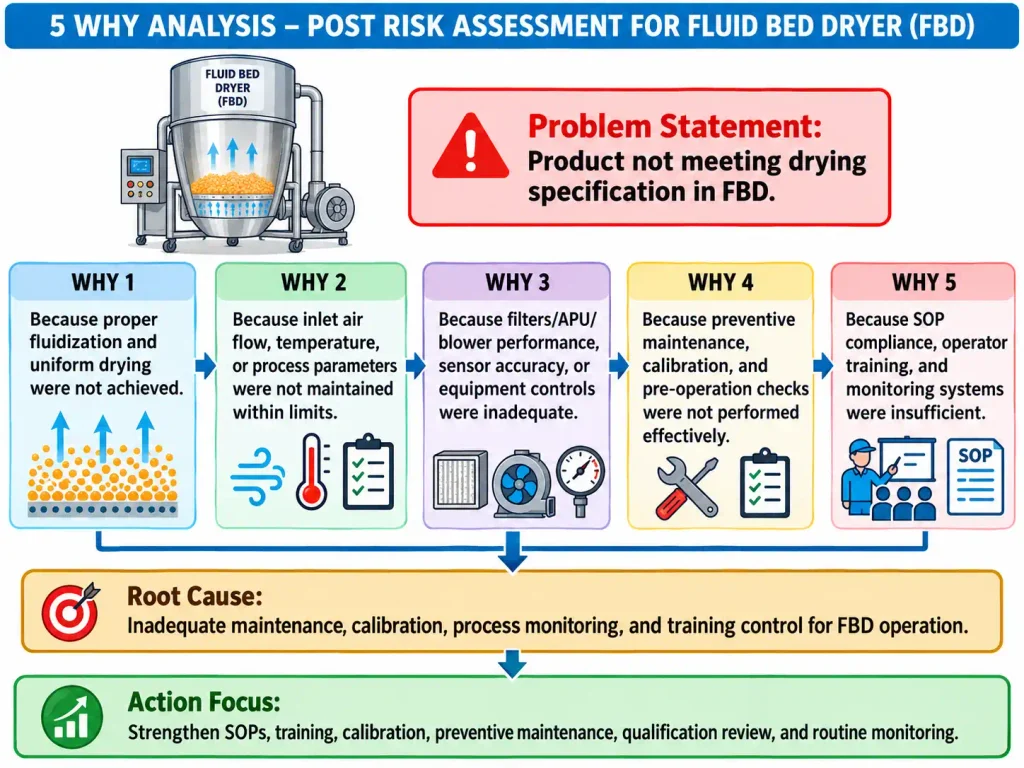
The 5 Why Analysis identifies the underlying causes of an FBD failing to achieve the required drying specification. The problem may begin with inadequate fluidization and non-uniform drying, followed by uncontrolled inlet air flow, temperature, or other process parameters. Further investigation may reveal poor filter, APU, blower, sensor, or equipment-control performance. These issues can be linked to ineffective preventive maintenance, calibration, or pre-operation checks. The final underlying causes may involve inadequate SOP compliance, operator training, and process monitoring. Corrective focus should therefore strengthen maintenance, calibration, qualification, training, SOP adherence, and routine monitoring of critical FBD parameters.