







1. Introduction – Procedure for Operation and Cleaning of Pass Box:
The Procedure for Operation and Cleaning of Pass Box is established to ensure the safe, controlled, and hygienic transfer of materials through a pass box in the pharmaceutical production area. A pass box serves as a controlled transfer system between different areas and helps minimize unnecessary personnel movement while supporting cleanliness and contamination-control practices. The SOP applies to the pass box provided in the Production Department, with production personnel responsible for its execution and the Production Manager responsible for effective implementation.As specified in the SOP, the pass box is to remain switched on continuously. Before material transfer, the appropriate door condition must be checked, and containers are transferred through the pass box in a controlled manner. The procedure also requires the pass box to be empty before cleaning and specifies daily/working-day cleaning of its internal and external surfaces using a clean mop wetted with IPA and Colin. Proper adherence to this SOP helps maintain cleanliness, orderly material movement, contamination control, and consistent GMP practices during routine pharmaceutical production activities.
Skip to PDF content2. Flow Diagram – Procedure for Operation and Cleaning of Pass Box:
The Procedure for Operation and Cleaning of Pass Box defines the method for routine operation and cleaning of the pass box installed in the Production Department. The SOP is intended to ensure that material transfer through the pass box is carried out in a controlled manner while maintaining cleanliness of the equipment. Production personnel and the Production Chemist are responsible for executing the procedure, while the Production Manager is responsible for its effective implementation.
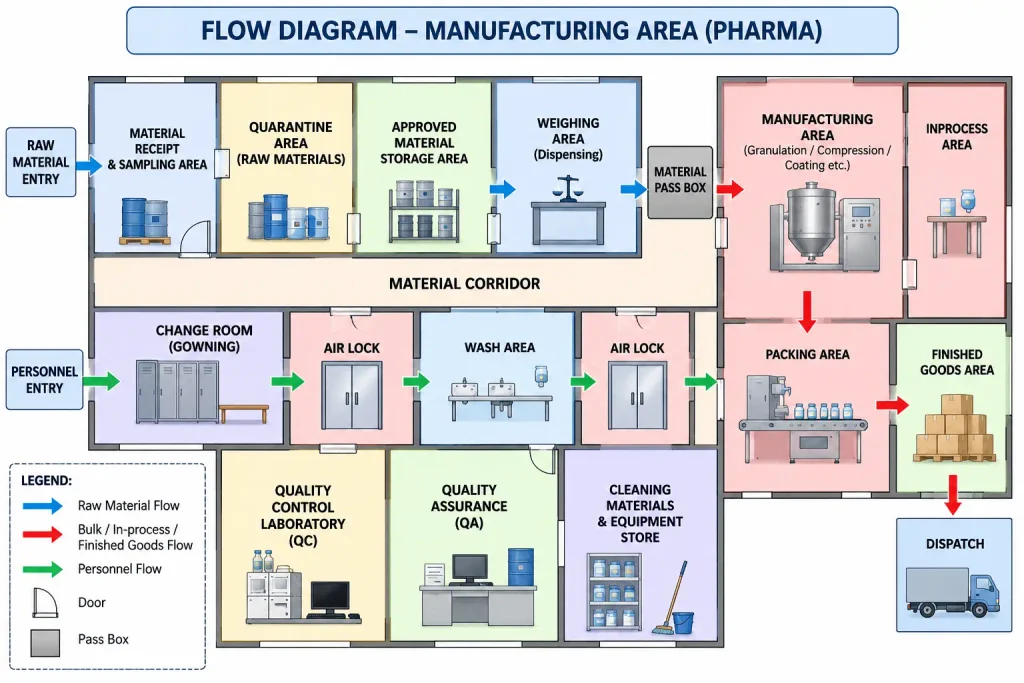
As per the SOP, the pass box is to remain switched on continuously. During operation, the main switch is turned on, the door condition is checked before material transfer, and containers are removed into the inside area before closing the door again. For cleaning, the pass box must first be empty. Its internal and external surfaces are cleaned daily or on working days using a clean mop wetted with IPA and Colin. Following this SOP supports consistent operation, cleanliness, proper material movement, and disciplined use of the pass box within the manufacturing area.
3. Benefits of Following SOP – Procedure for Operation and Cleaning of Pass Box:
Following the Procedure for Operation and Cleaning of Pass Box helps ensure that the pass box is operated in a consistent and controlled manner during routine production activities. The SOP defines responsibility for execution by production personnel and the Production Chemist, with the Production Manager responsible for effective implementation.
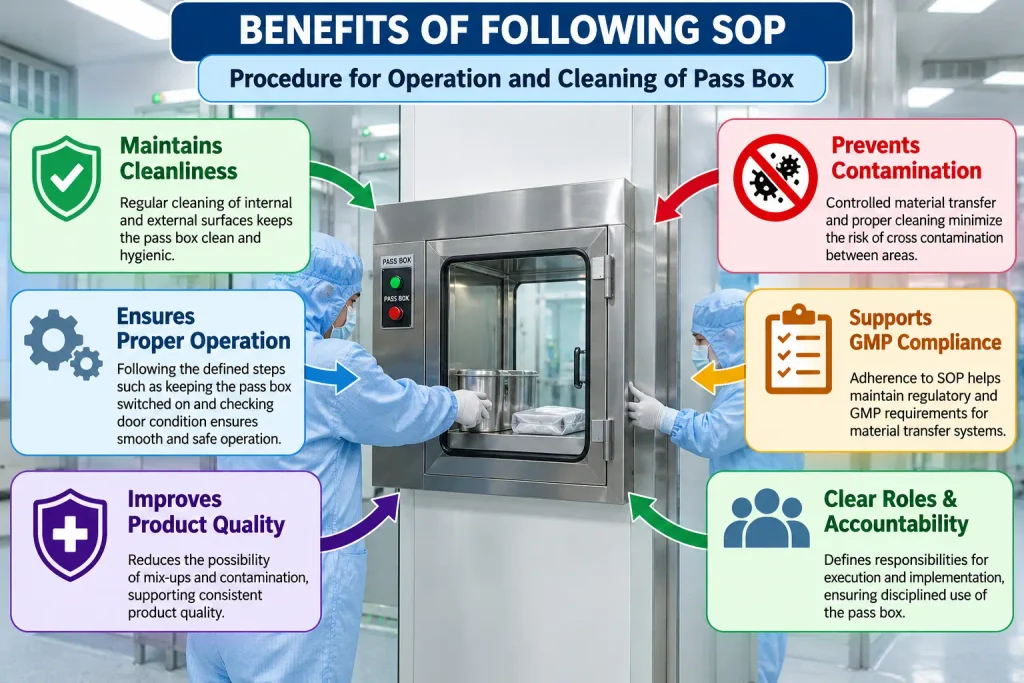
The procedure requires the pass box to remain switched on and specifies checks on door condition during material transfer. It also requires the pass box to be empty before cleaning and directs daily/working-day cleaning of the internal and external surfaces using a clean mop wetted with IPA and Colin. By following these instructions, the organization can support cleanliness, controlled material movement, proper equipment use, defined responsibilities, reduced risk of contamination, and consistent GMP practices in the manufacturing area.
4. Brainstorming Analysis for SOP Failure – Procedure for Operation and Cleaning of Pass Box:
The Brainstorming Analysis for SOP Failure – Procedure for Operation and Cleaning of Pass Box is used to identify potential reasons why the defined operating and cleaning requirements may not be followed effectively in the manufacturing area. The SOP requires the pass box to remain switched on, the door condition to be checked during material transfer, containers to be removed appropriately, and the pass box to be emptied before cleaning. It also specifies routine cleaning of internal and external surfaces using a clean mop wetted with IPA and Colin.
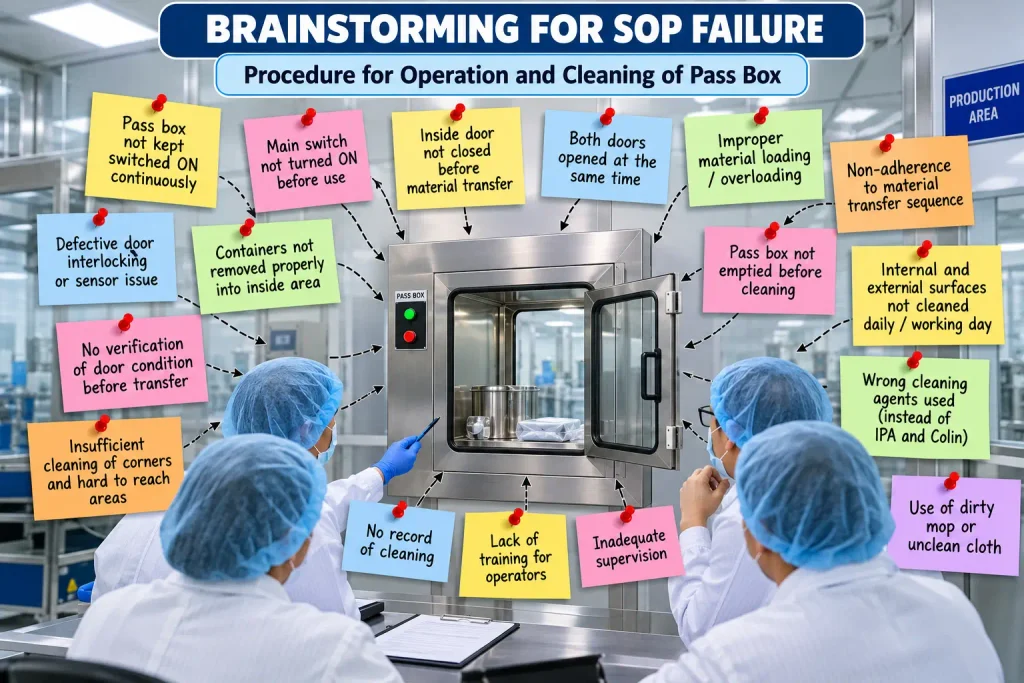
Potential failure causes identified during brainstorming may include improper door handling, inadequate cleaning, use of unsuitable cleaning materials, failure to empty the pass box before cleaning, insufficient operator training, weak supervision, and poor adherence to the defined transfer sequence. Evaluating these possible causes helps the organization identify procedural weaknesses, improve operator awareness, strengthen compliance, and maintain controlled material transfer through the pass box.
5. 5-Why Analysis for SOP Failure – Procedure for Operation and Cleaning of Pass Box:
The 5-Why Analysis for SOP Failure – Procedure for Operation and Cleaning of Pass Box is used to systematically identify the underlying reasons for failure to follow the defined operating and cleaning requirements. The SOP requires the pass box to remain switched on, the inside door condition to be checked before transfer, containers to be removed correctly, and the pass box to be empty before cleaning. It also specifies routine cleaning of the internal and external surfaces using a clean mop wetted with IPA and Colin.
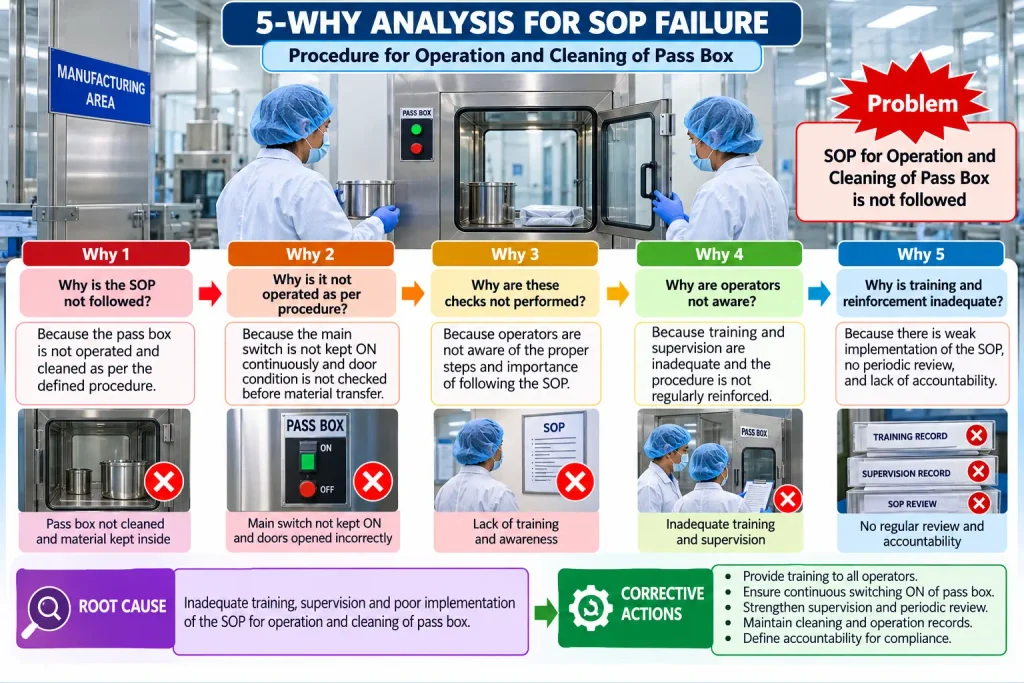
A typical 5-Why sequence may identify that the SOP was not followed because the pass box was not operated or cleaned as defined; this may have occurred because required checks were missed; the checks may have been missed due to inadequate operator awareness; poor awareness may result from insufficient training or supervision; and the deeper root cause may be weak SOP implementation and lack of regular reinforcement. The analysis helps identify root causes such as inadequate training, insufficient supervision, weak procedural control, and poor accountability, allowing suitable corrective and preventive actions to be established.
6. Fault Tree Analysis for SOP Failure – Procedure for Operation and Cleaning of Pass Box:
The Fault Tree Analysis for SOP Failure – Procedure for Operation and Cleaning of Pass Box systematically evaluates the possible events that can lead to failure of the defined pass box procedure. The top event is considered as “SOP for Operation and Cleaning of Pass Box Not Followed.” The analysis then branches into major failure categories such as improper pass box operation, inadequate cleaning, incorrect material transfer, and increased contamination or safety risk.
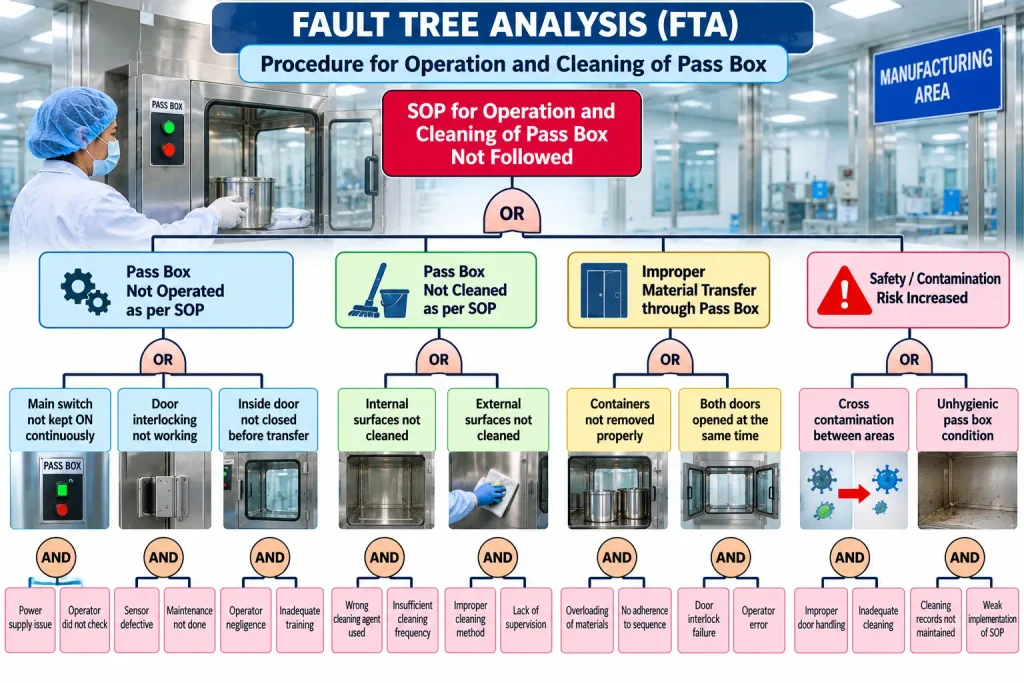
As per the SOP, the pass box is required to remain switched on, the inside door condition must be checked before material transfer, containers must be transferred correctly, and the pass box must be emptied before cleaning. Internal and external surfaces are also required to be cleaned on a daily/working-day basis using the specified cleaning materials. The fault tree helps identify contributory causes such as operator error, inadequate training, poor supervision, improper door handling, cleaning failures, equipment-related issues, and weak SOP implementation. Identifying these pathways supports effective CAPA planning and strengthens compliance within the pharmaceutical manufacturing area.
7. Impact Assessment – Procedure for Operation and Cleaning of Pass Box:
The Impact Assessment for SOP Failure – Procedure for Operation and Cleaning of Pass Box evaluates the possible consequences if the defined operating and cleaning requirements are not followed in the manufacturing area. The SOP requires the pass box to remain switched on, proper door condition to be ensured during material transfer, containers to be removed correctly, and the pass box to be empty before cleaning. It also specifies routine cleaning of internal and external surfaces using a clean mop wetted with IPA and Colin.
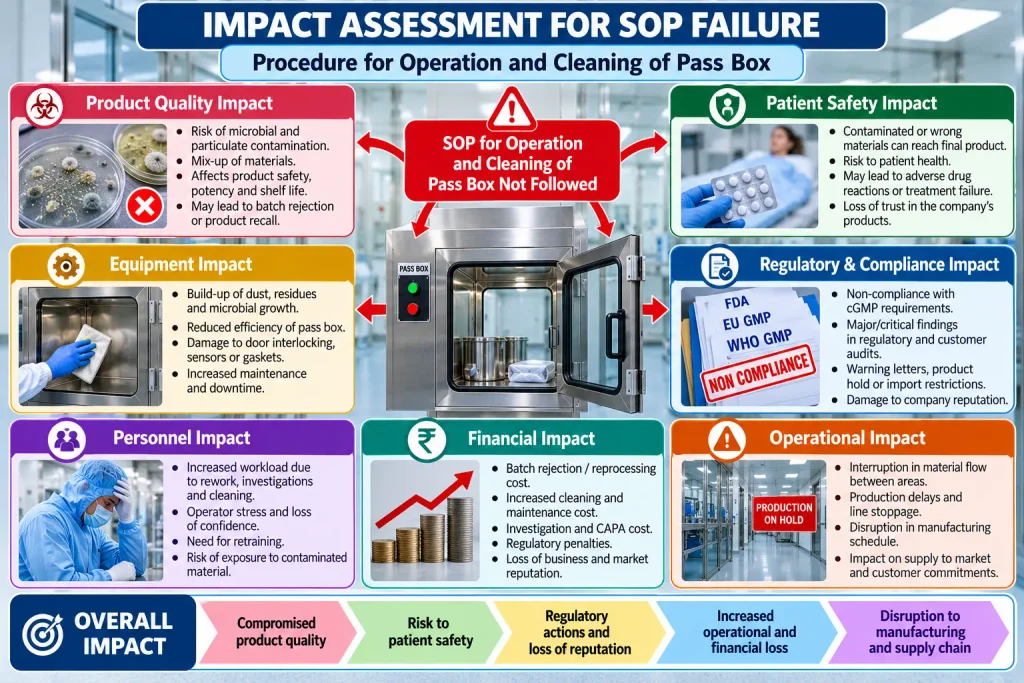
Failure to follow these controls may adversely affect cleanliness, material transfer control, product quality, operational efficiency, and GMP compliance. Improper cleaning may increase the possibility of residue or contamination, while incorrect door handling can compromise controlled transfer between areas. Repeated failures may also lead to deviations, investigations, retraining, production delays, and additional corrective actions. Therefore, effective implementation of this SOP is important to maintain disciplined pass box operation and consistent manufacturing practices.
8. CAPA – Procedure for Operation and Cleaning of Pass Box:
The Corrective and Preventive Action (CAPA) for SOP Failure – Procedure for Operation and Cleaning of Pass Box is intended to eliminate the identified causes of non-compliance and prevent recurrence of similar failures. The SOP requires the pass box to remain switched on, proper door condition to be ensured before material transfer, containers to be removed correctly, and the pass box to be empty before cleaning. It also specifies cleaning of the internal and external surfaces on a daily/working-day basis using a clean mop wetted with IPA.
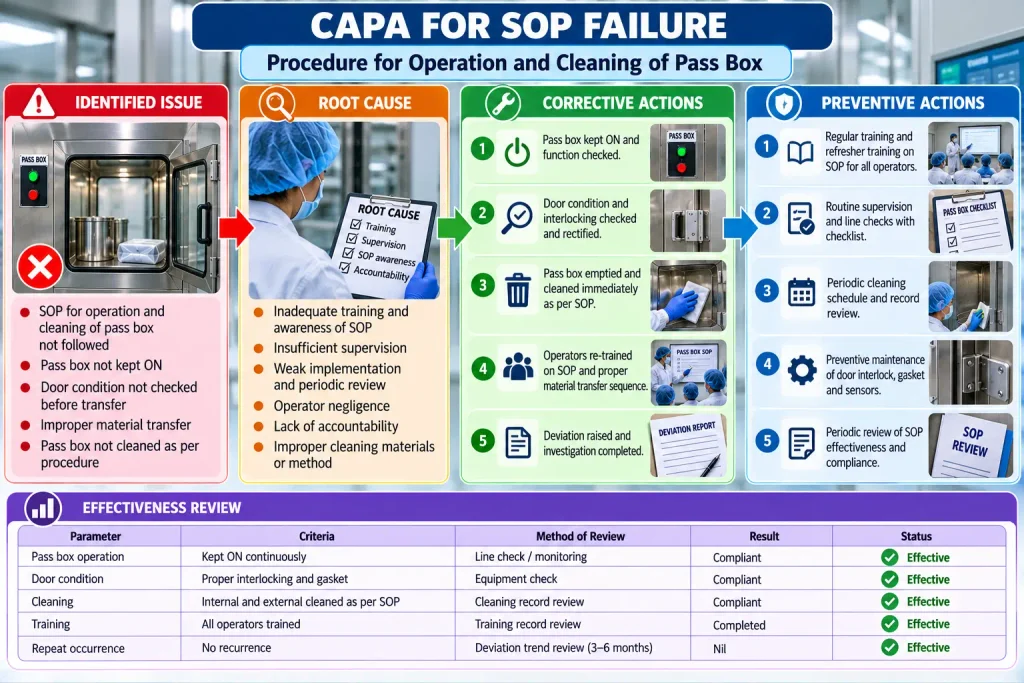
Corrective actions may include immediate cleaning of the pass box, verification of door condition, correction of improper operating practices, and retraining of concerned production personnel. Preventive actions may include periodic refresher training, routine supervision, use of operational and cleaning checklists, periodic review of records, and reinforcement of responsibilities. Effectiveness should be verified through line checks, cleaning record review, training record review, equipment condition checks, and deviation trend monitoring to confirm sustained compliance and absence of repeat failures.
Questions & Answers – Procedure for Operation and Cleaning of Pass Box:
Q1. What is the objective of this SOP?
The objective is to establish a defined procedure for the operation and cleaning of the pass box.
Q2. Where is this SOP applicable?
This SOP is applicable to the pass box provided in the Production Department.
Q3. Who is responsible for execution of this SOP?
Concerned production personnel and the Production Chemist are responsible for execution of the SOP.
Q4. Who is responsible for effective implementation of the SOP?
The Production Manager is responsible for effective implementation.
Q5. How long should the pass box remain switched on?
The SOP specifies that the pass box shall be kept switched on for 24 hours.
Q6. What is the first step for operating the pass box?
The first operating step is to switch ON the main switch.
Q7. What should be checked before transferring material?
Before material transfer, it should be ensured that the inside door of the pass box is closed.
Q8. What should be done after opening the inside door?
All containers should be removed from the pass box into the inside area, after which the door should be closed.
Q9. What condition should be ensured before cleaning the pass box?
The pass box should be empty before cleaning.
Q10. Which surfaces of the pass box are required to be cleaned?
Both the internal and external surfaces of the pass box are required to be cleaned.
Q11. How frequently should the pass box be cleaned?
The SOP specifies cleaning daily/on working days.
Q12. Which cleaning materials are specified in the SOP?
The SOP specifies cleaning with a clean mop wetted with IPA and Colin.
Q13. What is the reference mentioned in the SOP?
The SOP states that the reference is Not Applicable.
Q14. Are any annexures provided with this SOP?
No. The SOP states Annexure: NIL
Q15. To which departments are controlled copies distributed?
Controlled copies are distributed to Quality Assurance and Production.
Reference Guidelines – Procedure for Operation and Cleaning of Pass Box:
- WHO Good Manufacturing Practices (GMP) – requirements for premises, prevention of contamination, sanitation, and controlled material movement.
- EU Guidelines for Good Manufacturing Practice, Part I – Chapter 3: Premises and Equipment – design and use of premises/equipment to minimize contamination and mix-ups.
- EU GMP Part I – Chapter 5: Production – controls for material handling, prevention of cross-contamination, and cleaning practices.
- PIC/S Guide to GMP (PE 009), Chapters 3 and 5 – requirements for premises, equipment, production controls, cleaning, and material transfer.
- Schedule M of the Drugs Rules, India – GMP requirements relating to pharmaceutical premises, equipment, sanitation, and manufacturing controls.
- ISO 14644 series, where applicable to classified cleanroom environments and controlled transfer systems.