







1. Introduction – SOP for Data Integrity:
The SOP for Data Integrity establishes a systematic approach for maintaining the accuracy, consistency, reliability, traceability, and completeness of data generated throughout pharmaceutical operations. It applies to data integrity practices associated with BMRs, BPRs, documentation, formats, logbooks, and other manually or electronically generated GMP records. The SOP emphasizes compliance with ALCOA++ principles, ensuring that data remain attributable, legible, contemporaneous, original, accurate, complete, consistent, enduring, and available throughout their lifecycle. Data integrity is considered a lifecycle activity covering data generation, collection, processing, review, approval, reporting, and archival. The procedure also defines requirements for identifying, reporting, investigating, and managing suspected data integrity breaches. It includes deviation initiation, preliminary investigation, detailed task-force investigation, impact and risk assessment, root-cause determination, CAPA implementation, and escalation to senior management when required.
Skip to PDF content2. Flow Diagram – SOP for Data Integrity:
The SOP for Data Integrity defines the controls and responsibilities required to ensure that GMP data remain accurate, complete, reliable, traceable, and protected throughout their lifecycle. The procedure applies to records such as BMRs, BPRs, logbooks, formats, documentation, and other GMP-related data generated manually or electronically.
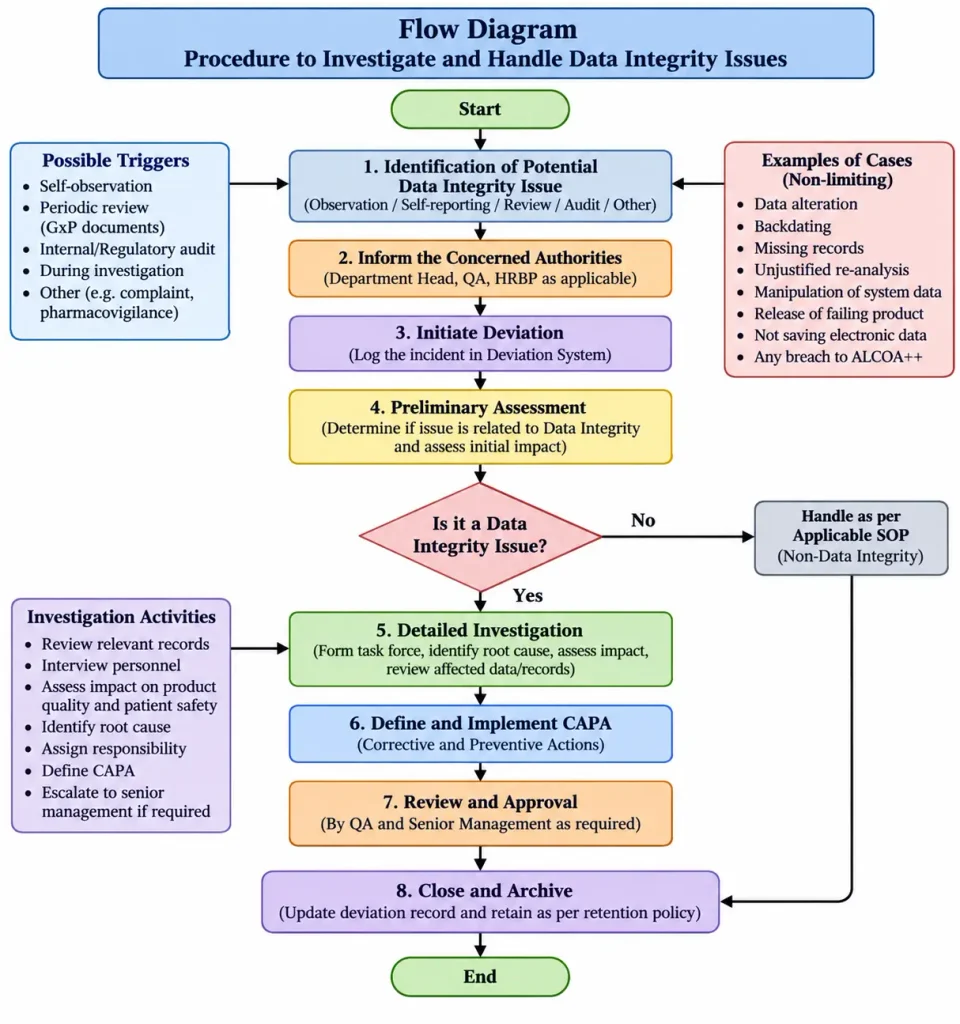
The SOP is based on ALCOA++ principles and addresses practices such as contemporaneous recording, prevention of unauthorized alteration or deletion, retention of original data, and availability of records for review and inspection. It also establishes a structured process for identifying and reporting data integrity incidents, initiating deviations, conducting preliminary and detailed investigations, assessing impact and risk, determining root cause, implementing CAPA, and escalating significant incidents to senior management.
3. Benefits of Following SOP for Data Integrity:
The SOP for Data Integrity defines the requirements for maintaining reliable, accurate, complete, consistent, and traceable GMP data throughout its entire lifecycle. It covers records such as BMRs, BPRs, documentation formats, logbooks, and other manually or electronically generated data used in pharmaceutical operations.
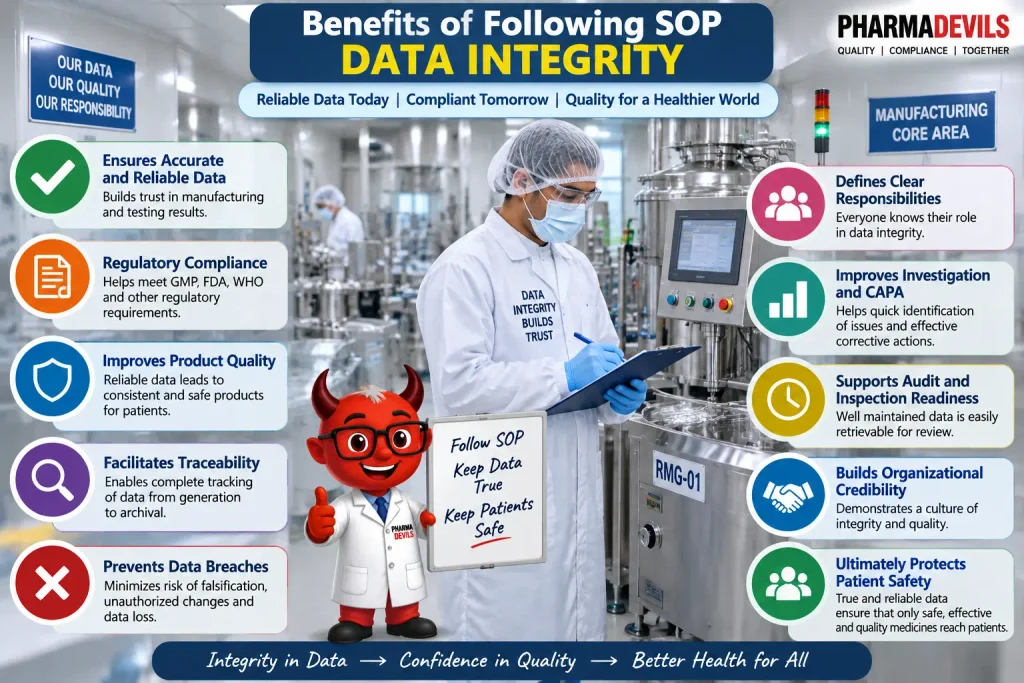
The SOP is based on ALCOA++ principles and requires data to be attributable, legible, contemporaneous, original, accurate, complete, consistent, enduring, and available. It helps prevent practices such as unauthorized data alteration, delayed recording, unjustified re-analysis, deletion of data, falsification, and manipulation of GMP records. It also provides a structured process for reporting suspected data integrity incidents, initiating deviations, performing preliminary and detailed investigations, assessing product and patient impact, identifying root causes, implementing CAPA, and escalating significant incidents to senior management.
Brainstorming for SOP Failure – SOP for Data Integrity
The brainstorming analysis for failure of the SOP for Data Integrity is used to identify possible reasons why data integrity requirements may not be followed effectively during pharmaceutical operations. Potential causes include inadequate training, unclear procedures, delayed data recording, poor documentation practices, manual entry errors, workload pressure, weak supervision, communication gaps, inadequate review, system-access problems, insufficient awareness of ALCOA++ principles, and ineffective CAPA follow-up.
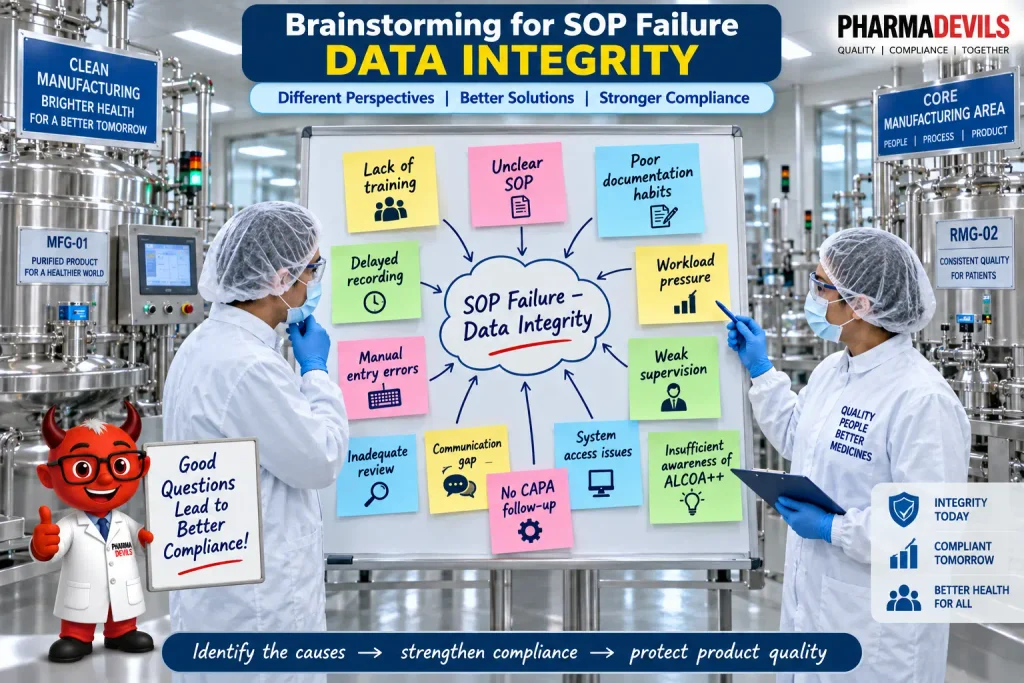
The SOP for Data Integrity requires GMP data to remain truthful, traceable, reliable, and properly controlled throughout its lifecycle. It specifically identifies risks such as unauthorized data alteration, non-contemporaneous recording, manipulation of records or system parameters, unjustified re-analysis, copying data without supporting originals, and unauthorized deletion of information. Brainstorming helps the investigation team collect different perspectives, identify contributing factors, determine appropriate root causes, and develop effective corrective and preventive actions to strengthen data integrity compliance and protect product quality and patient safety.
5. 5-Why Analysis for SOP Failure – SOP for Data Integrity:
The 5-Why Analysis for failure of the SOP for Data Integrity is used to systematically identify the underlying reasons for non-compliance with required data integrity practices. The analysis may begin with a failure such as data not being recorded in accordance with ALCOA++ principles, followed by repeated questioning to determine why the failure occurred.
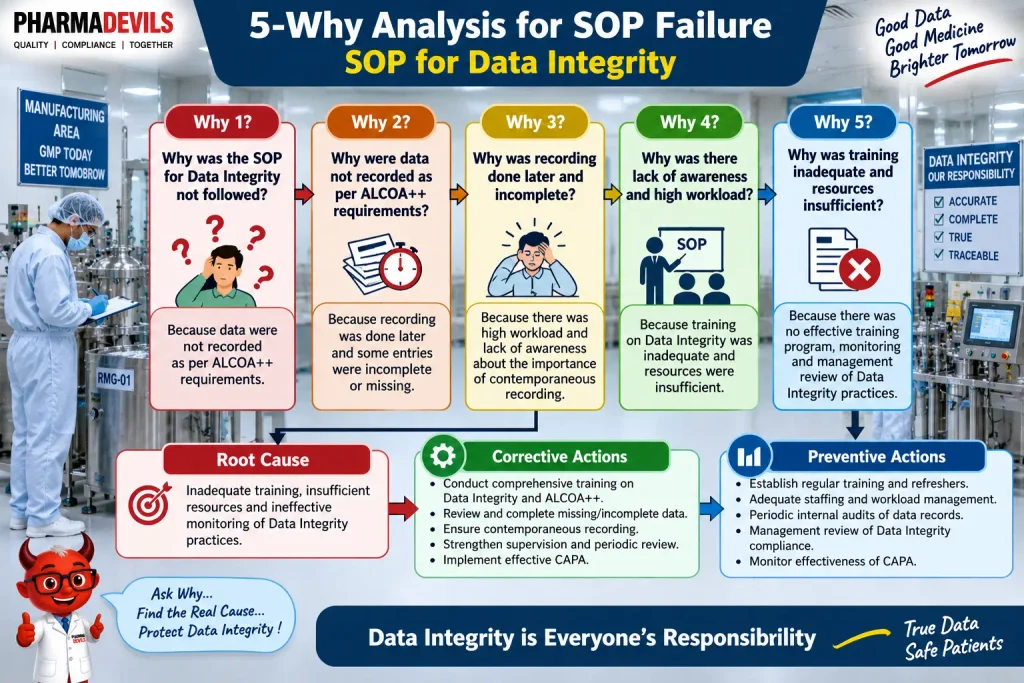
Typical contributing factors may include delayed or incomplete recording, insufficient awareness of contemporaneous documentation requirements, excessive workload, inadequate training, weak supervision, and ineffective monitoring of data integrity practices. These factors are consistent with the types of data integrity breaches identified in the SOP, such as non-contemporaneous entries, unauthorized alteration, manipulation of data, copying existing data without supporting originals, unjustified re-analysis, and unauthorized deletion of records. The analysis helps identify a defensible root cause so that suitable corrective and preventive actions can be implemented. The SOP requires investigation of data integrity incidents, impact and risk assessment, root-cause determination, and appropriate CAPA to protect product quality, patient safety, and data reliability.
6. Fishbone Analysis for SOP Failure – SOP for Data Integrity:
The Fishbone Analysis for failure of the SOP for Data Integrity helps identify the potential causes that may lead to incomplete, inaccurate, unreliable, or non-traceable GMP data. The analysis groups possible causes under key categories such as Man/Personnel, Method/Procedure, Machine/System, Material/Documents, Measurement/Review, and Environment/Management.
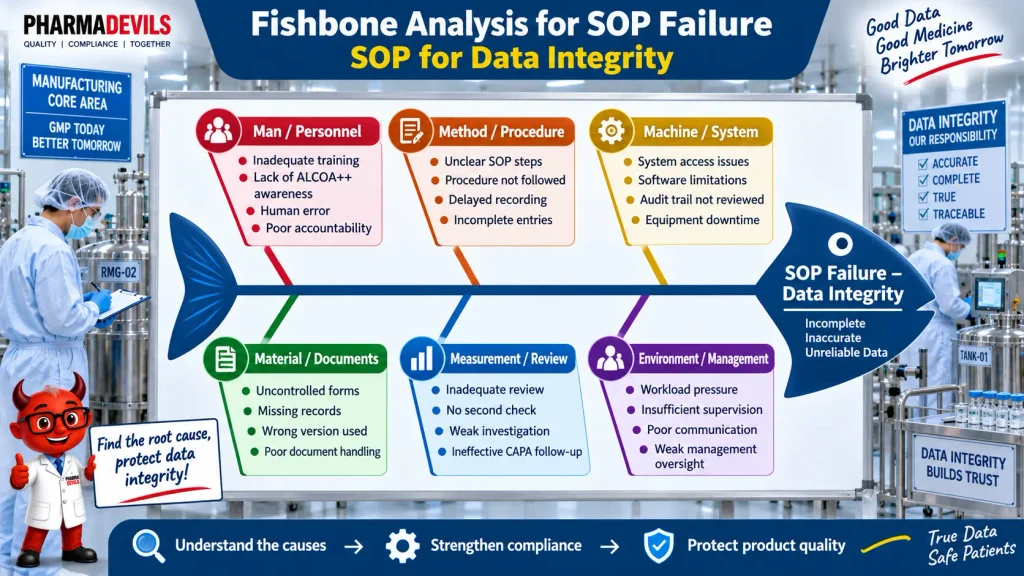
Potential causes include inadequate training, lack of ALCOA++ awareness, unclear SOP steps, delayed recording, incomplete entries, system-access problems, uncontrolled forms, missing records, inadequate review, weak investigation, insufficient supervision, workload pressure, and ineffective management oversight. These causes are consistent with the SOP’s concern about practices such as unauthorized alteration, non-contemporaneous recording, manipulation of process or analytical data, unjustified re-analysis, copying existing data as new data, and unauthorized deletion of records.The fishbone approach supports systematic investigation by helping the team identify contributing factors and potential root causes so that suitable corrective and preventive actions can be implemented to strengthen data integrity, product quality, and regulatory compliance.
7. Fault Tree Analysis for SOP Failure – SOP for Data Integrity:
The Fault Tree Analysis for failure of the SOP for Data Integrity evaluates how multiple failures can combine to result in inaccurate, incomplete, unreliable, or non-traceable GMP data. The top event is the failure to maintain data integrity, and the analysis works downward through possible contributing branches such as non-compliant data recording, weak control of electronic data, poor document management, inadequate training, insufficient supervision, and ineffective CAPA follow-up. The SOP identifies data integrity breaches such as non-contemporaneous recording, unauthorized alteration of data, manipulation of process or analytical parameters, copying existing data as new data, unjustified re-analysis, and unauthorized deletion or discarding of records.
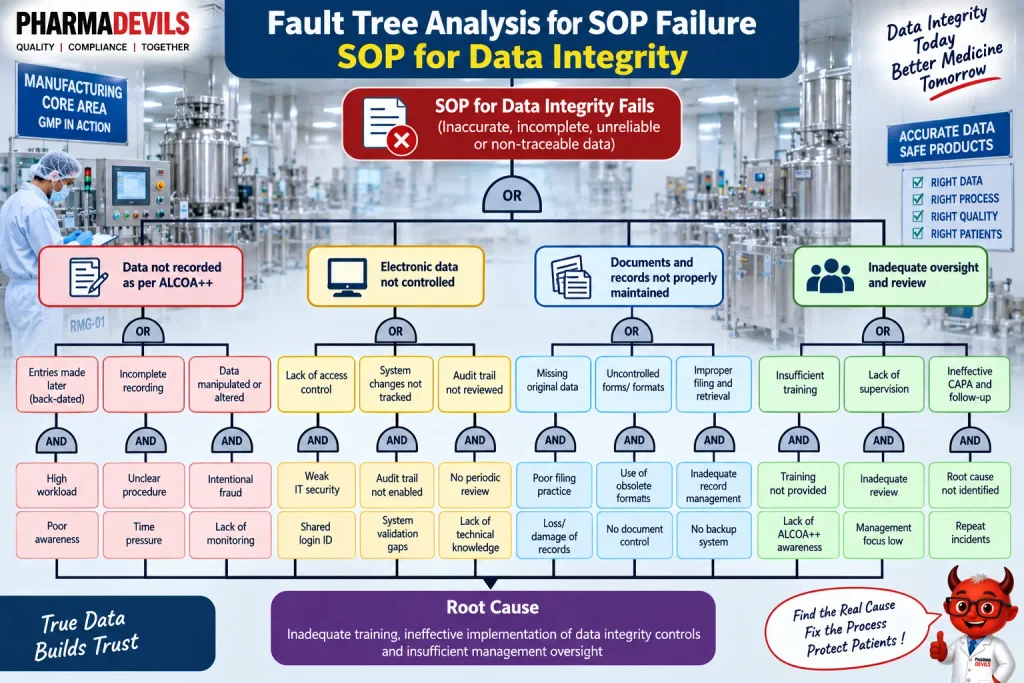
Fault Tree Analysis helps the investigation team connect these failures to their underlying causes using logical relationships, allowing the organization to focus on the most critical control gaps. The SOP requires detailed investigation, impact assessment, risk assessment, root-cause identification, and implementation of appropriate CAPA to protect data reliability, product quality, and patient safety.
8. Impact Assessment – SOP for Data Integrity:
The Impact Assessment for SOP for Data Integrity evaluates the consequences of failure to follow data integrity requirements on patient safety, product quality, data reliability, manufacturing operations, regulatory compliance, and business reputation. The SOP requires suspected falsification or alteration of records to be investigated to determine its effect on patient safety, product quality, and data reliability, followed by appropriate corrective actions.
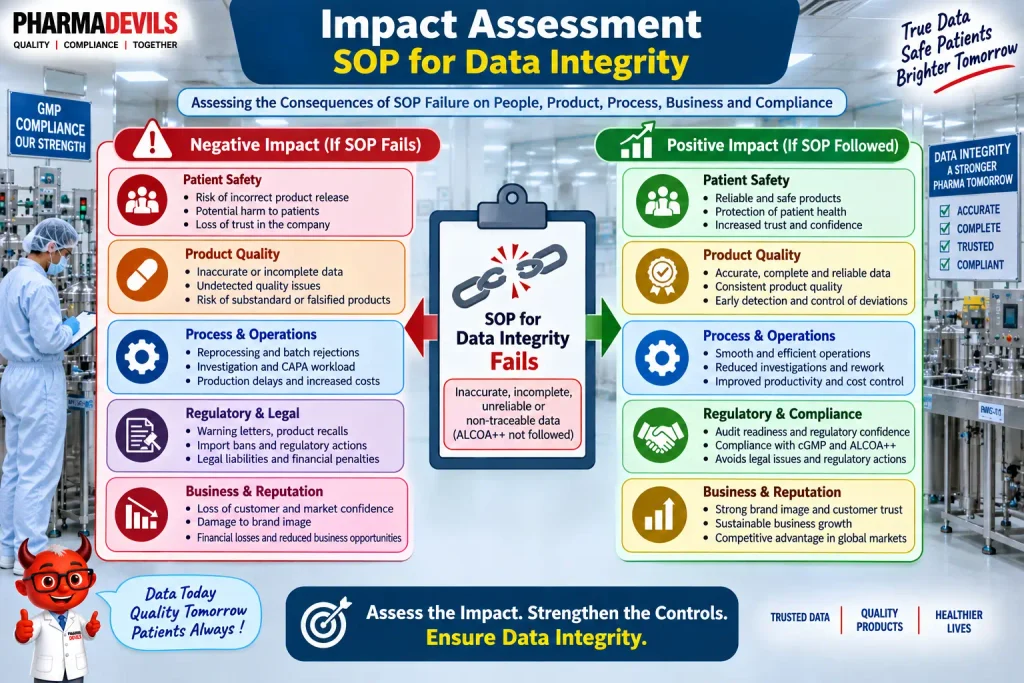
A data integrity failure may lead to inaccurate or incomplete records, incorrect product decisions, regulatory concerns, increased investigations, rework, and potential patient risk. The SOP also requires risk assessment of observed failures, including analysis of risks to patients and ongoing operations. Effective implementation of the SOP for Data Integrity supports reliable data, stronger compliance, effective CAPA, improved product quality, and protection of patient safety.
Questions & Answers – SOP for Data Integrity:
- Q: What is the objective of the SOP for Data Integrity?
A: The objective is to lay down the procedure for maintaining appropriate Data Integrity practices. - Q: What records are covered under this SOP?
A: The SOP covers Data Integrity practices related to BMRs, BPRs, documentation, formats, logbooks, and other manually maintained records. - Q: Who is responsible for implementation of the SOP?
A: All concerned departments are responsible for execution, while Assistant Manager-QA and Head-QA/QC are responsible for effective implementation. - Q: What is meant by a breach of ALCOA++?
A: A breach occurs when actions or records do not truthfully reflect what actually happened, including falsification, alteration, misleading information, misrepresentation, or forgery. - Q: Give examples of Data Integrity breaches.
A: Examples include unauthorized alteration, non-contemporaneous recording, signing for activities not performed, manipulation of dates or parameters, unjustified re-analysis, copying old data as new data, and unauthorized deletion of data. - Q: What does Data Integrity mean as a lifecycle approach?
A: It means maintaining the accuracy and consistency of data throughout data generation, collection, processing, review, approval, reporting, and archival. - Q: What are the main ALCOA++ attributes described in the SOP?
A: They include Attributable, Legible, Contemporaneous, Original, Accurate, Complete, Consistent, Enduring, and Available. - Q: When can a Data Integrity incident be identified?
A: It may be identified through self-reporting, periodic GxP document review, internal or regulatory audits, during investigations, or during any other review activity. - Q: What action should be taken after identifying a Data Integrity breach?
A: The incident should be reported to the concerned authorities, a deviation should be logged, root cause and impact assessed, and suitable corrective and preventive actions assigned. - Q: How is the initial deviation categorized for an ALCOA++ breach?
A: The initial categorization is “Critical,” although the final categorization may change after detailed investigation by the task force committee. - Q: What is the timeline for preliminary investigation?
A: The preliminary investigation report should be submitted within 48 hours of filing the deviation. - Q: What is the purpose of the detailed investigation?
A: It is intended to determine the nature, scope, root cause, extent of Data Integrity deficiencies, affected systems, and potential impact on product quality and patient safety. - Q: What should the risk assessment evaluate?
A: It should evaluate the potential effect of observed failures on released product quality, risks to patients, and risks posed by ongoing operations. - Q: What type of CAPA measures may be required?
A: CAPA may include corrective actions for affected data, interim patient-protection measures, and long-term improvements to procedures, processes, controls, systems, management oversight, training, and staffing. - Q: When should regulatory authorities be notified?
A: Appropriate notification should be made when significant Data Integrity incidents affect product quality and patient safety for products already released to the market.
Reference Guidelines – SOP for Data Integrity:
Reference:
- In-House Data Integrity Procedure / Quality Management System requirements.
- USFDA Guidelines – as applicable to data integrity and cGMP requirements.