







This SOP explains the standard method for changing personnel working on a pharmaceutical inspection line at defined intervals. The main purpose is to reduce operator fatigue, maintain concentration, and improve the accuracy of visual inspection. During continuous inspection work, a person may become tired or lose focus, which can increase the chance of missing defective, damaged, or incorrectly packed products. Therefore, trained inspection personnel should be rotated or replaced according to the approved frequency mentioned in the procedure. The SOP also describes the responsibilities of operators, supervisors, and quality personnel for following the rotation schedule and maintaining proper records. Before taking over the inspection activity, the new person should understand the product, defects, and inspection requirements. Proper personnel rotation helps maintain consistent inspection performance, reduces human error, supports product quality, and ensures that only acceptable products are released for further packing, storage, or distribution in accordance with approved GMP practices.
FLOW DIAGRAM
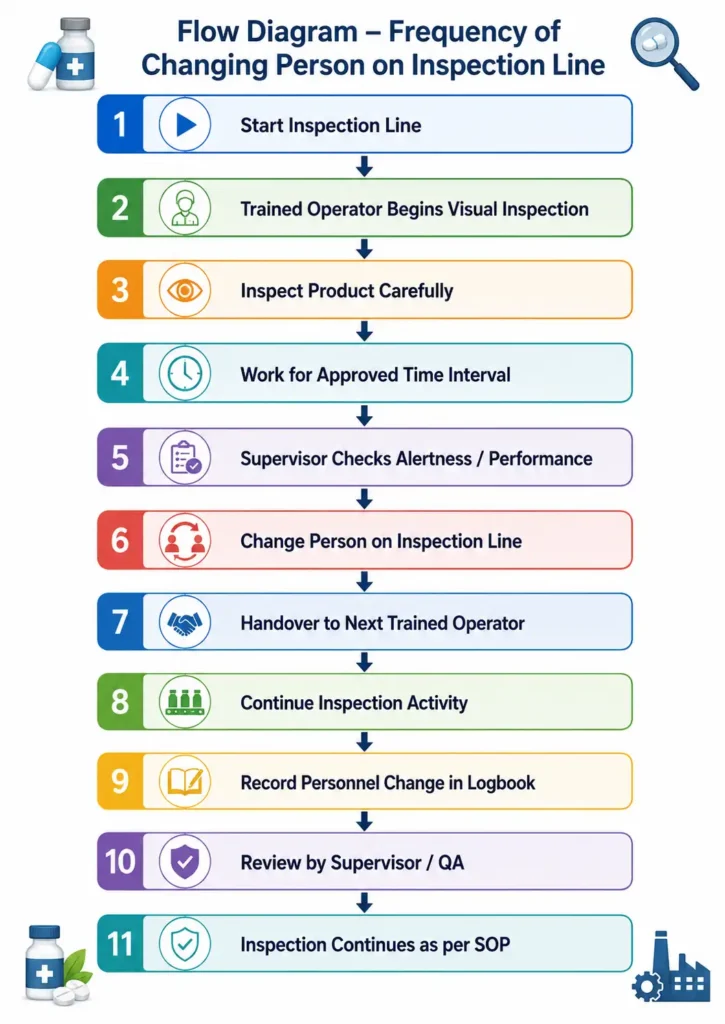
IMPACT ASSESSMENT
This SOP has an impact on the quality of pharmaceutical inspection activities. Changing the person on the inspection line at a defined frequency helps reduce tiredness, eye strain, loss of concentration, and human error. A fresh operator can identify defective, damaged, or wrongly packed products more effectively. This helps prevent unacceptable products from moving to the next stage or reaching the market. Regular personnel rotation also supports consistent inspection performance throughout the shift. The procedure ensures that only trained personnel perform the activity and that every change is properly recorded and supervised. Proper handover between operators reduces confusion and maintains continuity of inspection. If this SOP is not followed, the chances of missing defects may increase, which can affect product quality and patient safety. Therefore, following the approved rotation frequency improves inspection reliability, supports GMP compliance, reduces risk, and helps maintain the quality and safety of the finished pharmaceutical product.
Frequently Asked Questions (FAQs) – Frequency of Changing Person on Inspection Line
1. Why should a person be changed on the inspection line?
Answer: Personnel should be changed at defined intervals to reduce tiredness, eye strain, and loss of concentration during continuous inspection.
2. What is the main purpose of personnel rotation?
Answer: The main purpose is to maintain alertness and ensure that defective or damaged products are identified correctly.
3. Who should work on the inspection line?
Answer: Only trained and qualified personnel should perform visual inspection activities.
4. What should be done when one operator is replaced?
Answer: Proper handover should be given to the next trained operator so that inspection continues without interruption.
5. Why should personnel changes be recorded?
Answer: Recording the change provides traceability and confirms that the approved rotation procedure was followed.
6. What can happen if personnel are not changed at the required frequency?
Answer: The operator may become tired or lose concentration, increasing the possibility of missing defective products.