






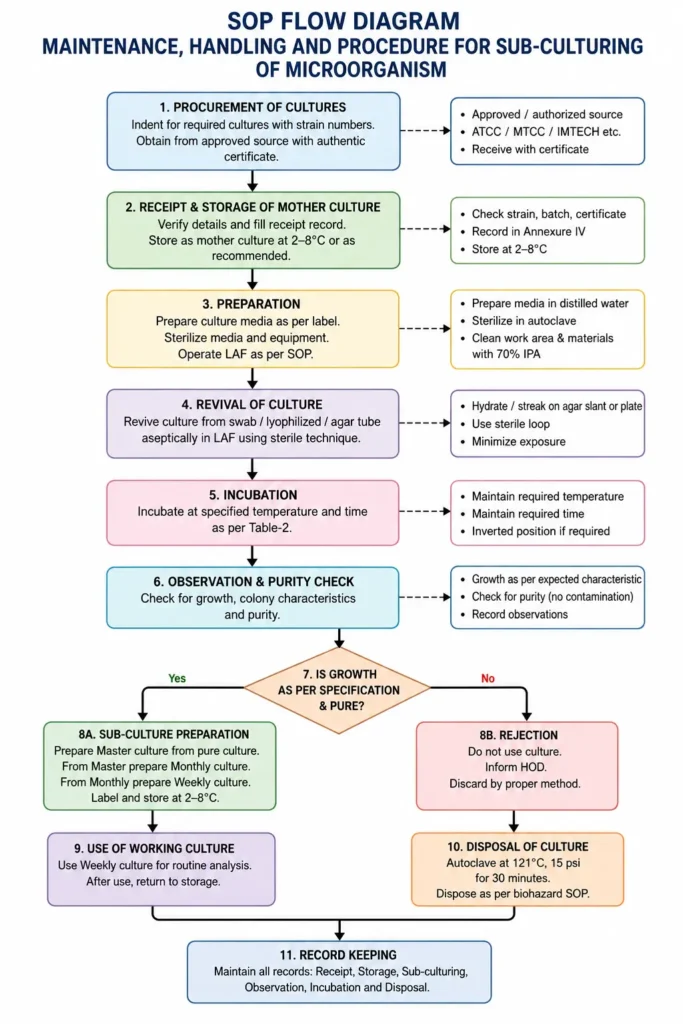
This SOP explains in simple terms how microorganisms are safely received, stored, grown, checked, used and finally destroyed in a microbiology laboratory. Microbial cultures should be purchased from an approved and reliable source with proper identification and certificates. After receipt, the original or mother culture is generally stored at 2–8°C. Sterile culture media are prepared, containers are cleaned with 70% IPA, and all culture transfer activities are performed carefully under Laminar Air Flow (LAF) using a sterilized inoculating loop. The cultures are incubated under suitable temperature and time conditions and checked for proper growth, appearance and purity. Pure cultures are further prepared as master, monthly and weekly cultures, properly labelled and stored at 2–8°C. Any contaminated or abnormal culture is rejected. After use, cultures are safely destroyed by autoclaving at 121°C, 15 psi for 30 minutes, and all activities are properly recorded.
IMPACT ASSESSMENT
This SOP has a positive impact on the safety, reliability and consistency of microbiology laboratory work. It ensures that microorganisms are received from approved sources, stored correctly, handled carefully and sub-cultured using clean and controlled practices. By following proper incubation, labelling, purity checking and storage steps, the chances of contamination, mix-up or incorrect results are greatly reduced. The use of master, monthly and weekly cultures also helps maintain the quality and traceability of microbial strains during routine testing. Clear precautions for sterilizing loops, minimizing exposure and working under LAF protect both the culture and the laboratory environment. Proper rejection of abnormal or contaminated cultures prevents unreliable test results. Safe destruction of used cultures by autoclaving reduces biohazard risk. Overall, this SOP helps the laboratory produce dependable results, maintain good documentation, protect personnel, and support product quality and patient safety through controlled microbiological practices and improves compliance with established laboratory procedures.