






1. Introduction – SOP for Job Responsibilities:
The Standard Operating Procedure (SOP) for Job Responsibilities is established to clearly define and document the duties, responsibilities, and accountability of personnel working within different departments of a pharmaceutical organization. The SOP is applicable to all responsible personnel and supports an effective Quality Assurance and manufacturing system in accordance with current Good Manufacturing Practices (cGMP). Department Heads are responsible for execution of the procedure, while the Head of QA/QC ensures its effective implementation. Clearly assigned job responsibilities help ensure that activities related to warehouse operations, production, engineering and utilities, quality control, quality assurance, personnel administration, training, qualification, validation, calibration, deviation handling, change control, product quality review, and documentation are performed by appropriately responsible personnel. The SOP also provides a formal Job Responsibility Format for documenting an employee’s qualification, experience, designation, department, assigned responsibilities, acceptance, authorization, and alternate responsibility during absence.
Skip to PDF content2. Flow Diagram – Job Responsibilities:
The flow diagram describes the systematic process for defining, documenting, approving, implementing, and maintaining job responsibilities within the organization. The process begins with identifying the organizational structure, including relevant departments and positions. Specific duties and responsibilities are then defined for each role so that personnel understand their assigned activities and accountability. These responsibilities are documented using the approved Job Responsibility Format (Annexure-I), which records details such as qualification, experience, designation, department, assigned responsibilities, acceptance, and authorization.
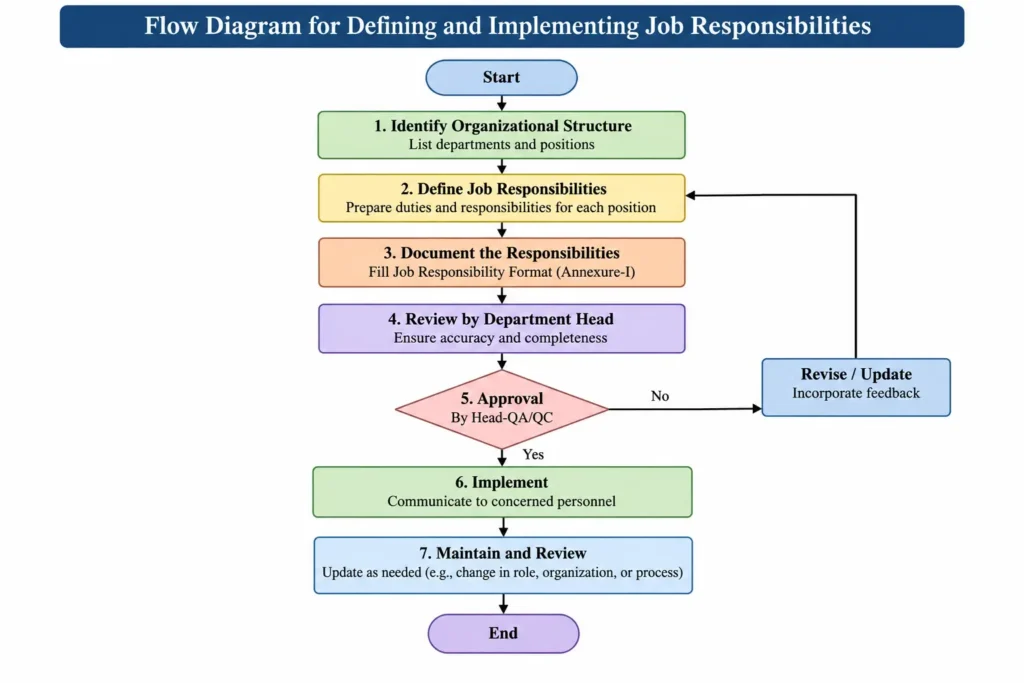
The documented responsibilities are reviewed by the respective Department Head to ensure accuracy and completeness and are subsequently approved by the authorized QA/QC personnel. If corrections are required, the document is revised before approval. Once approved, responsibilities are communicated to the concerned personnel and implemented. The responsibilities should be maintained and reviewed whenever there are changes in personnel, organizational structure, processes, or departmental activities to ensure continued compliance with cGMP requirements.
3. Benefits of Following SOP – Job Responsibilities:
Following the SOP for Job Responsibilities ensures that duties and accountability are clearly defined for personnel working across different departments of the pharmaceutical organization. The procedure supports a structured Quality Assurance and manufacturing system by assigning defined responsibilities to departments and personnel in accordance with cGMP requirements.
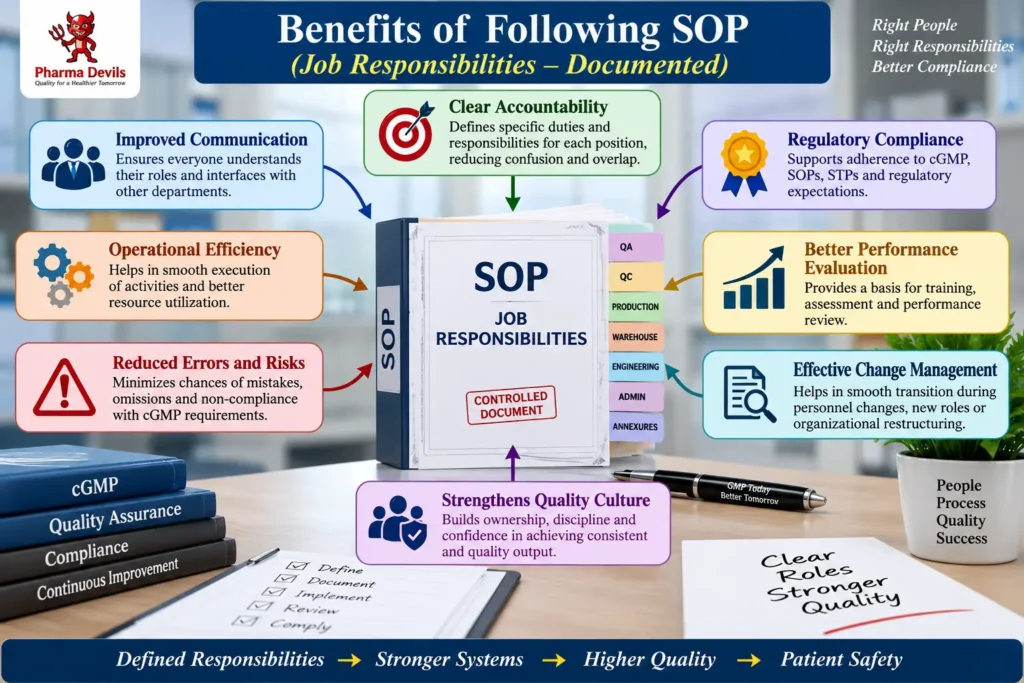
Clear allocation of responsibilities helps departments perform their assigned activities in a controlled and consistent manner. Production personnel are responsible for activities such as following approved instructions, reviewing batch records, reporting deviations, maintaining cleanliness, calibration, maintenance, validation, and qualification. Engineering, Quality Control, and Quality Assurance are likewise assigned specific responsibilities covering utilities, equipment qualification, testing, material release, investigations, document approval, self-inspection, validation, change control, product quality review, and complaint handling. Therefore, implementation of this SOP promotes clear accountability, effective coordination, proper documentation, reduced role ambiguity, systematic execution of GMP activities, and better overall compliance with the pharmaceutical quality system.
4. Brainstorming for SOP Failure – Job Responsibilities:
Brainstorming for failure of the SOP for Job Responsibilities helps identify potential causes that may lead to unclear accountability, improper execution of duties, and weaknesses in the pharmaceutical quality system. The SOP requires Department Heads to execute assigned responsibilities and the Head of QA/QC to ensure effective implementation. It also specifies that each department should have clearly defined responsibilities to support manufacturing activities in compliance with cGMP requirements.
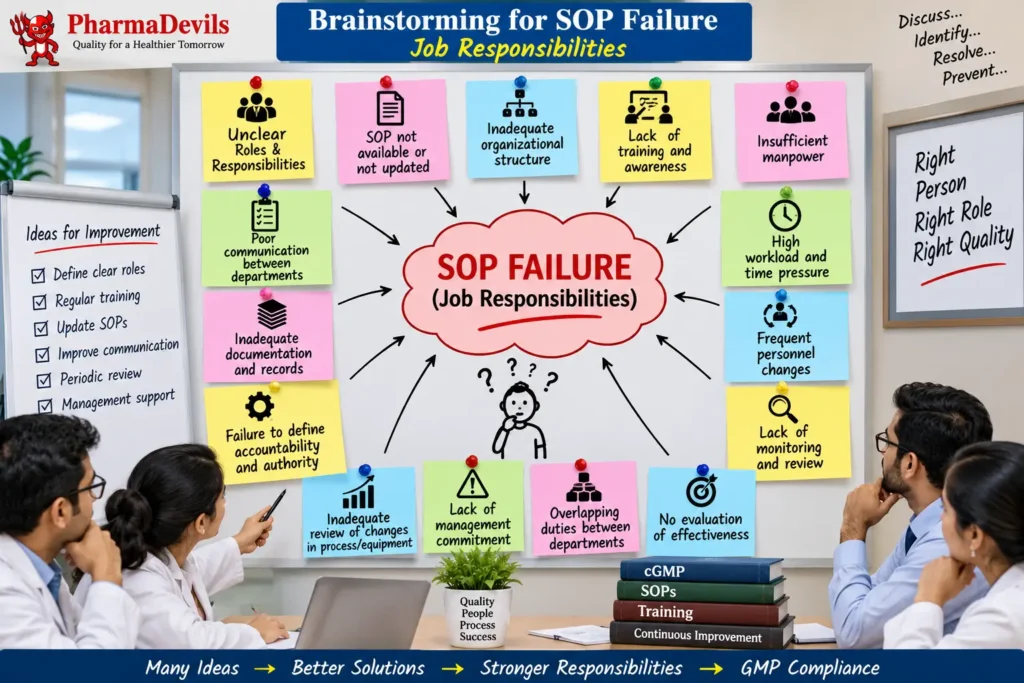
Potential causes of SOP failure may include unclear roles and responsibilities, inadequate communication between departments, insufficient training, outdated or unavailable SOPs, overlapping duties, inadequate documentation, insufficient manpower, high workload, frequent personnel changes, weak management commitment, poor monitoring, and lack of periodic review. These factors can result in tasks being missed, duplicated, delayed, or performed without appropriate authorization. A structured brainstorming exercise helps the organization identify these weaknesses, prioritize corrective actions, strengthen accountability, improve communication, and maintain effective implementation of documented job responsibilities throughout all departments.
5. 5-Why Analysis for SOP Failure – Job Responsibilities:
The 5-Why Analysis for SOP Failure – Job Responsibilities is used to systematically identify the underlying cause of ineffective implementation of defined roles and responsibilities. The analysis begins with the problem that employees may not consistently follow their assigned responsibilities. This can occur because personnel are not fully aware of their documented duties. Further investigation may identify inadequate training and communication regarding job responsibilities as a contributing factor. The next level may reveal that the SOP is not properly circulated, explained, reinforced, or periodically reviewed.
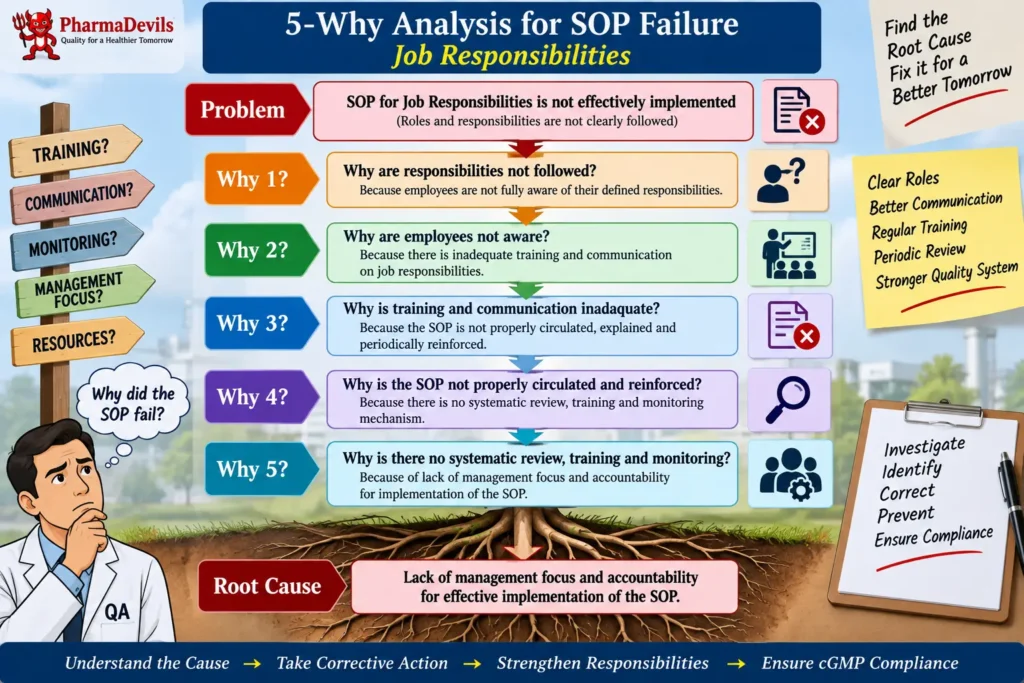
The analysis can then identify weaknesses in the system for training, monitoring, and review, ultimately leading to a potential root cause such as inadequate management oversight and accountability for effective SOP implementation. The SOP itself requires Department Heads to execute the procedure and the Head of QA/QC to ensure its effective implementation. Using the 5-Why approach helps identify root causes, strengthen training and communication, improve accountability, and support consistent implementation of job responsibilities in compliance with cGMP requirements.
6. Fishbone Analysis for SOP Failure – Job Responsibilities:
The Fishbone (Ishikawa) Analysis for SOP Failure – Job Responsibilities helps identify multiple contributing causes that can result in ineffective execution of documented duties and responsibilities. The analysis groups potential causes under major categories such as Man, Machine, Method, Material, Measurement, and Environment. Under Man, possible causes include inadequate awareness, insufficient training, frequent personnel changes, manpower shortage, and weak accountability. Machine or system-related factors may include poor SOP accessibility, outdated document formats, or inadequate document-control systems. Method-related causes can include unclear responsibilities, overlapping duties, lack of periodic review, and inconsistent implementation. Material or resource factors may involve inadequate training materials or unavailable updated SOPs. Measurement-related causes include insufficient monitoring, weak internal audits, absence of performance review, or inadequate tracking of deviations. Environmental factors may include high workload, organizational changes, poor communication, and time pressure.
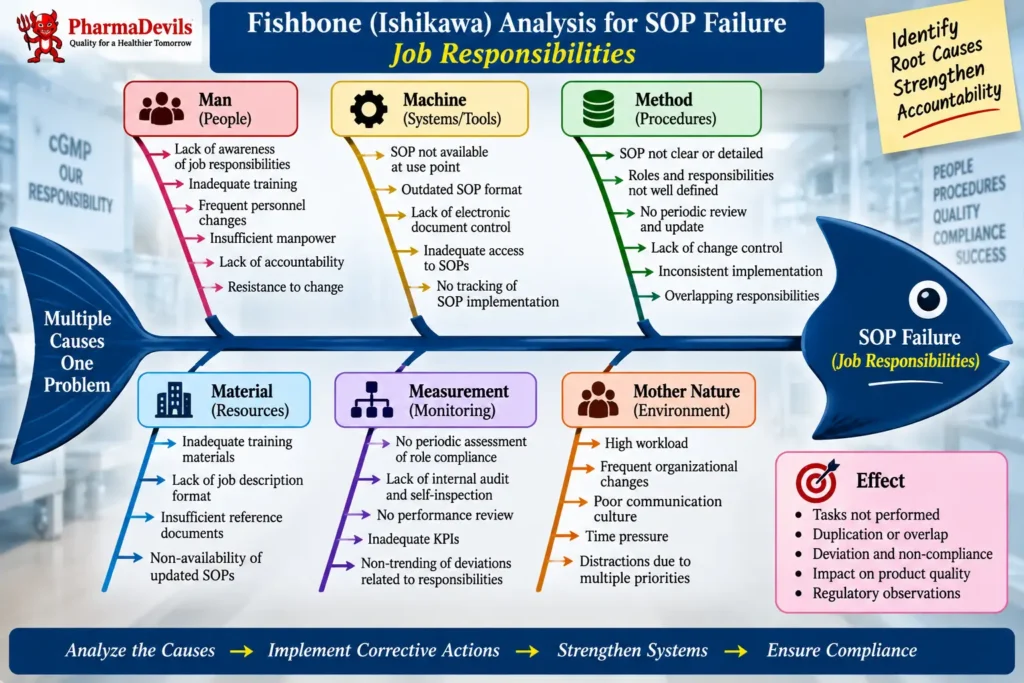
The SOP requires responsibilities to be clearly defined for departments and personnel to support cGMP-compliant manufacturing activities. Fishbone analysis therefore helps systematically identify potential causes, support root-cause investigation, and strengthen accountability and SOP implementation.
7. Fault Tree Analysis for SOP Failure – Job Responsibilities:
The Fault Tree Analysis (FTA) for SOP Failure – Job Responsibilities systematically identifies the events and underlying causes that may lead to ineffective implementation of assigned duties. The top event is failure of the Job Responsibilities SOP, where defined roles are not consistently understood, performed, or monitored. The analysis branches into major contributing events such as responsibilities not being performed, incorrect or overlapping duties, unavailable or outdated SOPs, and inadequate monitoring and accountability.
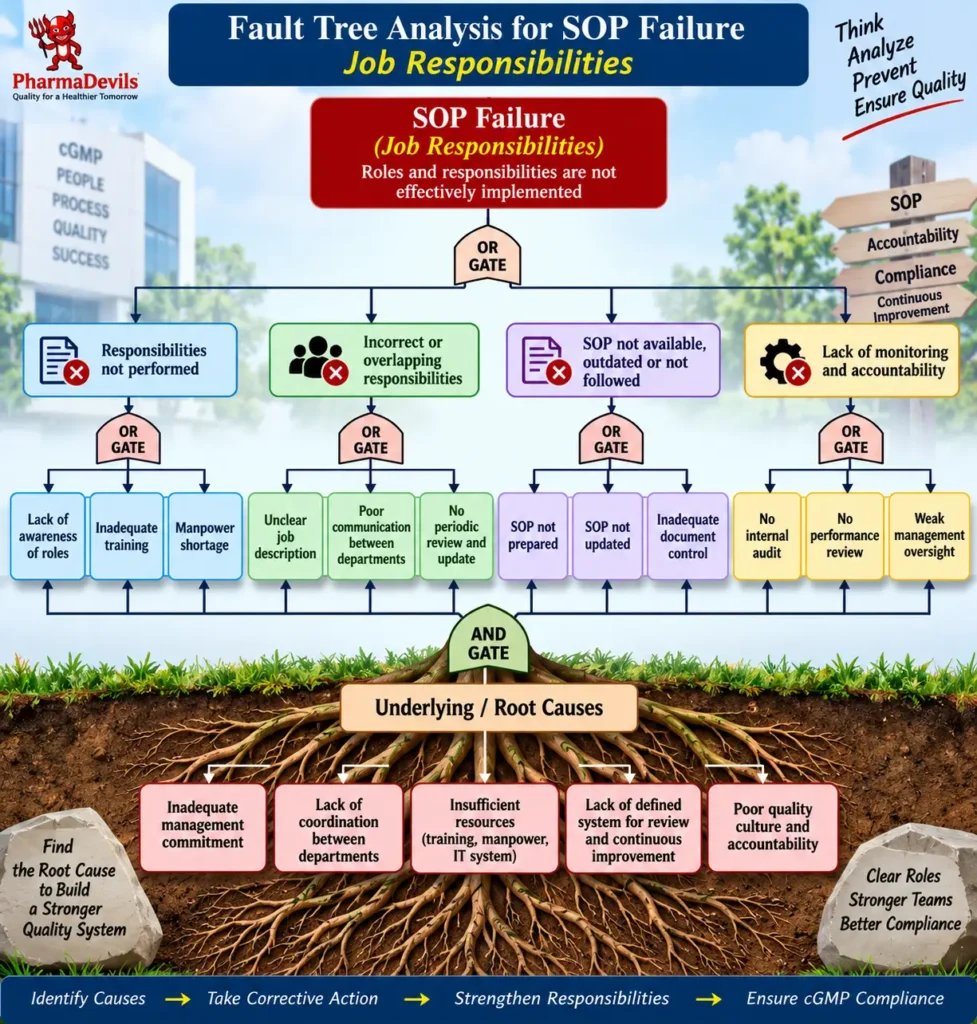
Possible contributing causes include lack of awareness, inadequate training, manpower shortages, unclear job descriptions, poor interdepartmental communication, insufficient periodic review, weak document control, absence of performance monitoring, and inadequate management oversight. The SOP requires Department Heads to execute the procedure and the Head of QA/QC to ensure its effective implementation. FTA helps trace these failures to their potential root causes so that appropriate corrective and preventive actions can strengthen accountability, communication, training, documentation control, and overall cGMP compliance.
8. Impact Assessment – Job Responsibilities:
The Impact Assessment for SOP Failure – Job Responsibilities evaluates the potential consequences when defined duties and responsibilities are not properly communicated, documented, implemented, or monitored. Failure of the SOP can result in unclear accountability, omission or duplication of tasks, communication gaps between departments, delays in batch or document review, and poor coordination during personnel absence or role changes. Such failures may also create training and awareness gaps, reduced operational efficiency, increased investigation workload, weak quality culture, and a higher risk of deviations or regulatory observations. Where critical responsibilities are missed or incorrectly assigned, there may also be an indirect impact on product quality and overall GMP compliance.
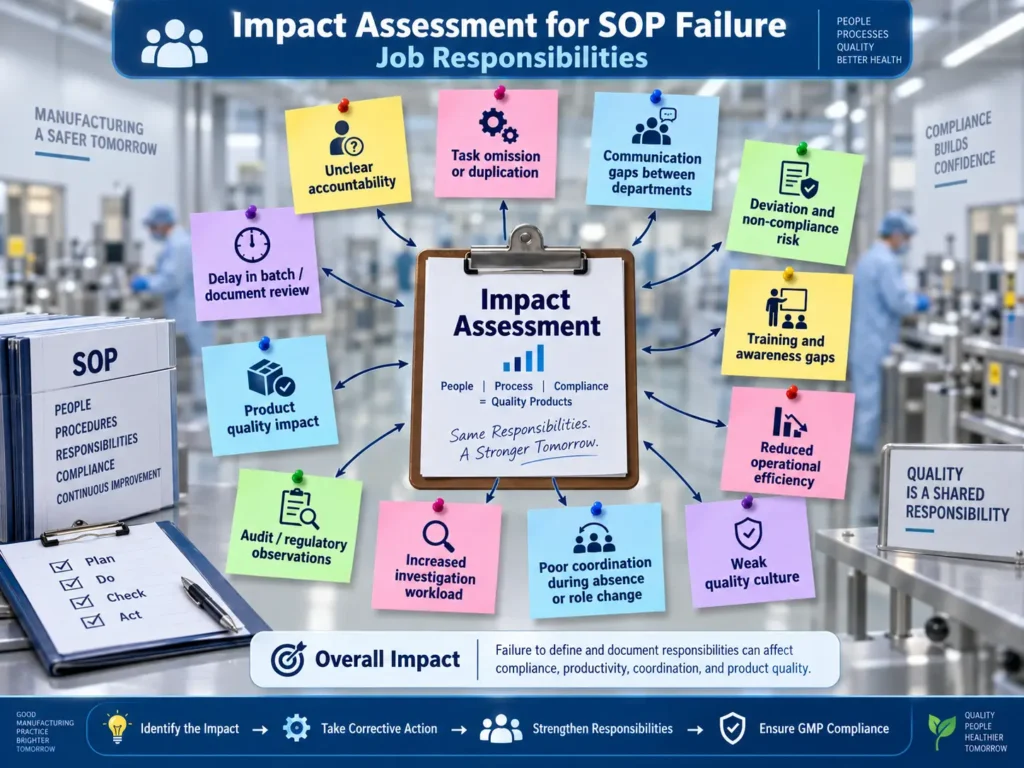
The SOP requires clearly defined departmental responsibilities to support an effective Quality Assurance and manufacturing system in accordance with cGMP requirements. Therefore, effective implementation, periodic review, appropriate training, and clear accountability are important controls for minimizing these risks and maintaining a consistent pharmaceutical quality system.
Questions & Answers – SOP for Job Responsibilities:
- Q: What is the objective of the SOP for Job Responsibilities?
A: The objective is to establish a documented procedure for defining the job responsibilities of individuals within the organization. - Q: What is the scope of this SOP?
A: The SOP is applicable to all responsible personnel of the company. - Q: Who is responsible for execution of this SOP?
A: All Department Heads are responsible for execution of the SOP. - Q: Who is responsible for effective implementation of the SOP?
A: The Head of QA/QC is responsible for ensuring its effective implementation. - Q: Why should responsibilities be clearly defined?
A: Defined responsibilities help departments perform their assigned tasks properly and support manufacturing of drug products in accordance with cGMP requirements. - Q: What are the major responsibilities of the Warehouse department?
A: Warehouse responsibilities include receipt, identification, quarantine, storage and handling of materials and products, environmental monitoring, deviation reporting, housekeeping, and inventory control. - Q: What are important responsibilities of the Production department?
A: Production is responsible for following approved manufacturing instructions, reviewing batch records, reporting deviations, maintaining cleanliness, ensuring calibration and maintenance, and supporting validation and qualification activities. - Q: What are the responsibilities of Engineering & Utility?
A: Engineering & Utility handles preventive and breakdown maintenance, equipment changes, calibration, operation of utilities such as water, HVAC, boiler and compressed air, and execution of equipment IQ and OQ. - Q: What are the main responsibilities of Quality Control?
A: QC responsibilities include sampling and testing, release or rejection of materials and products, OOS investigation, preparation of reagents, calibration, stability studies, method validation, and control of reference and working standards. - Q: What are the main responsibilities of Quality Assurance?
A: QA ensures maintenance of quality systems, reviews batch records, releases finished products, approves SOPs and specifications, investigates critical deviations, conducts self-inspection, reviews validation activities, performs product quality review, and handles market complaints and recalls. - Q: What responsibilities are assigned to Personnel and Administration?
A: These include procedures for personnel hygiene, medical checkups and housekeeping, employee welfare, coordination of training, and ensuring adequate qualified and experienced personnel are available. - Q: What information is included in the Job Responsibility Format?
A: The format records the employee’s name, qualification, experience, designation, department, date of joining, responsibilities, assigned-by details, acceptance, alternate responsibility during absence, authorization, signature, and date. - Q: Why is documentation of job responsibilities important?
A: It provides clear evidence of assigned duties, authorization and accountability and helps prevent ambiguity or overlapping responsibilities. - Q: What may happen if job responsibilities are not clearly defined?
A: Tasks may be omitted, duplicated, delayed, or performed without proper accountability, which can contribute to deviations and weaknesses in GMP compliance. - Q: When should job responsibilities be reviewed?
A: They should be reviewed whenever there are changes in personnel, designation, departmental activities, organizational structure, processes, or assigned responsibilities to ensure they remain current and appropriate.
Reference Guideline – SOP for Job Responsibilities:
1. In-House Procedure / Company Quality Management System – The SOP identifies its formal reference as “In House.”
2. Annexure-I: Job Responsibility Format – Used for documenting personnel details, assigned responsibilities, acceptance, alternate responsibility during absence, and authorization.
3. Current Good Manufacturing Practices (cGMP) – The SOP repeatedly requires departmental responsibilities and pharmaceutical manufacturing activities to be performed in accordance with cGMP requirements.