







1. Introduction – Batch Packing Record for Aceclofenac & Paracetamol Tablets:
The Batch Packing Record (BPR) for Aceclofenac & Paracetamol Tablets is a controlled pharmaceutical document designed to provide complete and traceable documentation of all activities performed during the packing of the finished tablets. The product contains Aceclofenac IP 100 mg and Paracetamol IP 325 mg per film-coated tablet, along with suitable excipients and Sunset Yellow FCF colour. The product is required to be protected from light and moisture and stored at a temperature not exceeding 30°C. The BPR provides systematic records for the issue and dispensing of packaging materials, overprinting details, line clearance, machine setup, packing operations, and in-process quality checks. It also includes monitoring of sealing temperature, forming temperature, machine speed, leak testing, environmental conditions, carton filling, shipper filling, and verification of printed information. Additionally, the document incorporates packaging material reconciliation, rejection analysis, destruction records, yield calculations, finished-product transfer, and approval by authorized Production and Quality Assurance personnel. These documented controls help maintain product identity, packaging integrity, traceability, and consistency throughout the packing process while minimizing the risks of mix-ups, labeling errors, and packaging defects.
Skip to PDF content2. Flow Diagram – Batch Packing of Aceclofenac & Paracetamol Tablets:
The flow diagram represents the systematic sequence followed during the packing of Aceclofenac & Paracetamol Tablets. The activity begins with the receipt of inspected tablets from the manufacturing section, followed by preparation of the packing schedule and dispensing of required packaging materials such as blister foil, Alu-Alu base foil, cartons, and shippers. Before commencement of packing, overprinting details are verified and line clearance is performed for both the overprinting area and packing line to ensure the absence of previous product or material.
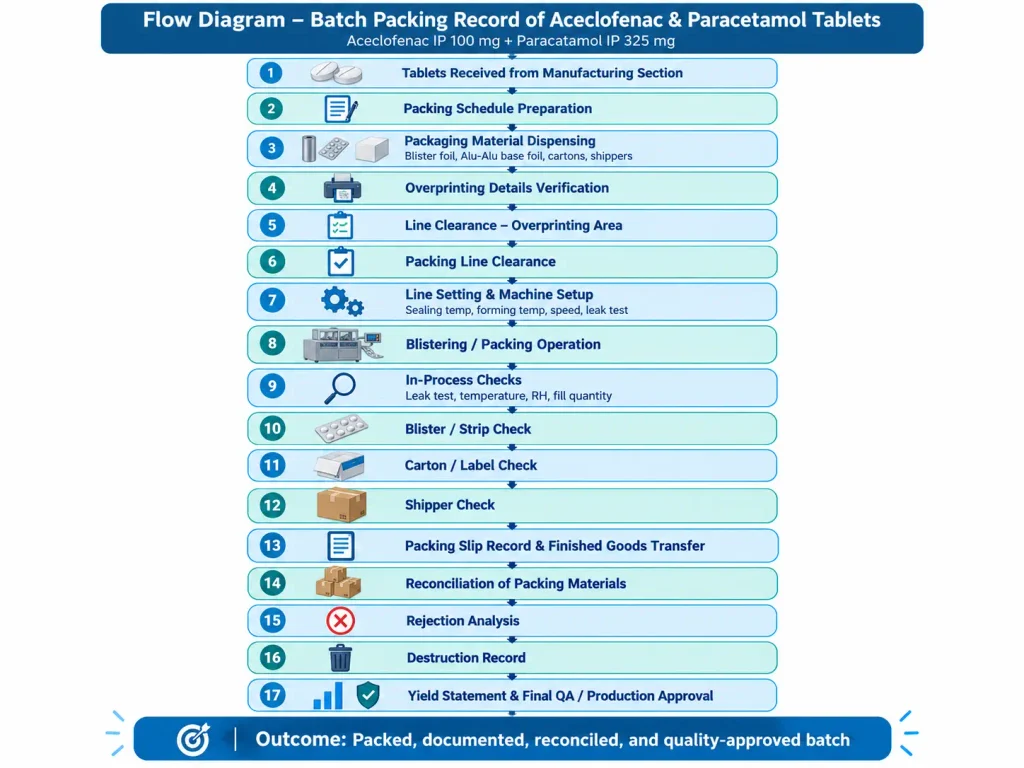
The packing line is then set with appropriate parameters such as sealing temperature, forming temperature, machine speed, leak testing, temperature, relative humidity, and filling quantities. During blistering or strip packing, periodic in-process checks are performed to verify packaging integrity and fill quantities. Subsequent controls include verification of blisters, cartons, labels, and shippers. Finished packs are transferred through packing slip records. Finally, packaging materials are reconciled, rejects are analyzed, rejected materials are destroyed, yield is calculated, and the completed batch is verified and released by authorized Production and Quality Assurance personnel.
3. Critical Process Parameters (CPP) and Critical Quality Attributes (CQA):
The infographic summarizes the important Critical Process Parameters (CPPs) and Critical Quality Attributes (CQAs) associated with the packing process of Aceclofenac & Paracetamol Tablets. The Batch Packing Record requires line setting and monitoring of key operational parameters such as sealing roller temperature, forming roller temperature, machine speed, leak testing, environmental temperature, relative humidity, carton fill quantity, and shipper fill quantity. These parameters must be controlled according to approved procedures and established operating ranges to maintain consistent packaging performance.
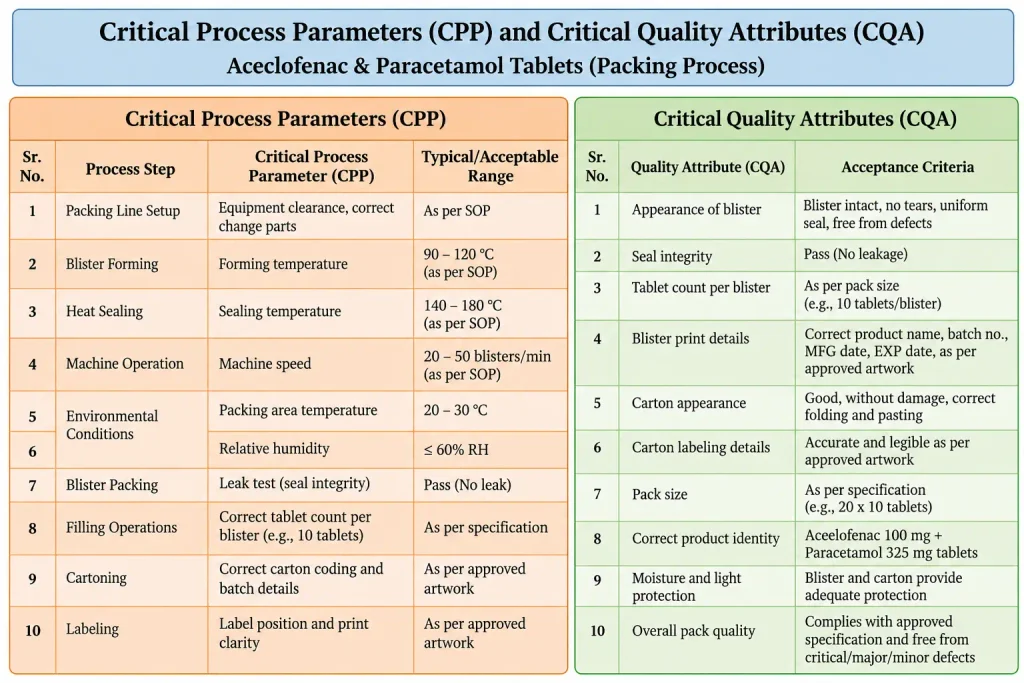
Important CQAs include proper blister or strip integrity, correct tablet count, accurate overprinting details, acceptable carton and shipper condition, correct labeling information, and overall pack quality. The record also requires periodic leak testing and verification of packaging information such as batch number, manufacturing date, expiry date, and price. Together, CPPs and CQAs provide a structured control strategy for the packing operation. Effective control of process parameters helps prevent leakage, improper sealing, printing errors, shortages, mix-ups, and damaged packaging. Monitoring these attributes supports product identity, traceability, packaging integrity, and compliance throughout the packing process until final reconciliation and QA approval.