







1. Introduction – SOP for Approval and Authorization of Master Documents:
The SOP for Approval and Authorization of Master Documents establishes a systematic procedure for preparing, reviewing, approving, and authorizing controlled master documents used within the pharmaceutical quality system. Its primary objective is to ensure that master documents are formally evaluated and authorized by designated responsible personnel before implementation. The procedure applies to master documents generated by departments including Production, Warehouse, Maintenance, Administration, Quality Control, and Quality Assurance. The SOP defines specific responsibilities for the preparation, checking, review, approval, and authorization of documents such as SOPs, validation protocols and reports, Site Master Files, master batch records, specifications, qualification documents, and cleaning validation documents. It also requires withdrawal of obsolete controlled copies before issuing current versions, helping maintain proper document control and preventing unintended use of superseded documents.
Skip to PDF content2. Flow Diagram – Approval and Authorization of Master Document:
The flow diagram illustrates the systematic process for preparation, review, approval, authorization, and controlled issuance of master documents within the pharmaceutical quality system. The process begins with preparation of the document by the designated person or user department using the applicable format and required information. The document is then reviewed by the specified responsible personnel to verify accuracy, completeness, compliance, and departmental requirements. Depending on the document type, approval is performed by the designated department head, Head QA/QC, or authorized designee. Certain master documents may also require final authorization by senior management, such as the Plant Head or President.
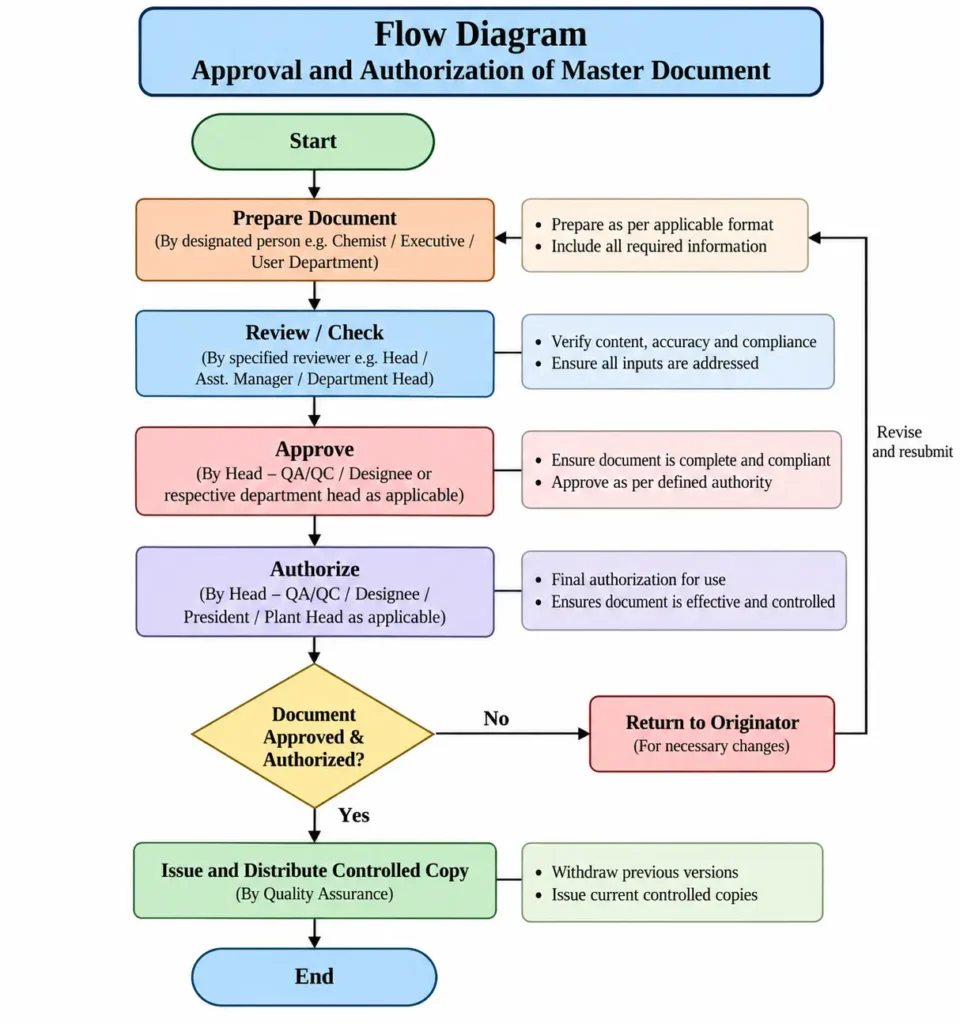
If deficiencies are identified, the document is returned to the originator for necessary correction and resubmission. After successful approval and authorization, Quality Assurance controls the document issuance and distribution. Previous controlled versions must be withdrawn before the current version is issued, thereby preventing unintended use of obsolete documents and maintaining an effective document-control system.
3. Benefits of Following SOP for Approval and Authorization of Master Documents:
Following the SOP for Approval and Authorization of Master Documents ensures that pharmaceutical documents are prepared, reviewed, approved, and authorized through a consistent and controlled process. Clear assignment of responsibilities helps personnel understand who is responsible for preparation, checking, approval, and final authorization of each document type. Proper implementation of the SOP improves GMP compliance, document accuracy, traceability, accountability, and overall quality-system effectiveness. It minimizes the risk of unauthorized, incomplete, or incorrectly approved documents being used in routine operations. Defined approval levels also strengthen management oversight and ensure that documents are evaluated by appropriate subject-matter and quality personnel.
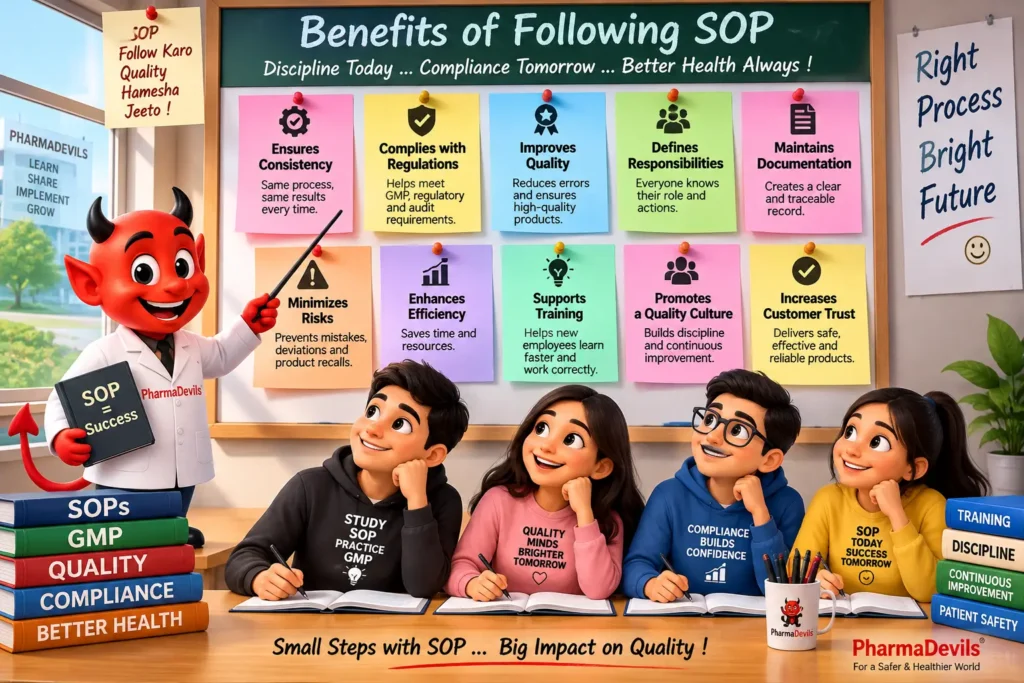
The procedure further supports effective document control by requiring withdrawal of previous controlled versions before issuance of the current version. This reduces the possibility of obsolete documents being used and helps maintain current, reliable, and auditable documentation throughout the organization.
4. Brainstorming for SOP Failure-Approval and Authorization of Master Documents:
The brainstorming exercise identifies potential causes that may lead to failure in effectively following the SOP for Approval and Authorization of Master Documents. Key contributing factors include inadequate training, unclear understanding of responsibilities, poor communication between departments, excessive workload or time pressure, insufficient supervision, documentation errors, human mistakes, delayed periodic review, and weak accountability. These issues may result in documents being prepared, reviewed, approved, or authorized by inappropriate personnel or being released without completing the required verification steps.
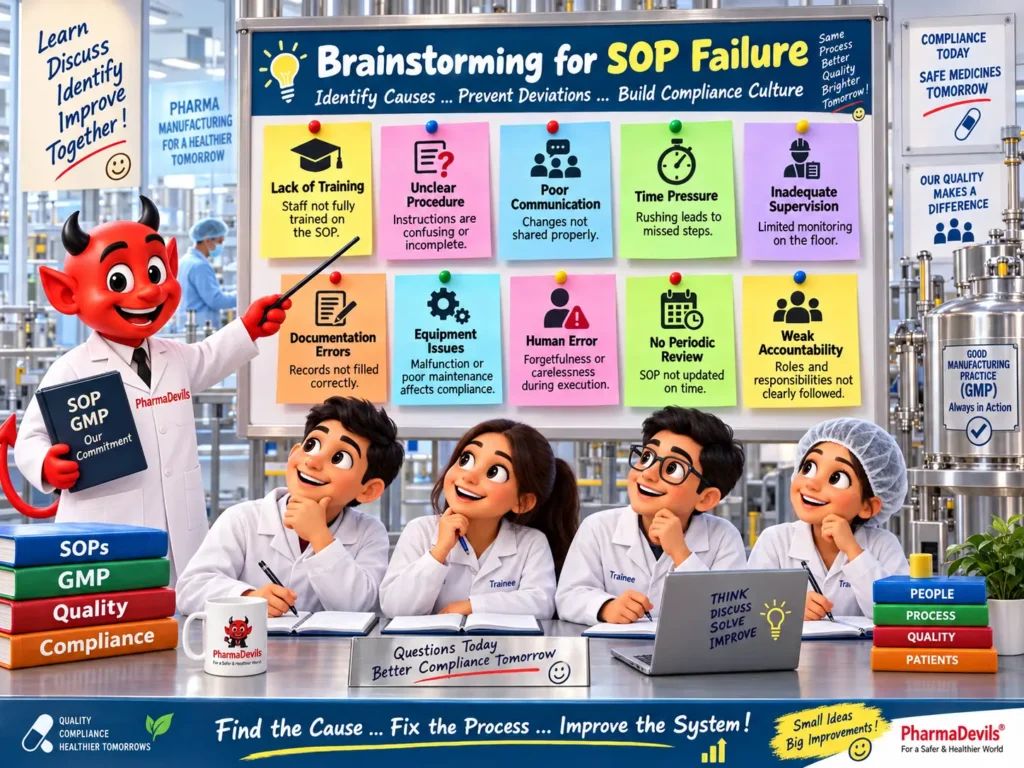
The SOP assigns defined responsibilities for document preparation, checking, approval, and authorization, making role clarity and coordination essential for compliance. Brainstorming also highlights the risk of obsolete documents remaining in circulation when previous controlled copies are not withdrawn before current versions are issued. Identifying these potential causes helps establish focused CAPA, improve training, strengthen document control, and prevent recurrence of SOP failures.
5. 5-Why Analysis for SOP Failure – Approval and Authorization of Master Documents:
The 5-Why Analysis identifies the underlying reasons for failure to follow the SOP for Approval and Authorization of Master Documents. The problem begins when documents are not reviewed, approved, or authorized according to the defined process and responsibility matrix. This may occur because responsible personnel do not clearly understand or follow their assigned roles for preparation, checking, approval, and authorization. Further analysis may reveal inadequate training, poor communication, insufficient supervision, and weak periodic monitoring of document-control practices. These weaknesses can allow unauthorized approvals, incomplete review, delayed corrections, or inappropriate document issuance. The deeper root cause may therefore be an ineffective document-control culture with insufficient accountability and management oversight.
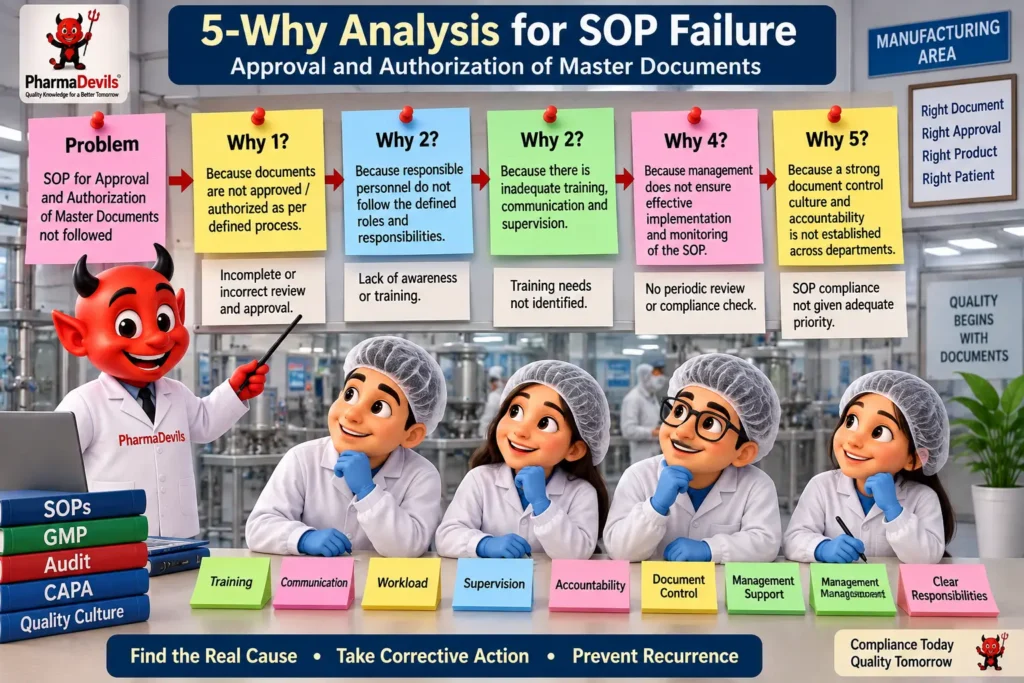
The analysis also emphasizes the importance of withdrawing obsolete controlled copies before issuing current versions, as required by the SOP. Addressing these root causes through training, clear responsibilities, compliance checks, and management review can reduce recurrence and strengthen the pharmaceutical quality system.
6. Fishbone Analysis for SOP Failure – Approval and Authorization of Master Documents:
The Fishbone Analysis systematically identifies potential causes that could lead to failure in following the SOP for Approval and Authorization of Master Documents. The analysis groups possible causes under major categories such as People, Method, System, Documents, Monitoring, Environment, and Management. Typical contributing factors may include inadequate training, unclear roles and responsibilities, human error, incomplete review, complex approval processes, poor document-version control, uncontrolled copies, insufficient compliance monitoring, workload pressure, weak communication, and inadequate management oversight.
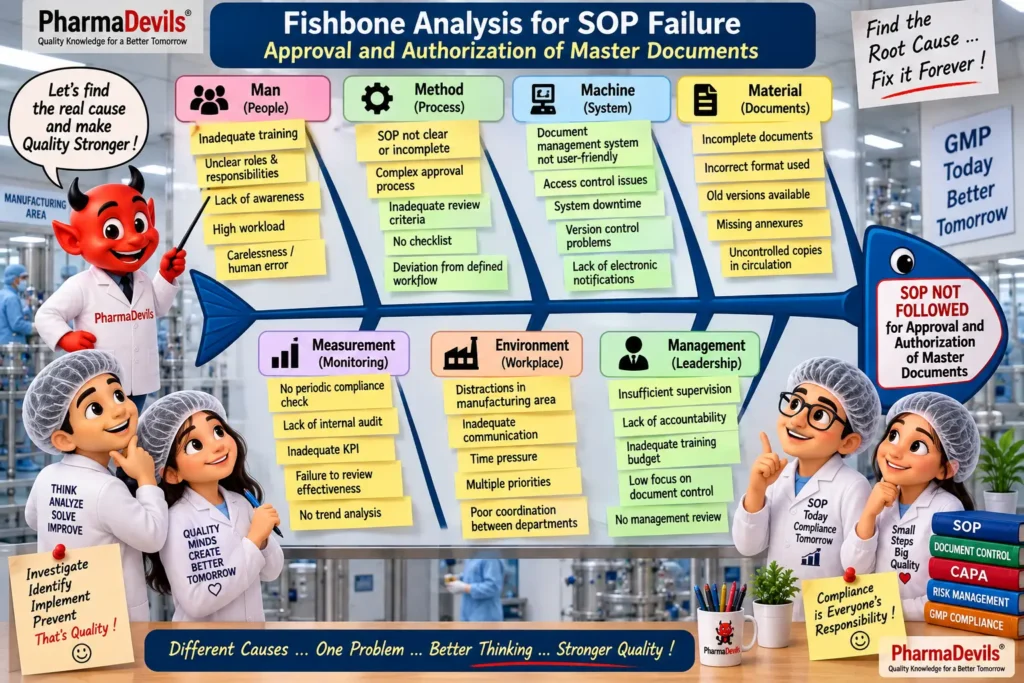
These potential causes are especially important because the SOP assigns specific personnel for preparation, checking, approval, review, and authorization of different master documents. The SOP also requires previous controlled versions to be withdrawn before current versions are issued, helping prevent obsolete documents from remaining in use. The fishbone approach helps investigation teams identify underlying systemic weaknesses, prioritize corrective actions, strengthen accountability, improve document control, and reduce recurrence of SOP-related failures.
7. Fault Tree Analysis for SOP Failure-Approval and Authorization of Master Documents:
The Fault Tree Analysis (FTA) evaluates how different failures can combine to cause non-compliance with the SOP for Approval and Authorization of Master Documents. The top event is the use or release of a master document without completing the required preparation, checking, approval, or authorization process. The SOP itself assigns defined responsibilities for these activities across SOPs, validation documents, batch records, specifications, qualification documents, and other master records.
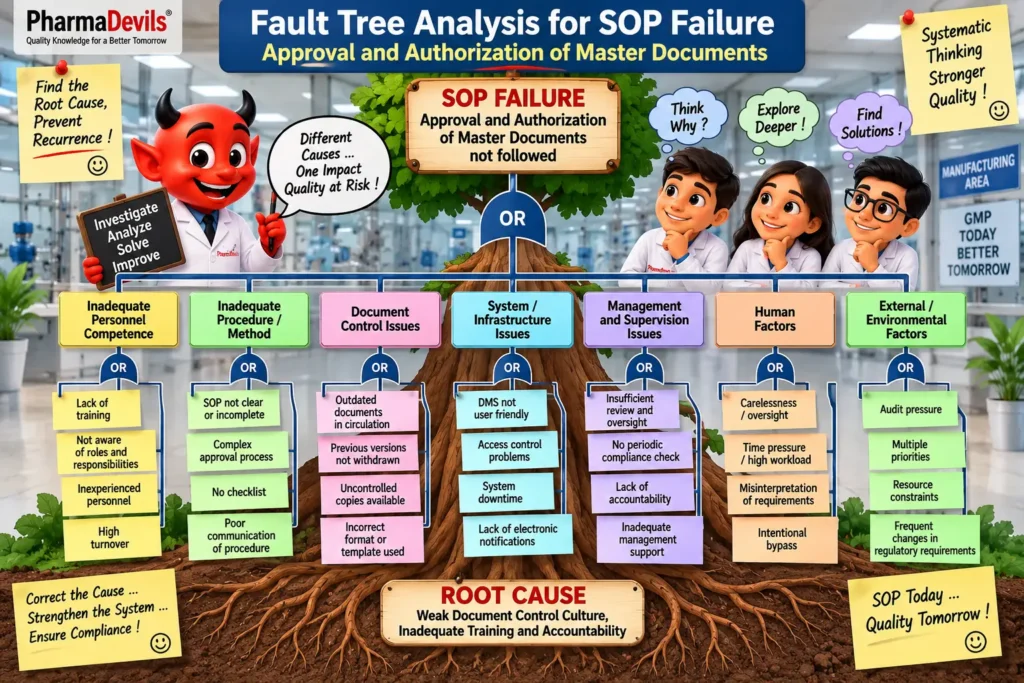
Potential branches of failure include inappropriate approval, incomplete review, obsolete documents remaining in use, unclear responsibilities, inadequate training, weak supervision, poor communication, excessive workload, and ineffective document-control practices. A particularly important control is the requirement to withdraw previous controlled versions before issuing the current version. The FTA helps trace these contributing events toward underlying systemic causes, supporting focused corrective and preventive actions, stronger accountability, improved document control, and prevention of recurrence.
8. Impact Assessment for SOP Failure: Approval and Authorization of Master Documents:
The Impact Assessment evaluates the potential consequences of failing to follow the SOP for Approval and Authorization of Master Documents. Improper preparation, review, approval, authorization, or distribution of controlled documents can affect several critical areas of the pharmaceutical quality system. Product quality may be compromised through the use of outdated or incorrect documents, potentially resulting in deviations, batch failures, rework, or recalls.
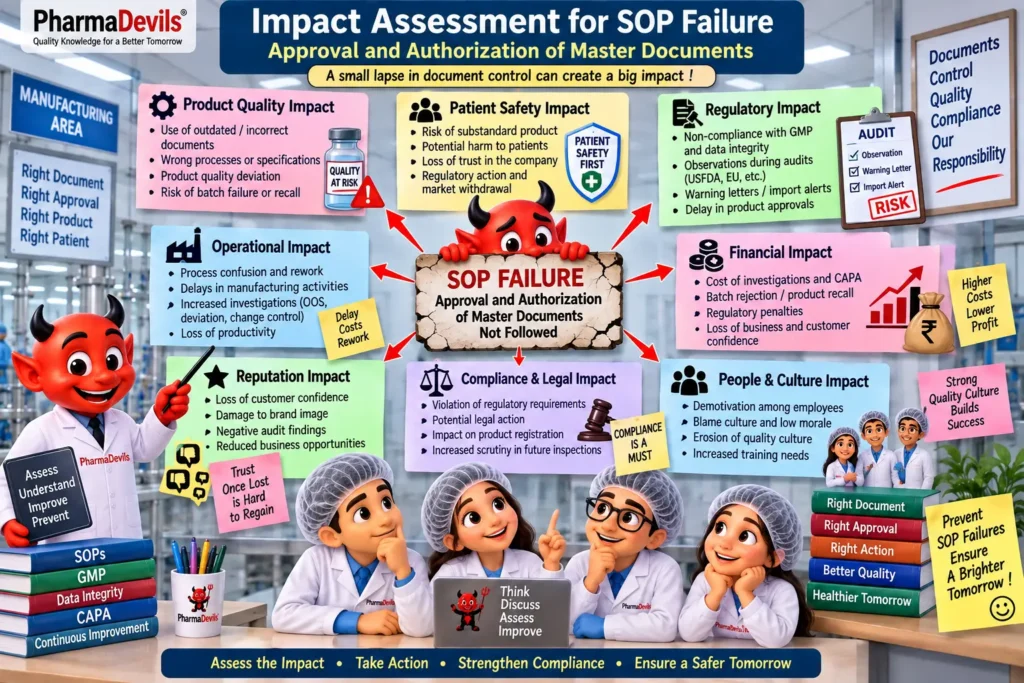
Patient safety may also be affected if incorrect procedures or specifications influence product quality. Regulatory impacts can include GMP non-compliance, audit observations, warning actions, and increased regulatory scrutiny. Operational consequences may involve process confusion, manufacturing delays, investigations, and reduced productivity. Financial impacts can arise from CAPA, rejected batches, recalls, penalties, and business losses.The assessment also highlights possible reputational, legal, and organizational impacts, including reduced customer confidence, weakened quality culture, increased training requirements, and poor employee accountability. Overall, effective document control helps protect product quality, patient safety, regulatory compliance, and business continuity.
Questions & Answers – SOP for Approval and Authorization of Master Documents
Q1. What is the objective of this SOP?
Answer: The objective is to define the procedure to be followed for the approval and authorization of master documents.
Q2. What is the scope of this SOP?
Answer: It applies to master documents used in Production, Warehouse, Maintenance, Administration, Quality Control, and Quality Assurance.
Q3. Who is responsible for effective implementation of this SOP?
Answer: The Head-QA/QC is responsible for effective implementation of the SOP.
Q4. Who approves departmental SOPs?
Answer: Departmental SOPs are approved by the Head – Quality Assurance after preparation and checking by the designated user department personnel.
Q5. Who approves Process Validation Protocols and Reports?
Answer: Process Validation Protocols and Reports are approved by the Head QA/QC or designee after review by the specified Production, Quality Control, and QA personnel.
Q6. Who authorizes the Site Master File?
Answer: The Site Master File is authorized by the President/Plant Head after approval by the Head QA/QC or designee.
Q7. Who is responsible for approval of the Approved Vendor List?
Answer: The Approved Vendor List is approved by the Head QA/QC or designee after preparation and checking by Quality Assurance personnel.
Q8. Who prepares and approves the Validation Master Plan?
Answer: The Validation Master Plan is prepared by Quality Assurance, checked by the concerned heads of Production, Quality Control, Maintenance and QA, and approved by the Head QA/QC or designee.
Q9. Who is responsible for Equipment Qualification documents such as DQ, IQ, OQ and PQ?
Answer: These qualification documents are prepared by Quality Assurance, reviewed by relevant Quality Control, Maintenance and QA personnel, and approved by the Head QA/QC or designee.
Q10. What should be done with previous controlled copies when a new version is issued?
Answer: Previous controlled copies must be withdrawn before Quality Assurance issues the current version.
Q11. What happens if the responsible approver or authorizer is absent?
Answer: The approval or authorization may be performed by the appointed nominee of the respective responsible person.
Q12. What should be done for a new master document not listed in the SOP?
Answer: The authorization responsibilities should be decided during preparation of that new master document.
Q13. Who prepares, checks, and approves Facility/Utility Qualification documents?
Answer: They are prepared by the User Department/Executive or Manager QA, checked by the Department Head, and approved by the Head QA/QC or designee.
Q14. Who approves Cleaning Validation protocols and reports?
Answer: Cleaning Validation documents are prepared by Quality Assurance, checked by Quality Control, Production and Quality Assurance, and approved by the Head – Quality Assurance and Plant Head.
Q15. How are controlled and master copies distributed according to this SOP?
Answer: Both the controlled copy and master copy are assigned to the Head of Department – Quality Assurance.
Reference Guideline – Approval and Authorization of Master Documents:
1. In-House Procedure / Internal Quality Management System Requirements – The SOP identifies its reference as “In House.”