





1. Introduction – Cetirizine Dihydrochloride, Phenylephrine Hydrochloride & Paracetamol Tablets:
Cetirizine Dihydrochloride, Phenylephrine Hydrochloride & Paracetamol Tablets are a combination pharmaceutical dosage form commonly used for the symptomatic relief of allergic conditions associated with cold, nasal congestion, headache, fever, sneezing, watery eyes, and related upper respiratory symptoms. The formulation combines three active pharmaceutical ingredients with complementary therapeutic actions to provide effective symptomatic management. Cetirizine Dihydrochloride is a second-generation antihistamine that selectively blocks peripheral histamine H1 receptors. It helps reduce allergic symptoms such as sneezing, itching, rhinorrhea, and watery eyes while generally causing less sedation than many first-generation antihistamines. Phenylephrine Hydrochloride is a sympathomimetic agent primarily acting on alpha-adrenergic receptors. Its vasoconstrictor action helps reduce swelling of the nasal mucosa and provides temporary relief from nasal and sinus congestion.Paracetamol, also known as Acetaminophen, possesses analgesic and antipyretic properties. It helps relieve mild to moderate pain, including headache and body ache, and assists in reducing elevated body temperature associated with fever. Manufacturing of these tablets requires appropriate control of dispensing, sifting, blending, granulation where applicable, lubrication, compression, and packing operations to ensure uniform distribution of active ingredients and consistent product quality. Critical parameters such as blend uniformity, tablet weight, hardness, thickness, friability, disintegration, dissolution, assay, and related substances should be monitored according to the approved Batch Manufacturing Record, specifications, validated process, and applicable Good Manufacturing Practices. Proper manufacturing and quality-control practices help ensure that the finished tablets consistently meet predefined requirements for identity, strength, purity, safety, and therapeutic performance.
Skip to PDF content2. Flow Diagram – Cetirizine Dihydrochloride, Phenylephrine Hydrochloride & Paracetamol Tablets:
The manufacturing flow for Cetirizine Dihydrochloride, Phenylephrine Hydrochloride & Paracetamol Tablets begins with the dispensing of approved raw materials according to the Batch Manufacturing Record. All active pharmaceutical ingredients and excipients are accurately weighed and verified before processing. The dispensed materials are then subjected to sifting through specified sieves to remove lumps and achieve uniform particle distribution.
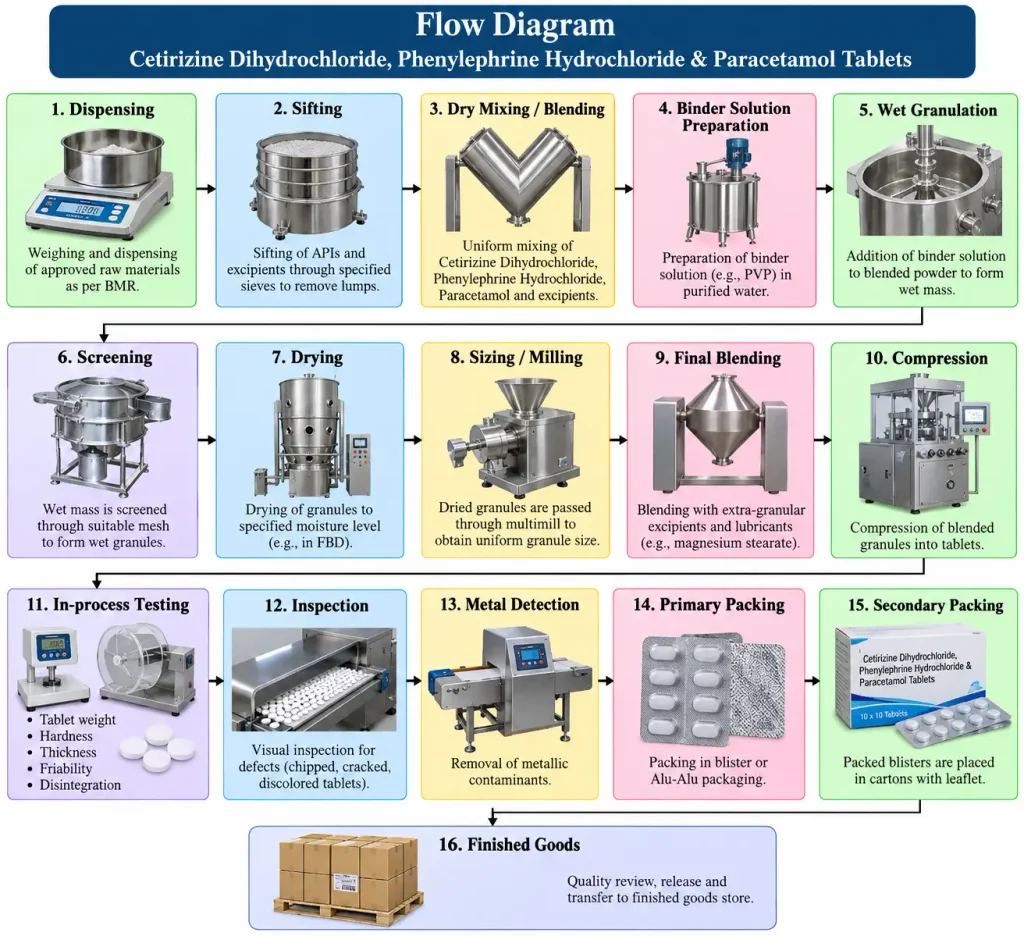
The sifted ingredients are transferred for dry mixing or blending to ensure homogeneous distribution of Cetirizine Dihydrochloride, Phenylephrine Hydrochloride, Paracetamol, and excipients. Where the approved manufacturing process requires granulation, a suitable binder solution is prepared and added during wet granulation. The wet mass is screened, dried to the specified moisture level, and passed through a multimill or suitable sizing equipment.The dried granules are blended with extra-granular materials and lubricants during final blending. The blend is then transferred for tablet compression, where parameters such as tablet weight, hardness, thickness, friability, and disintegration are monitored. After satisfactory in-process testing, tablets are subjected to inspection and metal detection, followed by approved primary packing, such as blister or Alu-Alu packing. Packed tablets are finally placed into secondary cartons, reconciled, quality reviewed, and transferred to the finished goods store after release. Add a visual step-by-step flowClarify the conditional granulation step.
3. Critical Process Parameters (CPP) and Critical Quality Attributes (CQA):
For Cetirizine Dihydrochloride, Phenylephrine Hydrochloride & Paracetamol Tablets, Critical Process Parameters (CPPs) are manufacturing variables that require appropriate monitoring and control because changes in these parameters may affect the quality of the finished product. During blending and granulation, important CPPs may include mixing time, mixer speed, order of addition, granulation time, binder concentration, and binder addition rate. During drying and milling, inlet air temperature, product temperature, drying time, end-point moisture, and milling screen size are important parameters. Compression CPPs include compression force, turret speed, dwell time, feed-frame speed, hopper level, and punch-and-die condition. Where coating is applicable, spray rate, pan speed, inlet temperature, atomizing air pressure, and coating solution parameters should be controlled.
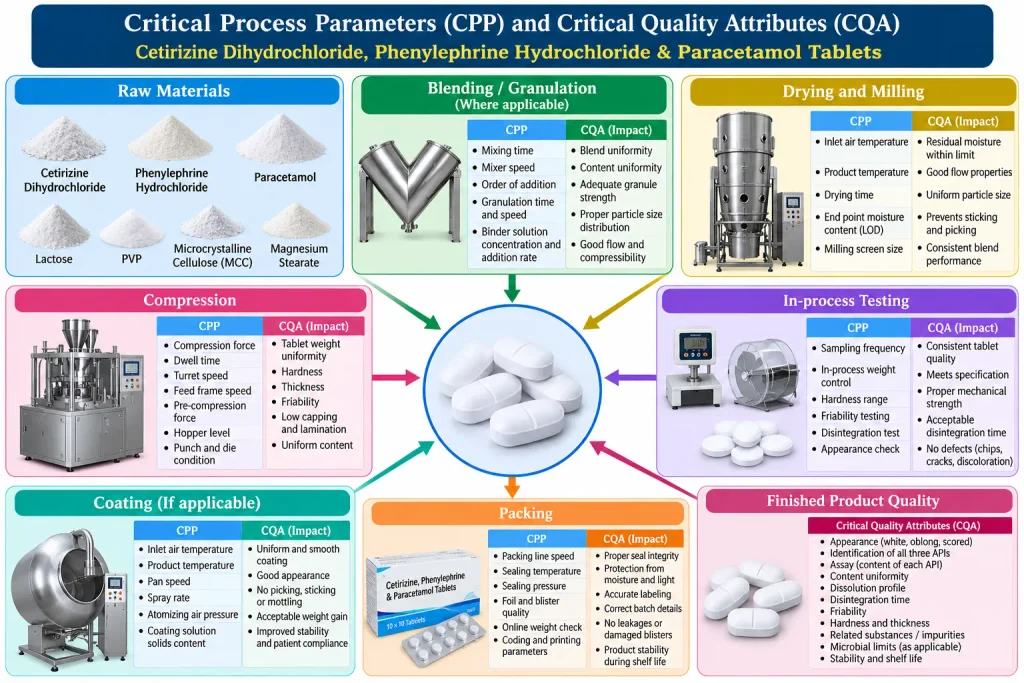
Critical Quality Attributes (CQAs) are measurable physical, chemical, biological, or microbiological characteristics that should remain within predefined limits to ensure product quality. Important CQAs include appearance, identification, assay of each active ingredient, content uniformity, tablet weight variation, hardness, thickness, friability, disintegration, dissolution, related substances, and microbial quality where applicable. Packaging integrity, correct labeling, and product stability are also important quality attributes. Proper control and monitoring of CPPs help ensure that the CQAs consistently comply with approved specifications throughout the product lifecycle. Add a CPP–CQA control tableSeparate manufacturing stages clearly