




Cleaning Validation in Pharmaceutical Industry
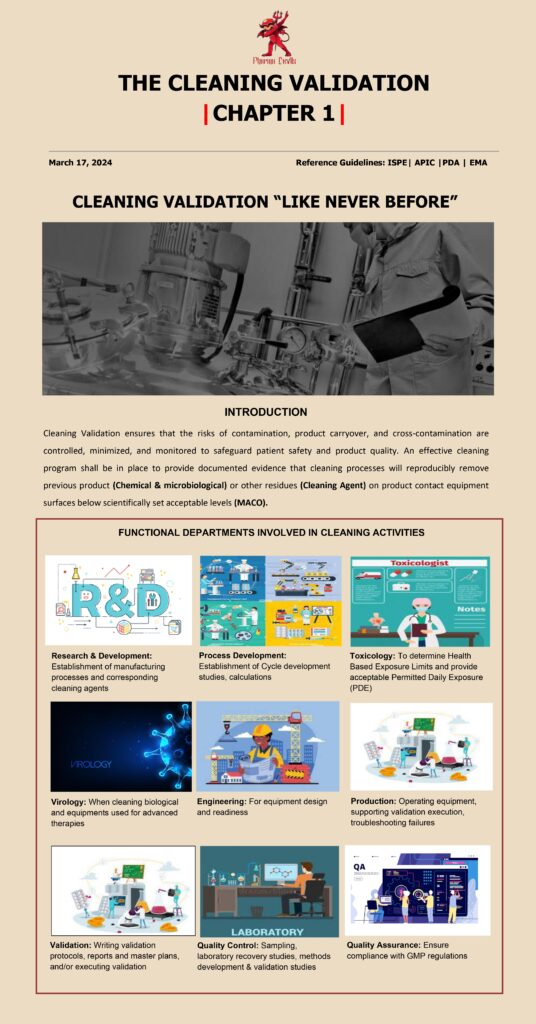
Cleaning validation in pharma is a documented, scientific approach that demonstrates cleaning procedures consistently remove product residues, cleaning agents and microorganisms to pre-defined acceptable levels. It is a core GMP requirement and a critical element of any contamination control strategy, especially where multiple products, strengths or allergens are manufactured on shared equipment.
A robust cleaning validation program begins with a detailed understanding of the products, processes and equipment involved. Risk factors such as product potency, toxicity, solubility, batch size, minimum daily dose, equipment design and previous contamination history are evaluated to determine worst-case scenarios. Based on this assessment, representative products and equipment trains are selected for validation using grouping or bracketing approaches where appropriate.
Clear acceptance criteria are established in advance, typically using health-based exposure limits such as PDE or HBEL values, along with safety factors, to calculate maximum allowable carryover (MACO) limits. Swab and rinse sampling methods, visual inspections and analytical techniques with suitable sensitivity and specificity are defined and justified. At least three consecutive successful cleaning validation runs are usually required to demonstrate consistency and reproducibility.
The validation protocol describes the scope, responsibilities, sampling plan, test methods, calculations and acceptance criteria. All activities, results and deviations are documented in a comprehensive validation report. Any failure or atypical result must be investigated, with corrective and preventive actions implemented and assessed for impact on previously manufactured batches.
Cleaning validation is not a one-time exercise. It must be periodically reviewed and maintained through a lifecycle approach. Changes in products, equipment, cleaning agents, procedures or analytical methods require impact assessment and, when necessary, revalidation. Ongoing verification through routine monitoring, visual checks, periodic re-swabbing and trend analysis ensures that validated cleaning processes remain in control, supporting patient safety, regulatory compliance and reliable pharmaceutical manufacturing. Adequate training of operators, controlled documentation, and clear, user-friendly SOPs are essential to ensure that validated cleaning procedures are followed consistently on the shop floor.