





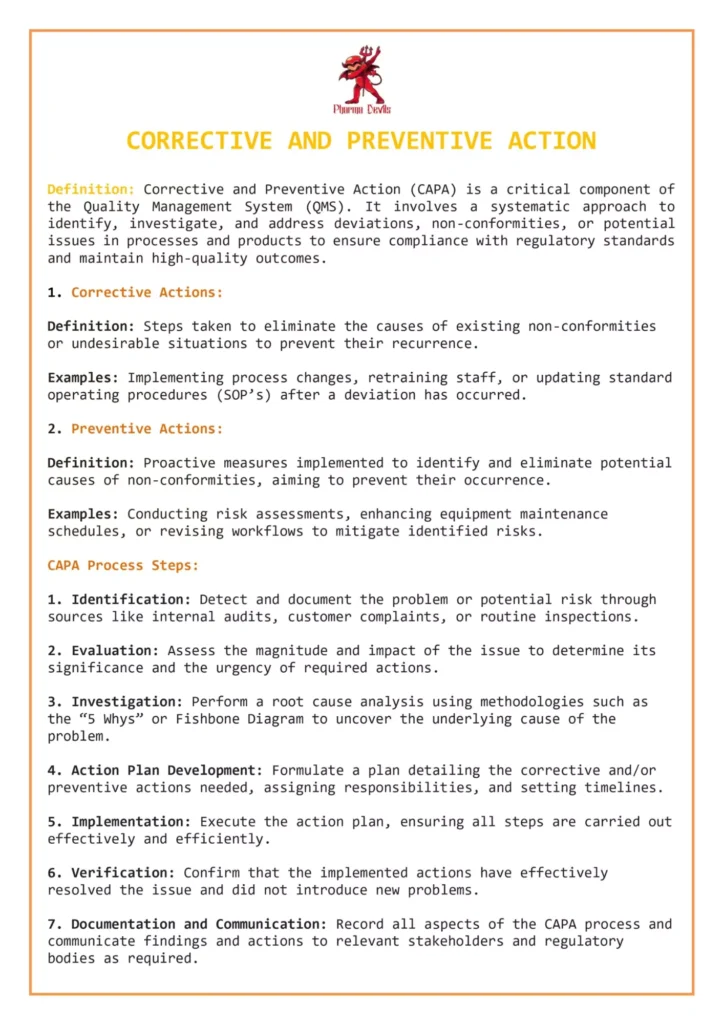

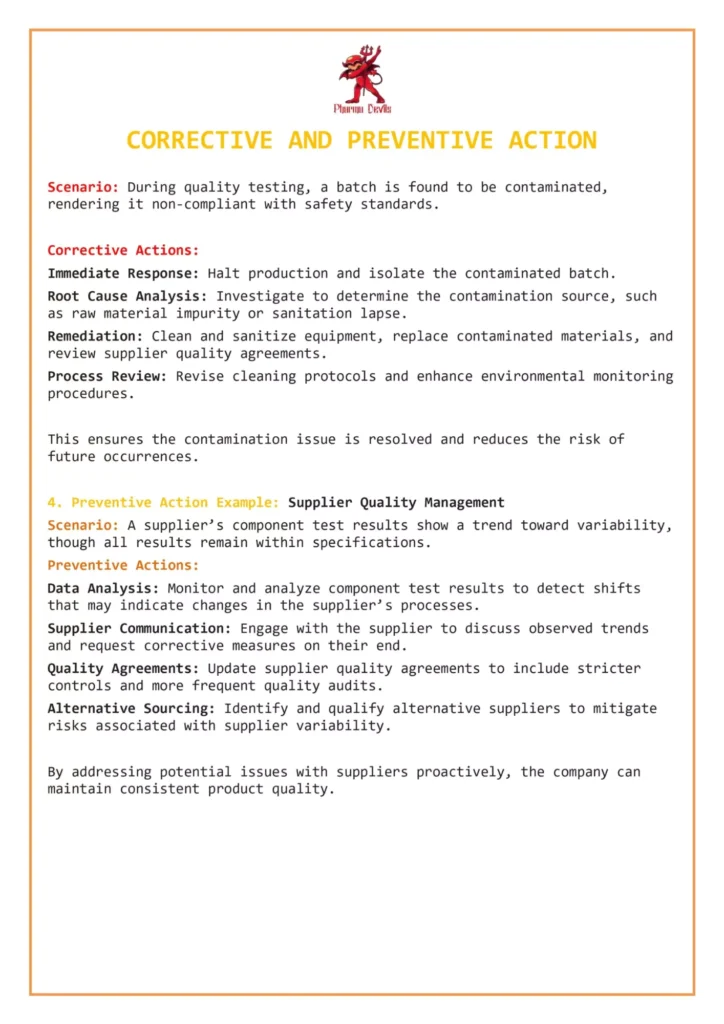
Corrective and Preventive Action (CAPA) in pharma is the structured system used to eliminate the cause of an existing problem (corrective action) and to prevent potential problems from occurring (preventive action). CAPA is a core element of the Pharmaceutical Quality System (PQS) because it links real issues—deviations, OOS/OOT results, complaints, audits, recalls, validation failures—into sustainable improvements that protect patient safety and product quality.
Corrective action vs preventive action
- Corrective Action (CA): addresses the root cause of a detected nonconformance. Example: if a tablet weight variation deviation occurs due to feeder wear, corrective action is replacing/repairing the feeder and restoring control.
- Preventive Action (PA): addresses potential causes before a failure occurs. Example: introducing a predictive maintenance plan and acceptance criteria for feeder wear to prevent recurrence across machines.
Typical CAPA lifecycle
- Initiation: CAPA is raised from a trigger (deviation, audit finding, complaint trend, OOS). QA assigns a CAPA number and owner.
- Containment (immediate action): protect product and patient—stop activity, quarantine material, increase monitoring, secure data.
- Investigation and root cause analysis: collect evidence and identify true causes using 5-Why, Ishikawa, fault tree, or trend analysis. Avoid superficial “human error” conclusions without system causes.
- Risk assessment and prioritization: assess severity, occurrence, detectability (QRM) to determine urgency and scope.
- CAPA plan: define actions, responsibilities, due dates, required documents, and verification criteria (e.g., revalidation, retraining, procedure change, engineering modification).
- Implementation: execute actions under change control when required; document evidence and manage deviations.
- Effectiveness check: confirm CAPA works (no recurrence over defined batches/time; improved trend; successful audits; stable EM results).
- Closure: QA reviews completeness, verifies effectiveness evidence, and formally closes CAPA.
Good CAPA practices
Strong CAPA is data-driven, uses measurable outcomes, and includes system-level prevention (training + procedure improvement + engineering controls). Trending repeat deviations and management review are essential. Common inspection findings include weak root cause, overdue CAPAs, closing without effectiveness checks, and actions not linked to risk or product impact.