







1. Introduction – Dextromethorphan Hydrobromide & Chlorpheniramine Maleate Syrup (BPR):
The Batch Packing Record (BPR) for Dextromethorphan Hydrobromide & Chlorpheniramine Maleate Syrup is an essential pharmaceutical documentation system designed to ensure the systematic execution, monitoring, verification, and recording of packaging operations in accordance with Good Manufacturing Practices (GMP). Dextromethorphan Hydrobromide is an antitussive agent used to suppress dry, non-productive cough, while Chlorpheniramine Maleate is a first-generation antihistamine that helps relieve allergic symptoms such as sneezing, runny nose, and watery eyes. As specified in the BPR, each 5 mL contains Dextromethorphan Hydrobromide IP 10 mg and Chlorpheniramine Maleate IP 2 mg in a flavoured syrup base. The Batch Packing Record provides structured documentation covering packing material dispensing, line clearance, bottle washing, filling, sealing, labelling, overprinting, inspection, and final packing operations. It also includes in-process quality checks such as fill-volume verification, sealing integrity, leakage testing, cap perforation inspection, and packaging material reconciliation. The record establishes traceability through batch details, manufacturing and expiry dates, equipment identification, operational observations, and Production and Quality Assurance verification. Additionally, the BPR incorporates rejection analysis, finished product yield calculation, sample accountability, material reconciliation, and destruction records.The primary objective of this BPR is to ensure consistent packaging quality, prevent mix-ups and contamination, maintain data integrity, and support regulatory compliance throughout the pharmaceutical packaging process.
Skip to PDF content2. Flow Diagram of Dextromethorphan Hydrobromide & Chlorpheniramine Maleate Syrup – Batch Packing Record (BPR):
The flow diagram of Dextromethorphan Hydrobromide & Chlorpheniramine Maleate Syrup (BPR) illustrates the systematic sequence of pharmaceutical packing operations performed in accordance with Good Manufacturing Practices (GMP). The process begins with batch packing approval, packing material dispensing, and line clearance verification by Quality Assurance. Clean bottles undergo washing and are transferred for syrup filling according to the specified fill volume.
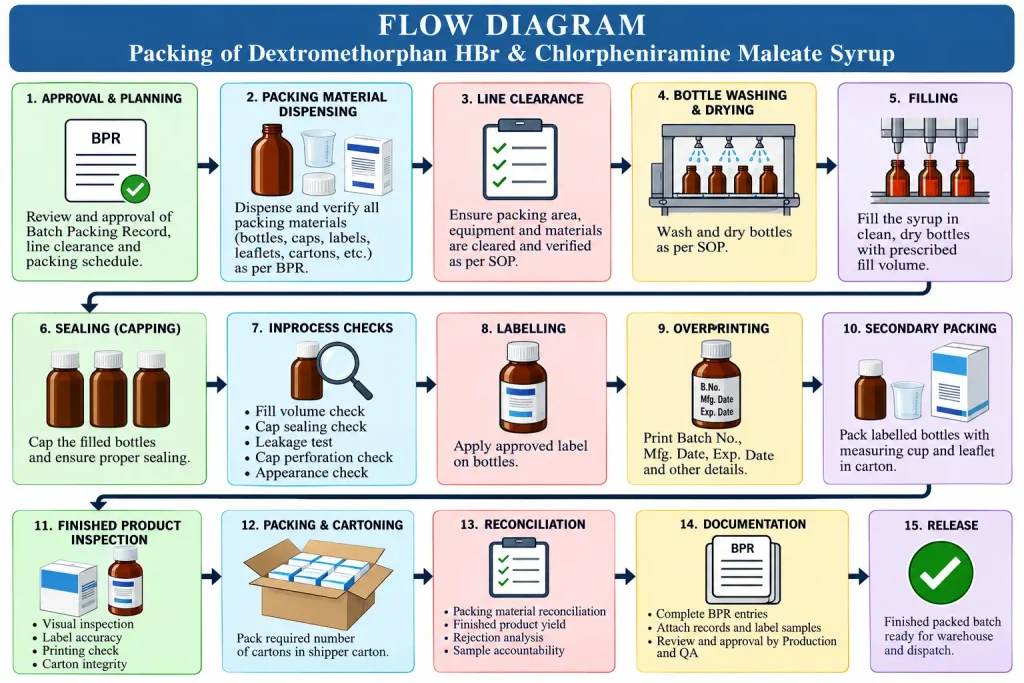
Filled bottles are sealed and subjected to in-process quality checks, including fill volume verification, sealing integrity, leakage testing, and cap perforation inspection. Subsequently, bottles undergo labelling and overprinting of batch numbers, manufacturing dates, and expiry dates. Secondary packing involves placing bottles, measuring cups, and leaflets into cartons, followed by shipper packing. Final inspection ensures packaging integrity, correct identification, and product quality. The process concludes with material reconciliation, rejection analysis, yield calculation, documentation review, and Quality Assurance approval to support traceability, regulatory compliance, and batch release.
3. Critical Process Parameters (CPP) and Critical Quality Attributes (CQA) of Dextromethorphan Hydrobromide & Chlorpheniramine Maleate Syrup (BPR):
The Critical Process Parameters (CPP) and Critical Quality Attributes (CQA) of Dextromethorphan Hydrobromide and Chlorpheniramine Maleate Syrup are essential for maintaining consistent packaging quality, product safety, and regulatory compliance. Critical Process Parameters include packing material verification, bottle washing conditions, filling volume, filling speed, sealing integrity, cap perforation, labelling accuracy, and overprinting controls. These parameters require monitoring and verification during packaging operations to prevent defects and ensure process consistency.
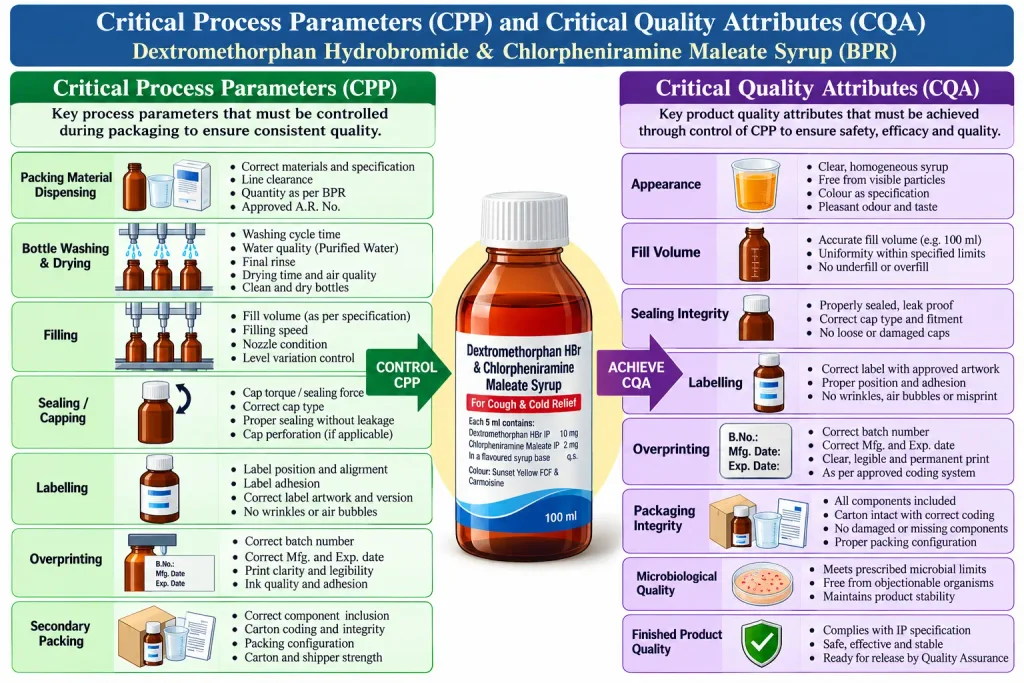
Critical Quality Attributes include syrup appearance, accurate fill volume, leak-proof sealing, correct labelling, legible batch coding, packaging integrity, and compliance with approved product specifications. In-process checks, including filling volume verification, leakage testing, cap inspection, and packaging material reconciliation, help identify potential quality deviations. Effective monitoring of CPPs supports the achievement of specified CQAs, reduces packaging defects, strengthens batch traceability, and ensures that finished products meet established quality requirements before Quality Assurance release.