






1. Introduction – Phenylephrine Hydrochloride & Chlorpheniramine Maleate Syrup IP:
Phenylephrine Hydrochloride & Chlorpheniramine Maleate Syrup IP is a pharmaceutical formulation used for the symptomatic relief of nasal congestion, sneezing, runny nose, and other symptoms associated with common colds and allergies. It contains two active pharmaceutical ingredients: Phenylephrine Hydrochloride IP (5 mg) and Chlorpheniramine Maleate IP (2 mg) per 5 mL of syrup. Phenylephrine Hydrochloride acts as a nasal decongestant by constricting blood vessels in the nasal passages, reducing swelling and congestion. Chlorpheniramine Maleate is a first-generation antihistamine that blocks histamine H1 receptors, providing relief from allergic symptoms such as sneezing, itching, and rhinorrhea. The Batch Packing Record (BPR) provides a comprehensive documentation system for monitoring and controlling pharmaceutical packing operations in accordance with Good Manufacturing Practices (GMP). It covers packing material dispensing, line clearance, bottle washing, filling, sealing, labeling, visual inspection, secondary packaging, and reconciliation. The BPR also includes critical in-process quality checks such as fill volume verification, sealing integrity, leakage testing, label accuracy, and rejection analysis. Proper documentation ensures batch traceability, packaging consistency, regulatory compliance, and product quality. The formulation is packed in 60 mL amber PET bottles and requires storage protected from light at temperatures not exceeding 25°C.
Skip to PDF content1. Flow Diagram – Phenylephrine Hydrochloride & Chlorpheniramine Maleate Syrup IP:
The flow diagram illustrates the systematic packing process of Phenylephrine Hydrochloride & Chlorpheniramine Maleate Syrup IP, ensuring product quality, packaging integrity, traceability, and compliance with Good Manufacturing Practices (GMP). The packing process begins with the receipt of approved bulk syrup from the manufacturing department, followed by dispensing and verification of packaging materials, including 60 mL amber PET bottles, PP caps, labels, mono cartons, and corrugated shippers.
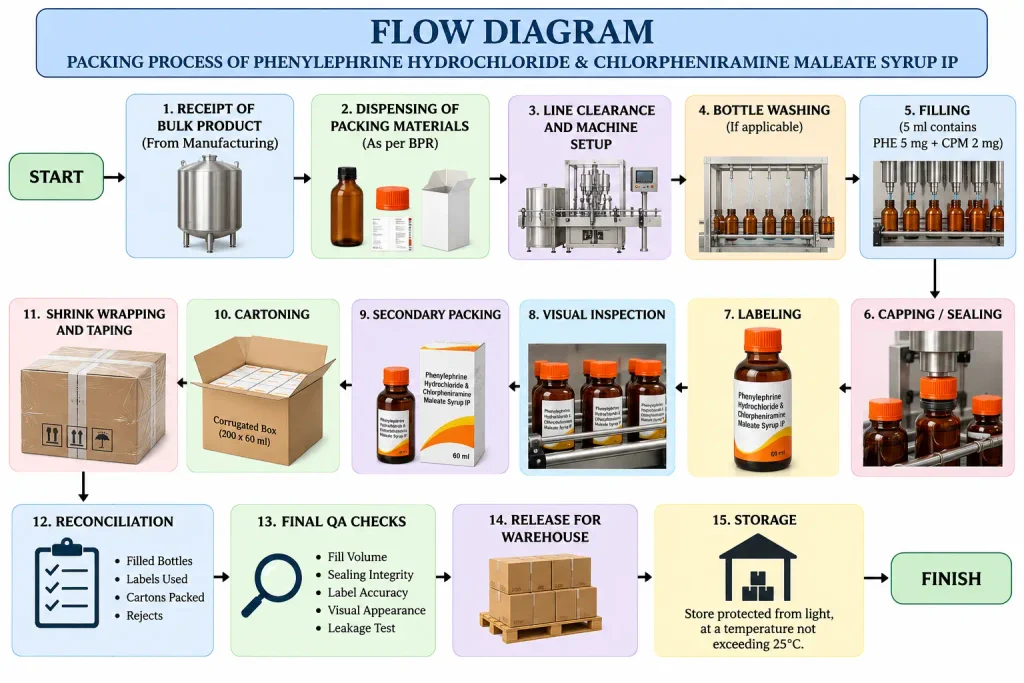
After line clearance and equipment preparation, bottles undergo washing before being transferred to the filling machine. The syrup is filled into bottles under controlled conditions, followed by capping, sealing, labeling, and visual inspection. Critical in-process quality checks include fill volume verification, sealing integrity, leakage testing, cap perforation inspection, label accuracy, and examination for visible defects. The inspected bottles are packed into mono cartons and subsequently arranged in corrugated shippers. Packaging material reconciliation, rejection analysis, and documentation review are performed to ensure accountability and batch traceability. Finally, the packed batch undergoes Quality Assurance review and approved release procedures before transfer to the designated storage area. The finished product must be stored protected from light at a temperature not exceeding 25°C, as specified in the Batch Packing Record. This flow diagram provides a visual reference for pharmaceutical production personnel, Quality Assurance teams, training activities, and GMP documentation.
2. Critical Process Parameters (CPP) and Critical Quality Attributes (CQA) of Phenylephrine Hydrochloride & Chlorpheniramine Maleate Syrup IP:
Critical Process Parameters (CPPs) and Critical Quality Attributes (CQAs) play an important role in maintaining the quality, safety, consistency, and integrity of Phenylephrine Hydrochloride & Chlorpheniramine Maleate Syrup IP during pharmaceutical filling and packing operations. Critical Process Parameters (CPPs) are process variables that require monitoring and control to ensure the finished product meets predefined quality specifications. Important parameters include bottle washing conditions, filling speed, fill volume, nozzle performance, capping and sealing settings, labeling accuracy, and packaging line controls. In-process checks such as leakage testing, sealing integrity verification, visual inspection, and packaging material reconciliation help prevent defects and packaging failures.
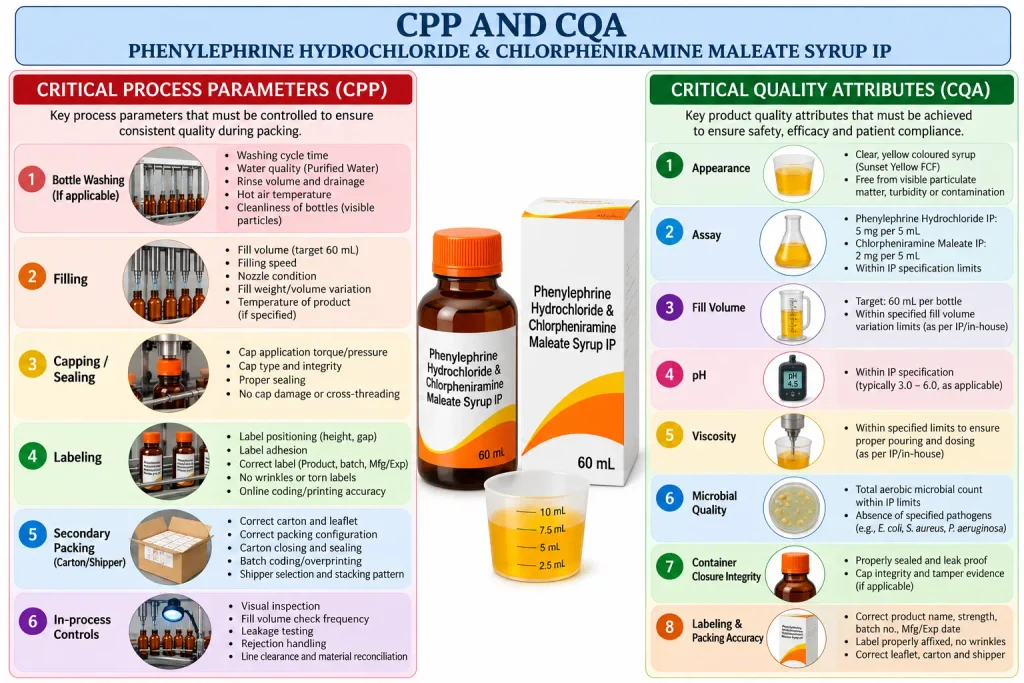
Critical Quality Attributes (CQAs) are physical, chemical, microbiological, and packaging-related characteristics that must remain within approved specifications to ensure product quality. Important attributes include syrup appearance, assay, pH, viscosity, microbial quality, fill volume, container closure integrity, and labeling accuracy. The formulation contains Phenylephrine Hydrochloride IP 5 mg and Chlorpheniramine Maleate IP 2 mg per 5 mL of syrup and is packed in 60 mL amber PET bottles. Effective monitoring of process parameters and verification of quality attributes support GMP compliance, batch consistency, product traceability, and patient safety. This CPP and CQA infographic serves as an educational reference for pharmaceutical production personnel, Quality Assurance professionals, process validation teams, and GMP training programs.
Note: The parameters shown are potential CPPs and CQAs. Their criticality and acceptance limits must be established through documented risk assessment, validation, and approved product specifications.