






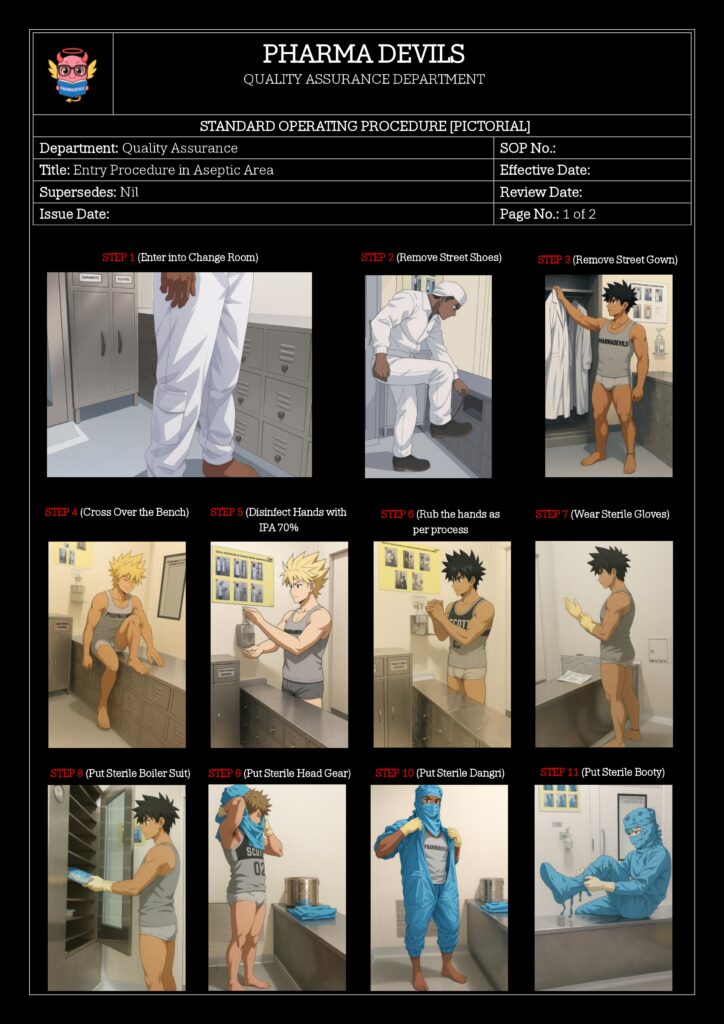
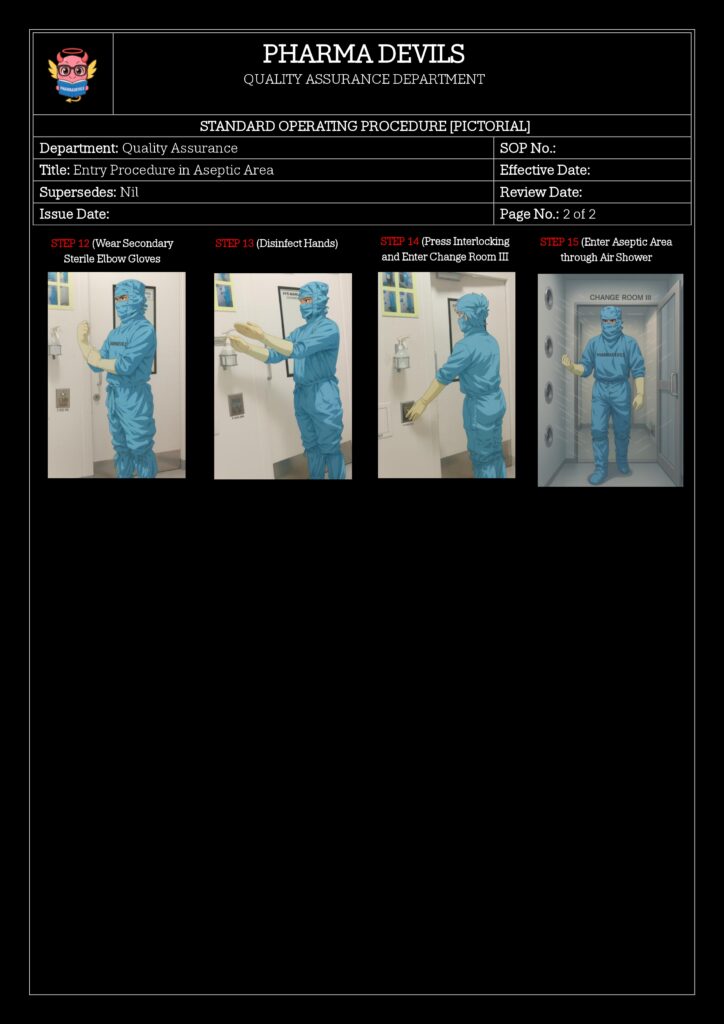
1. Pre-entry checks (outside change room)
Before even touching the change room door:
- Health status
- No fever, cold, cough, skin lesions, open wounds, eye infection, or GI upset.
- Report any health issues to supervisor; do not enter if unfit.
- Personal items
- Remove jewellery, watches, cosmetics (heavy makeup, nail polish), unsecured hair accessories.
- No mobile phones, pens, or personal items beyond designated area.
- Clothing
- Wear company-approved street clothes (no loose fibers, no wool).
- Safety shoes as per site requirement up to the primary change room.
2. Change Room – Stage 1 (Black to Grey)
Purpose: Remove gross contamination from outside environment.
- Step sequence (unidirectional flow):
- Enter black side (dirty side).
- Remove outdoor shoes and place in designated lockers/rack.
- Wear plant shoes / dedicated slippers.
- Don primary garments (if used at your site):
- Hair cover / bouffant cap
- Beard cover (if applicable)
- Basic overcoat / factory coat
- Key rules:
- Sit on change room bench: one side for dirty, other for clean.
- Never let “dirty side” shoes cross to “clean side”.
3. Handwashing & Hand Disinfection
Performed before putting on sterile gloves.
- Remove visible dirt under nails (no long nails).
- Turn on water (hands-free tap if available).
- Wet hands and forearms up to the elbow.
- Use approved non-perfumed antiseptic soap.
- Wash for at least 30–60 seconds:
- Palm to palm
- Back of hands
- Between fingers
- Fingertips & nails
- Thumbs
- Wrists / forearms
- Rinse thoroughly – no soap residue.
- Dry with lint-free single-use towels.
- Apply alcohol-based hand rub (ABHR) and allow to air dry completely.
4. Change Room – Stage 2 (Grey to White)
This is where you wear sterile cleanroom garments.
Typical sequence (never touch the outside of sterile garments with unclean hands):
- Don hood / head cover
- Ensure all hair and ears are fully covered.
- Face mask
- Cover nose, mouth, and chin; mold nose strip; no gaps.
- Shoe covers / boots
- Wear over plant shoes or use dedicated sterile boots.
- Tuck trouser legs inside if required by SOP.
- Inner sterile gloves (if double-gloving)
- Open sterile pack correctly.
- Touch only inner surface while donning.
- Sterile coverall / suit
- Handle from inner surface only.
- Avoid touching the floor.
- Zip fully; ensure cuffs and ankles are properly closed.
- Goggles / eye protection
- Use sterilized goggles (packed or autoclaved).
- Ensure no fogging; if fogging, adjust before entry.
- Outer sterile gloves
- Disinfect inner gloves with ABHR, let dry.
- Open outer glove pack aseptically.
- Don without touching outer surface with bare skin.
- Final check in mirror
- No exposed hair, no gaps in mask, zipper closed, boots secure.
Golden rule: Once gowned, do not touch face, mask, hood, or non-sterile surfaces. If you do, disinfect or change gloves/garments as per SOP.
5. Airlock Entry to Aseptic Area
- Verify differential pressure is within limit before opening door.
- Use interlocked doors properly:
- Only one door open at a time.
- Wait for laminar airflow / air shower cycle if installed.
- Step on disinfectant mat or tacky mat as per procedure.
- Disinfect gloved hands with sterile IPA (70%) at entry.
- Enter calmly – no rushing, no unnecessary movement.
6. Behaviour Inside Aseptic Area
Once inside:
- Movement & posture
- Move slowly and deliberately; no sudden arm movements.
- Avoid walking close to walls, filters, or over open sterile items.
- Touch discipline
- Touch only what is required for the job.
- Never touch floor, walls, or non-classified items.
- Frequently disinfect gloves with sterile IPA as per SOP.
- Talking & communication
- Minimize talking, especially over exposed materials.
- No shouting, laughing, or unnecessary conversation.
- Personal habits
- No scratching, rubbing eyes/nose, adjusting mask, or crossing arms inside gown.
- If mask becomes loose, wet, or damaged → exit to change room and regown.
7. Re-entry & Re-use Rules
- Short exit (e.g., to unclassified corridor)
- Follow site SOP: often requires at least regloving and redisinfection, sometimes partial regowning.
- Long break / washroom use / major gown disturbance
- Complete re-gowning from Stage 1 is usually required.
- Damaged/soiled garment or glove
- Leave area via proper exit route.
- Replace garment/gloves with fresh sterile ones.
- Perform full hand disinfection steps again.
8. Common Non-compliances (to use as “Don’t” list on a poster)
- Entering with:
- Illness or visible skin issues
- Cosmetics, perfume, jewellery
- Stepping from dirty side directly to clean side.
- Wearing mask below nose or exposing hair/beard.
- Walking too fast, waving arms, leaning over open products.
- Touching doors, walls, or floor and then touching sterile items.
- Reusing torn / dropped gloves or garments.
- Talking over open vials/containers.