






1. Introduction to Levosalbutamol Sulphate, Ambroxol Hydrochloride & Guaiphenesin Syrup:
The Batch Packing Record (BPR) for Levosalbutamol Sulphate, Ambroxol Hydrochloride & Guaiphenesin Syrup is an essential pharmaceutical documentation system designed to ensure proper packaging, product identification, quality control, and traceability throughout the packing process. This combination syrup is commonly used in the management of respiratory conditions associated with productive cough, bronchospasm, and excessive mucus secretion. Each 5 ml of syrup contains Levosalbutamol Sulphate equivalent to Levosalbutamol IP 1 mg, Ambroxol Hydrochloride IP 30 mg, and Guaiphenesin IP 50 mg in a flavoured syrup base. Levosalbutamol acts as a bronchodilator, Ambroxol facilitates mucus clearance through its mucolytic activity, and Guaiphenesin functions as an expectorant. The BPR provides a structured framework for documenting critical packaging operations, including packing material dispensing, line clearance, bottle washing, filling, sealing, labelling, inspection, and final packing. It also incorporates in-process quality checks covering fill volume, sealing integrity, leakage testing, cap perforation, and packaging accuracy. Additional sections address rejection analysis, packing material reconciliation, finished product yield, sample accountability, material destruction, and final quality verification. Proper implementation of the BPR supports compliance with Good Manufacturing Practices (GMP), minimizes packaging errors, prevents product mix-ups, and maintains complete batch traceability. The record serves as documented evidence that packaging activities have been performed according to approved procedures and established quality requirements, supporting pharmaceutical product quality, patient safety, and regulatory compliance.
Skip to PDF content2. Flow Diagram – Levosalbutamol Sulphate, Ambroxol Hydrochloride & Guaiphenesin Syrup:
The flow diagram of Levosalbutamol Sulphate, Ambroxol Hydrochloride & Guaiphenesin Syrup illustrates the sequential packaging operations performed under Good Manufacturing Practices (GMP) to ensure product quality, safety, and batch traceability. The packing process begins with the receipt of approved bulk syrup from the manufacturing department, followed by packing material dispensing and verification. Proper line clearance is performed to prevent product mix-ups and cross-contamination. Subsequently, bottles undergo washing and preparation according to approved procedures before being transferred to the filling machine.
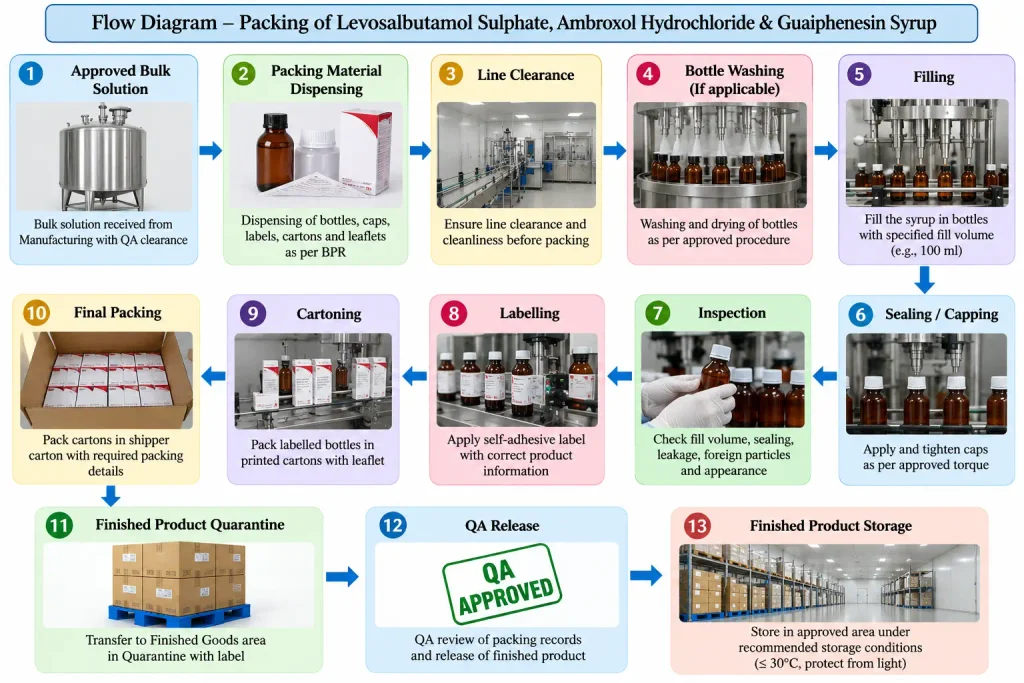
During filling, the specified quantity of syrup is dispensed into individual bottles, followed by sealing or capping to maintain container integrity. In-process quality checks include fill volume verification, sealing quality, leakage testing, cap perforation inspection, and visual examination. After satisfactory inspection, bottles undergo labelling, cartoning, and final shipper packing. The Batch Packing Record also documents packaging material reconciliation, rejected units, production yield, and verification by Production and Quality Assurance personnel. Finally, packed products are transferred to the designated finished goods quarantine area for quality review and release before storage under approved conditions. This systematic flow diagram supports GMP compliance, packaging efficiency, accurate documentation, and consistent finished product quality throughout the pharmaceutical syrup packing process.
2. Critical Process Parameters (CPP) and Critical Quality Attributes (CQA) of Levosalbutamol Sulphate, Ambroxol Hydrochloride & Guaiphenesin Syrup:
The Critical Process Parameters (CPP) and Critical Quality Attributes (CQA) of Levosalbutamol Sulphate, Ambroxol Hydrochloride & Guaiphenesin Syrup are essential considerations for ensuring consistent product quality, packaging integrity, patient safety, and compliance with Good Manufacturing Practices (GMP). Critical Process Parameters (CPP) represent processing conditions that require appropriate control during pharmaceutical packaging operations. Important parameters include packing material verification, line clearance, bottle washing temperature, washing jet pressure, filling volume, sealing conditions, cap perforation, labelling accuracy, and final packing operations.
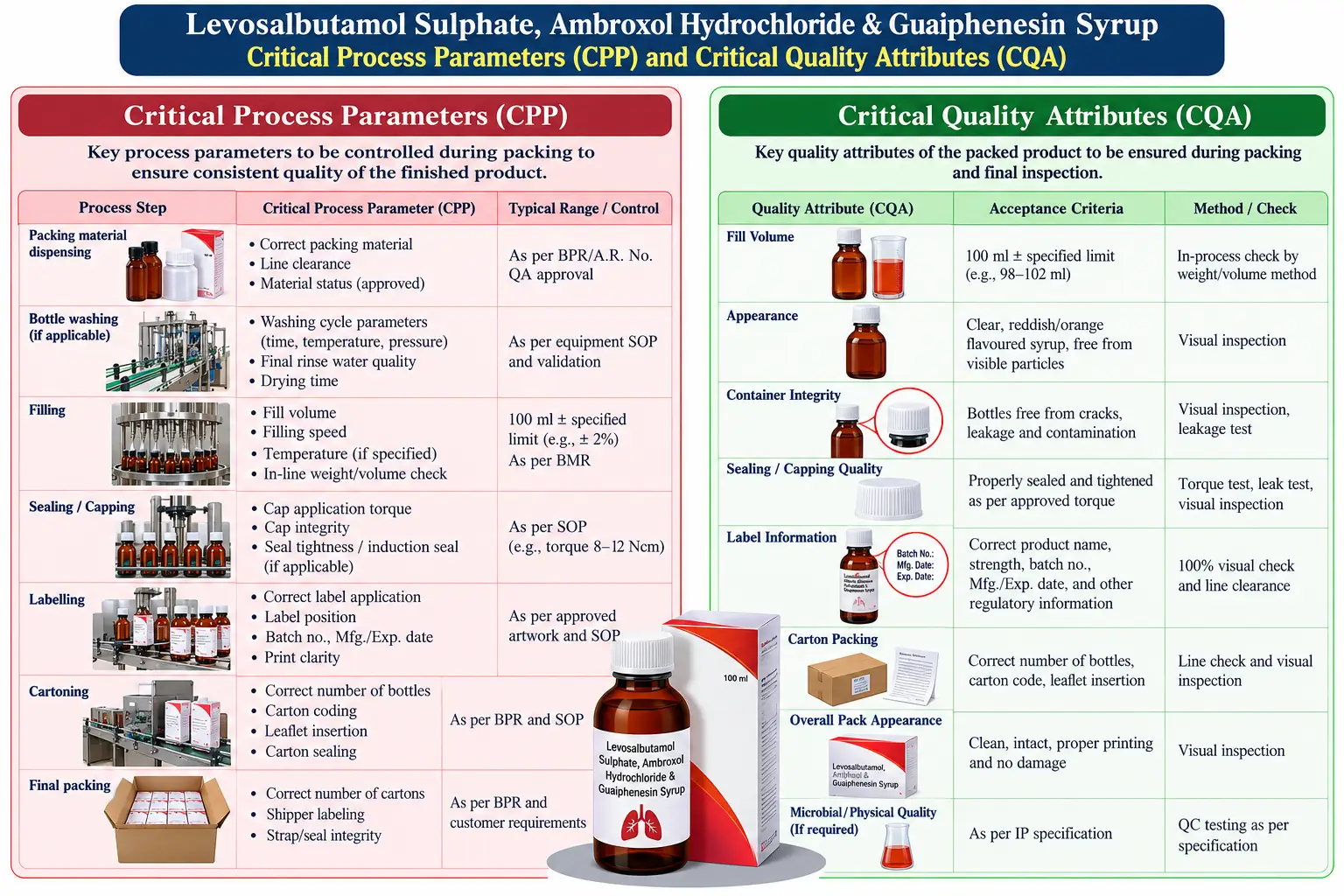
The Batch Packing Record specifies bottle washing with purified water at 50–60°C, hourly filling-volume checks, sealing and labelling inspections, and periodic leakage testing. Monitoring these parameters helps minimize packaging defects, underfilled or overfilled bottles, leakage, and incorrect product identification. Critical Quality Attributes (CQA) are the physical, chemical, microbiological, and packaging-related characteristics that must meet established acceptance criteria to ensure finished product quality. Relevant attributes include correct fill volume, syrup appearance, container closure integrity, absence of visible foreign particles, accurate labelling, and acceptable packaging condition. The BPR also includes rejection analysis, packing material reconciliation, finished product yield, and Quality Assurance verification to maintain batch accountability and traceability. Effective monitoring of process parameters and quality attributes supports product consistency, regulatory compliance, reduction of packaging errors, and reliable finished product quality.
Note: The illustrated CPPs and CQAs are educational examples. Their criticality and acceptance limits must be established through approved specifications, validation studies, and documented quality risk assessments.