








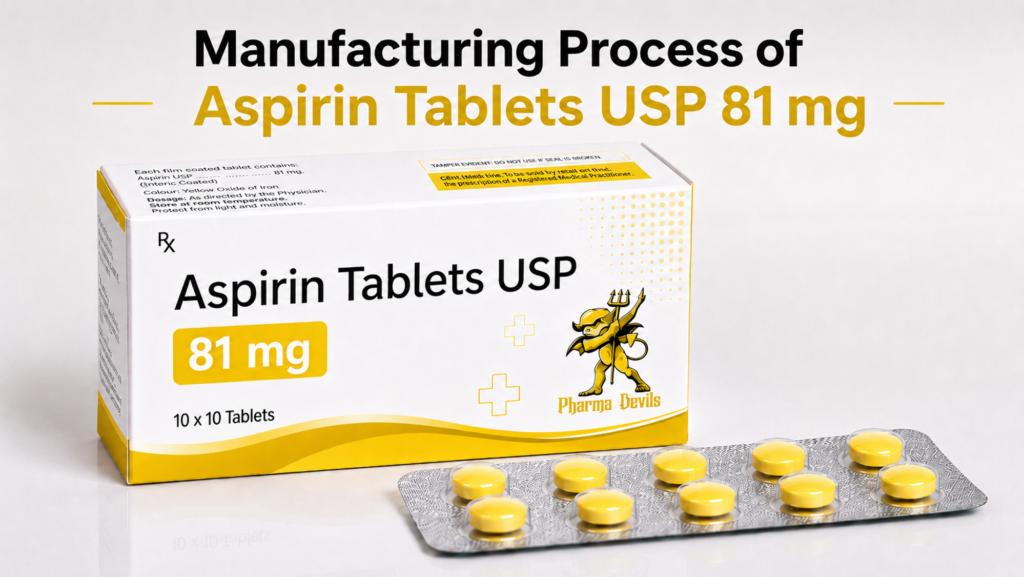
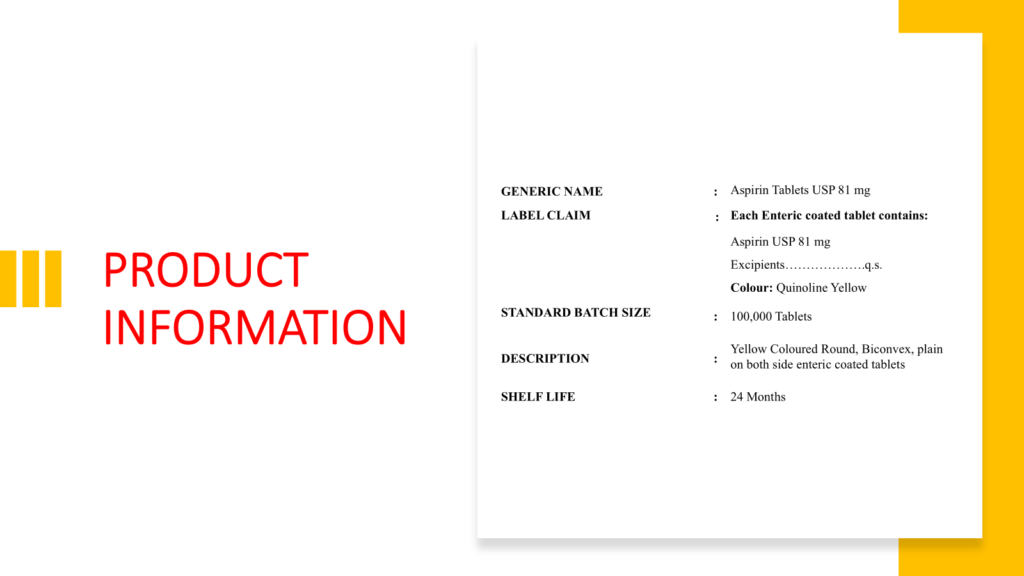
Aspirin Tablets USP 81 mg are low-dose, enteric-coated tablets commonly manufactured for delayed-release action. Each tablet contains Aspirin USP 81 mg as the active pharmaceutical ingredient. Aspirin belongs to the class of non-steroidal anti-inflammatory drugs and is widely known for its analgesic, antipyretic, anti-inflammatory, and antiplatelet properties. The 81 mg strength is generally referred to as low-dose aspirin.
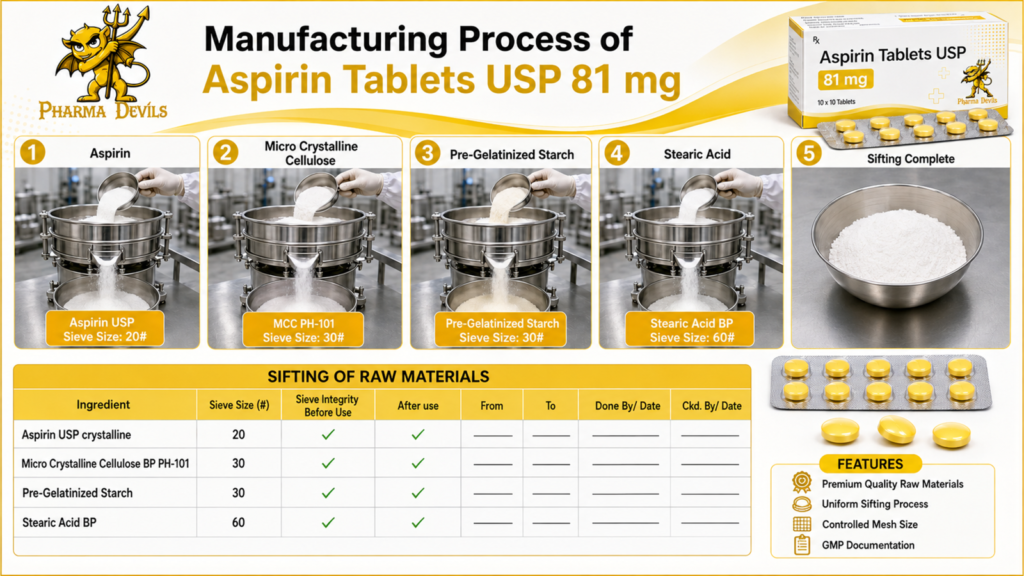
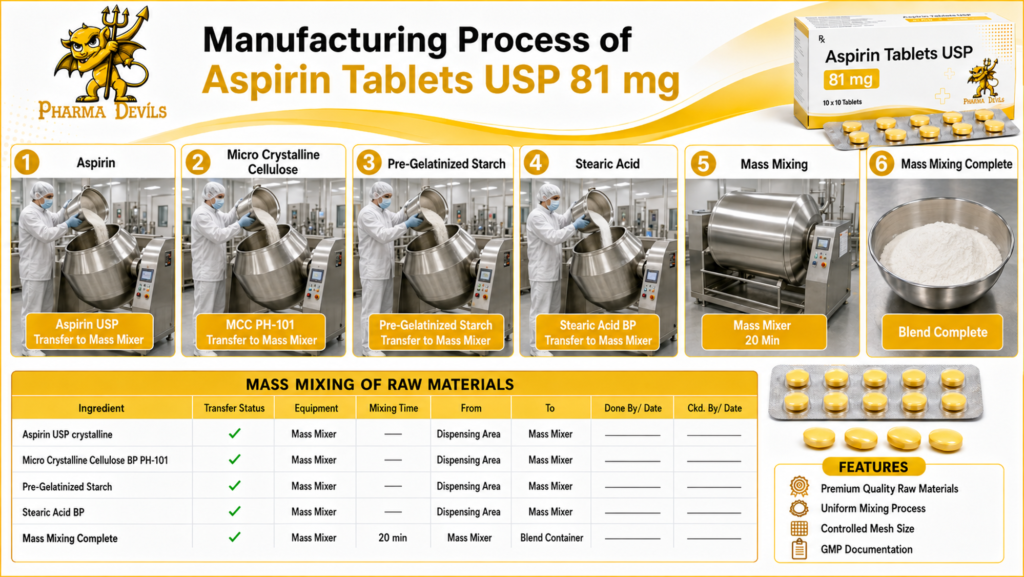
The manufacturing process of Aspirin Tablets USP 81 mg begins with dispensing and sifting of raw materials. Aspirin USP crystalline is passed through a suitable mesh, while excipients such as microcrystalline cellulose, pre-gelatinized starch, and stearic acid are also sifted as per the defined mesh size. The sifted materials are transferred into a mass mixer and mixed for the specified time to obtain a uniform blend.
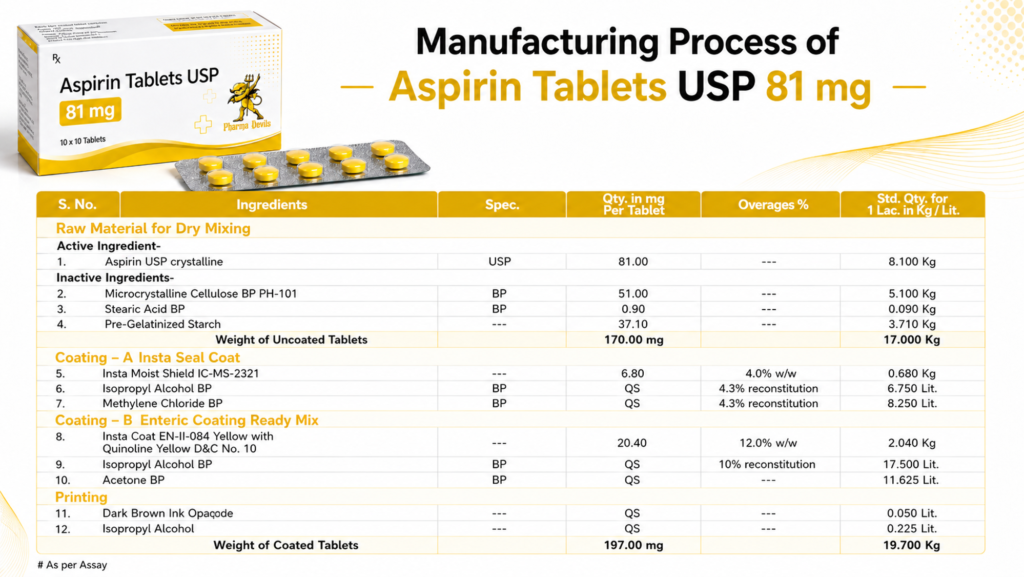
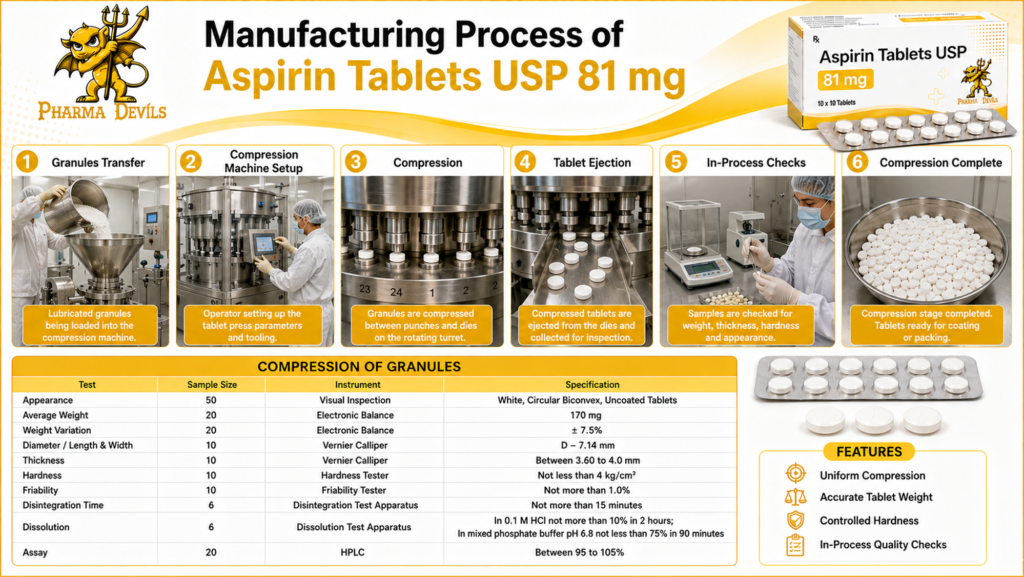
After dry mixing, the blend is compressed using a tablet compression machine. During compression, in-process checks are performed for appearance, average weight, weight variation, diameter, thickness, hardness, friability, disintegration time, dissolution, and assay. The uncoated tablets are typically white, circular, biconvex tablets with an average weight of around 170 mg.
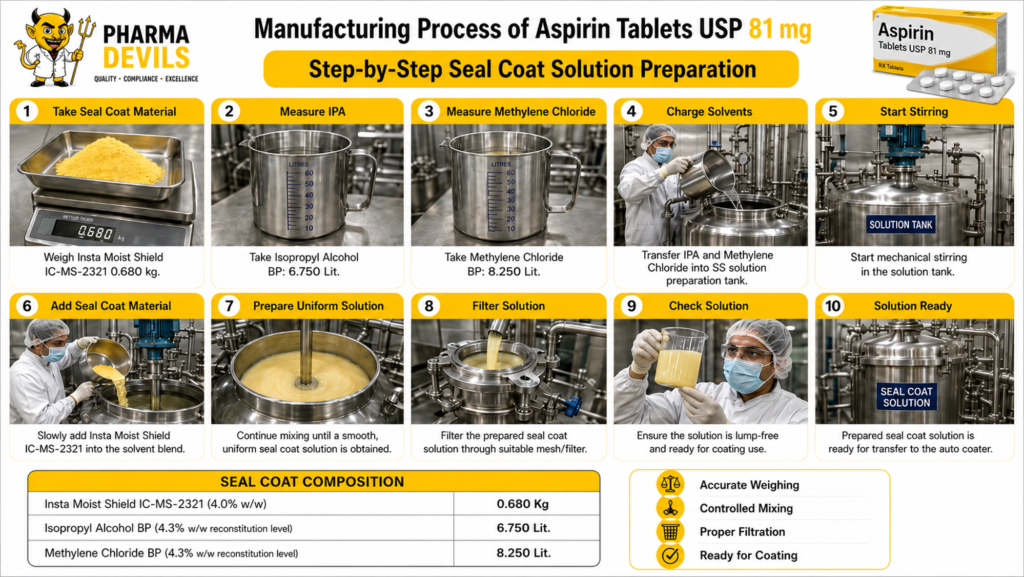
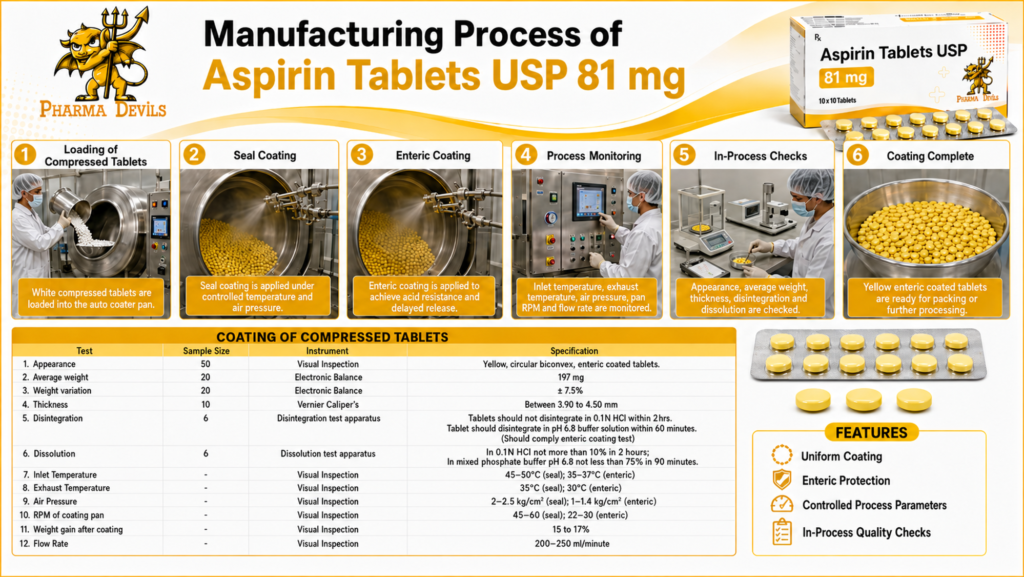
The compressed tablets are then subjected to coating. First, a seal coat solution is prepared using Insta Moist Shield IC-MS-2321 with suitable solvents such as isopropyl alcohol and methylene chloride. Seal coating helps protect the tablet core and prepares the surface for enteric coating.
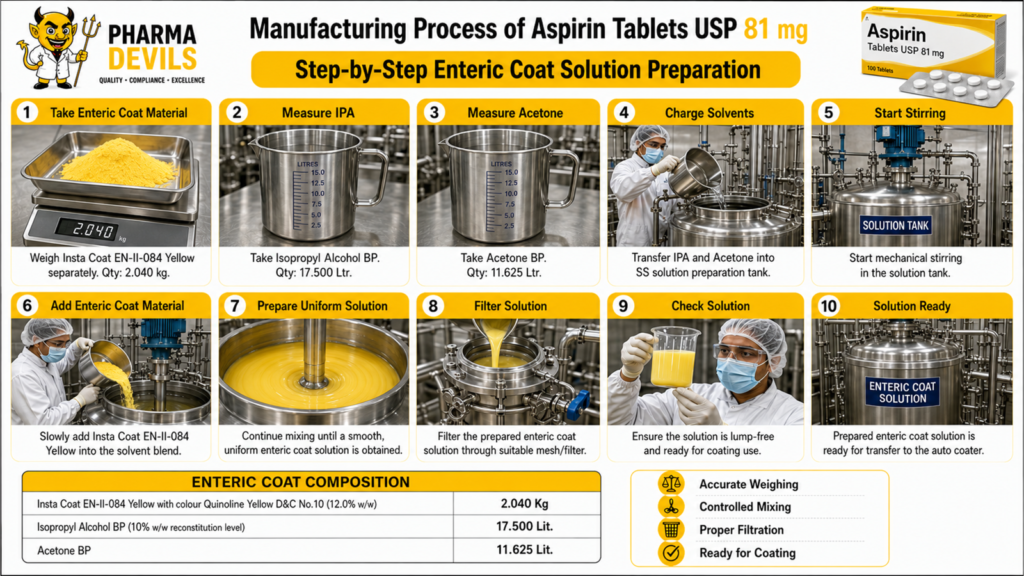
After seal coating, enteric coating is applied using Insta Coat EN-II-084 Yellow containing Quinoline Yellow D&C No. 10, along with isopropyl alcohol and acetone. The coating process is carried out in an auto coater under controlled parameters such as inlet temperature, exhaust temperature, air pressure, pan RPM, spray rate, and weight gain.
The final coated tablets are yellow, circular, biconvex, enteric-coated tablets with an average weight of about 197 mg. Quality control testing ensures compliance with enteric coating performance, dissolution requirements, assay limits, and finished product specifications.