







1. Introduction to Paracetamol & Diclofenac Sodium Tablets IP – Batch Manufacturing Record (BMR):
Paracetamol & Diclofenac Sodium Tablets IP are combination pharmaceutical formulations containing two active pharmaceutical ingredients: Paracetamol IP 325 mg and Diclofenac Sodium IP 50 mg per uncoated tablet. Paracetamol acts as an analgesic and antipyretic, while Diclofenac Sodium is a non-steroidal anti-inflammatory drug (NSAID) that provides analgesic and anti-inflammatory effects. This combination is used for managing pain and inflammation associated with various musculoskeletal conditions. The Batch Manufacturing Record (BMR) provides a comprehensive documentation system for manufacturing these tablets in accordance with Good Manufacturing Practices (GMP) and established quality standards. The specified theoretical batch size is 150,000 tablets, with an average tablet weight of 600 mg. The manufacturing process involves raw material dispensing, sifting, wet granulation, drying, milling, blending, lubrication, compression, and dedusting. Each manufacturing stage requires appropriate monitoring, documentation, equipment verification, and quality control checks. Critical quality parameters include tablet weight variation, thickness, hardness, friability, disintegration time, and granule moisture content. These parameters are monitored to maintain consistent product quality throughout manufacturing. The BMR also incorporates line clearance, in-process quality checks, batch yield reconciliation, deviation documentation, and quality assurance verification. Proper implementation ensures traceability, regulatory compliance, manufacturing consistency, and product quality.
Skip to PDF content2. Flow Diagram of Paracetamol & Diclofenac Sodium Tablets IP – Manufacturing Process:
The manufacturing flow diagram of Paracetamol & Diclofenac Sodium Tablets IP illustrates the systematic production stages followed under Good Manufacturing Practices (GMP). Each uncoated tablet contains Paracetamol IP 325 mg and Diclofenac Sodium IP 50 mg. The manufacturing process begins with raw material dispensing and sifting to ensure accurate quantities and removal of unwanted particles. The sifted ingredients undergo wet granulation using a suitable binder solution, followed by drying in a Fluid Bed Dryer (FBD) to achieve the specified moisture content.
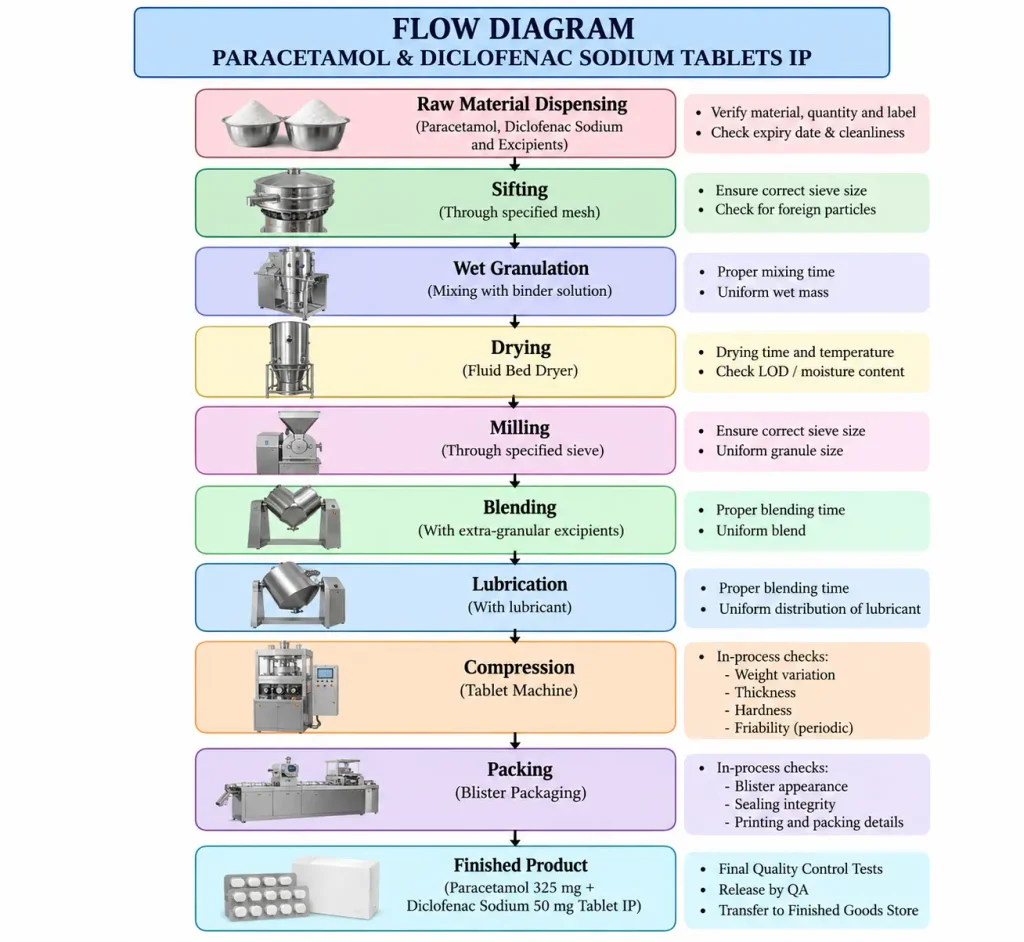
The dried granules are milled, sized, blended with extra-granular excipients, and lubricated to ensure uniform mixing and suitable flow properties. The lubricated granules are compressed into tablets under controlled conditions. In-process quality checks include tablet weight variation, thickness, hardness, friability, and disintegration time. Finally, approved tablets undergo packaging, quality verification, batch reconciliation, and Quality Assurance release to ensure product consistency, traceability, and compliance with established specifications.
3. Critical Process Parameters (CPP) and Critical Quality Attributes (CQA) of Paracetamol & Diclofenac Sodium Tablets IP:
The Critical Process Parameters (CPP) and Critical Quality Attributes (CQA) are essential for ensuring consistent manufacturing quality of Paracetamol 325 mg and Diclofenac Sodium 50 mg Tablets IP. CPPs include critical operating conditions during sifting, wet granulation, drying, milling, blending, lubrication, and tablet compression. Important parameters include sieve size, granulation time, binder concentration, drying temperature, loss on drying (LOD), blending time, lubrication time, and compression force.
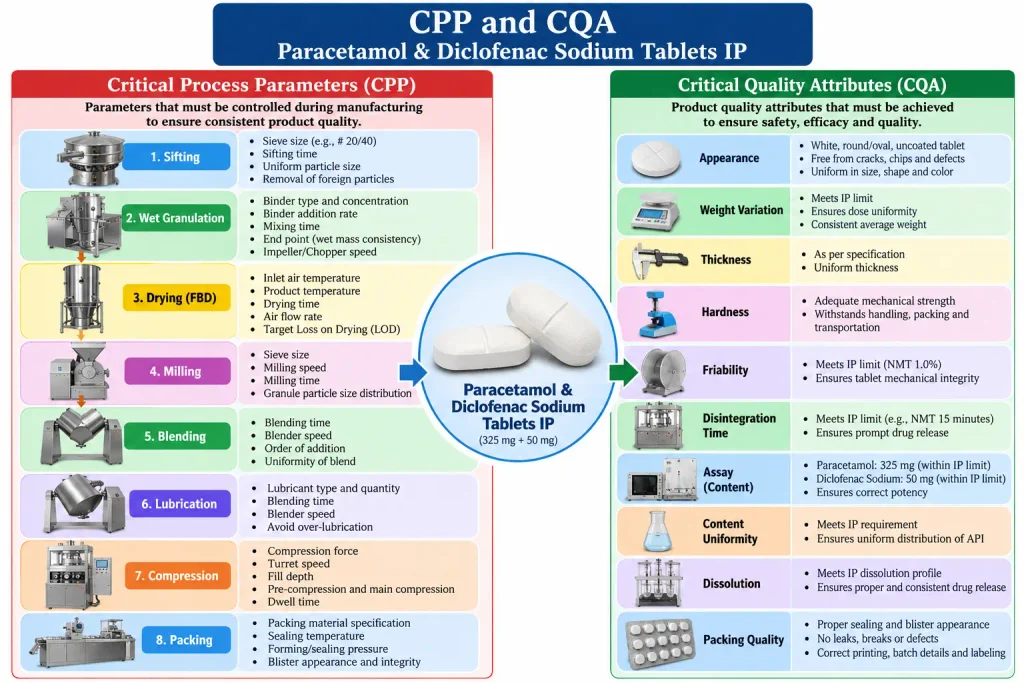
CQAs represent the physical, chemical, and performance characteristics required to maintain product quality. These include tablet appearance, weight variation, thickness, hardness, friability, disintegration time, assay, content uniformity, and dissolution. During manufacturing, in-process checks are performed to monitor specified quality parameters and identify potential deviations. Proper control of CPPs helps achieve the required CQAs. Effective monitoring, documentation, process validation, and Quality Assurance verification support GMP compliance, batch consistency, product safety, and reliable therapeutic performance throughout the manufacturing process.