






1. Introduction – Paracetamol Paediatric Oral Syrup IP:
The Batch Packing Record (BPR) of Paracetamol Paediatric Oral Syrup IP is an essential pharmaceutical documentation system designed to ensure the controlled, consistent, and traceable filling, sealing, labeling, and packaging of the finished product in accordance with Good Manufacturing Practices (GMP). Paracetamol Paediatric Oral Syrup IP is a liquid pharmaceutical formulation containing Paracetamol IP 125 mg per 5 mL in a flavoured syrupy base, with Erythrosine as the colouring agent. The product is intended for paediatric use and must be stored protected from light at a temperature not exceeding 30°C. The BPR provides comprehensive documentation of packaging material dispensing, line clearance, bottle washing, filling volume verification, sealing operations, cap inspection, labeling, overprinting, and final packing activities. It also includes in-process quality checks to monitor filling accuracy, sealing integrity, leakage, labeling quality, and packaging defects. Additional sections cover rejection analysis, packaging material reconciliation, batch yield calculations, finished product transfer, and destruction of rejected packaging materials. Each critical operation is documented, checked, and verified by authorized Production and Quality Assurance personnel to maintain accountability, product traceability, and compliance with approved procedures.
Skip to PDF content2. Flow Diagram of Batch Packing Process for Paracetamol Paediatric Oral Syrup IP (BPR):
The Flow Diagram of Paracetamol Paediatric Oral Syrup IP Batch Packing Record (BPR) illustrates the sequential packaging operations performed to ensure product quality, safety, traceability, and compliance with Good Manufacturing Practices (GMP). The process begins with the transfer of approved bulk syrup to the filling and packing area, followed by dispensing and verification of packaging materials, including 60 mL amber bottles, polypropylene (PP) caps, measuring caps, labels, trays, shrink film, and corrugated boxes. Before initiating operations, line clearance is performed to confirm that equipment and surrounding areas are clean and free from materials belonging to previous batches. Bottle washing is conducted according to the approved procedure, followed by controlled filling and sealing operations.
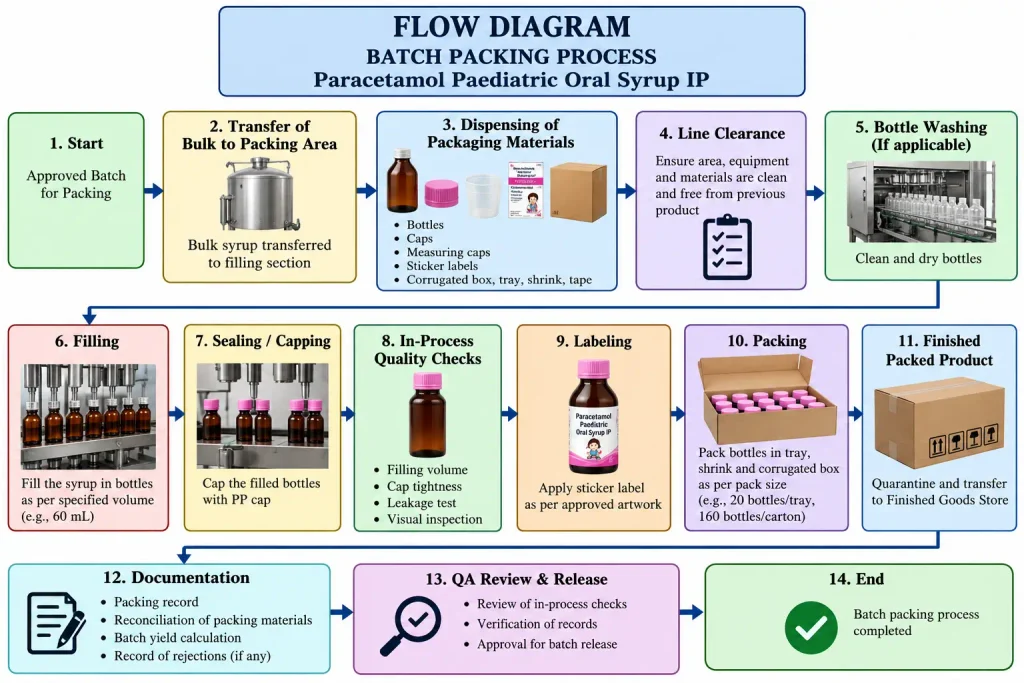
In-process quality checks include fill volume verification, sealing integrity, leakage testing, cap perforation inspection, visual examination, and labeling verification. These checks help ensure packaging consistency and minimize product defects. After labeling, bottles are arranged in trays, shrink-wrapped, and packed into corrugated shippers according to the approved packing configuration. The final stages involve rejection analysis, reconciliation of printed packaging materials, batch yield calculation, and documentation review. Authorized Production and Quality Assurance personnel verify the completed records before batch release. This systematic packaging process supports GMP compliance, prevention of mix-ups, packaging quality assurance, and complete batch traceability, ensuring that Paracetamol Paediatric Oral Syrup IP is appropriately packed and documented for distribution.
3. Critical Process Parameters (CPP) and Critical Quality Attributes (CQA) of Paracetamol Paediatric Oral Syrup IP – Batch Packing Record (BPR):
The Critical Process Parameters (CPP) and Critical Quality Attributes (CQA) of Paracetamol Paediatric Oral Syrup IP are essential elements of pharmaceutical packaging operations that help ensure consistent product quality, patient safety, and compliance with Good Manufacturing Practices (GMP). Critical Process Parameters (CPP) refer to process variables that require monitoring and control during packaging operations. These include bulk syrup transfer, packaging material verification, bottle washing conditions, filling machine settings, fill volume adjustment, sealing operations, labeling accuracy, and secondary packaging activities. The Batch Packing Record specifies important in-process controls, including bottle washing temperature of 50–60°C, hourly filling volume verification, sealing and labeling inspections, leakage testing, and packaging material reconciliation. Effective monitoring helps minimize filling variations, container leakage, labeling errors, and packaging defects.
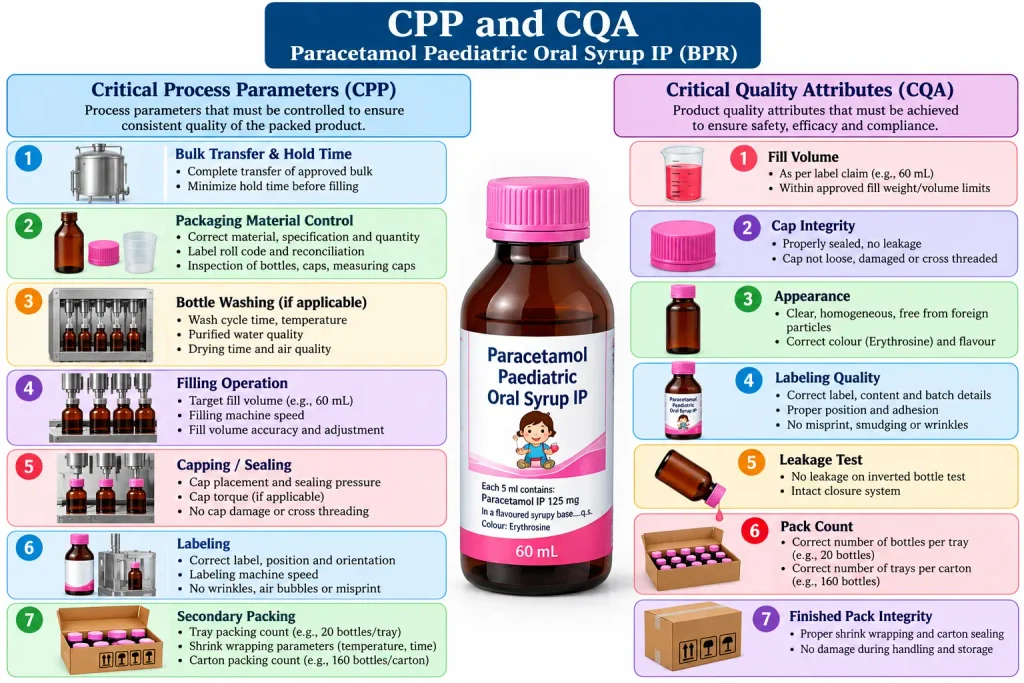
Critical Quality Attributes (CQA) represent the physical and functional characteristics that must meet predetermined quality requirements. These include accurate fill volume, satisfactory container-closure integrity, appropriate product appearance, correct labeling, proper measuring cap fitment, and acceptable finished packaging. The BPR also provides instructions for rejection analysis, inspection of polypropylene caps, verification of printed packaging materials, and batch yield reconciliation. Proper monitoring of CPPs and verification of CQAs help maintain product consistency, packaging integrity, batch traceability, and regulatory compliance. The illustrated CPP and CQA diagram provides a systematic overview of the key packaging controls and quality requirements for Paracetamol Paediatric Oral Syrup IP.
Note: The diagram presents potential critical parameters and attributes. Their formal classification as CPPs or CQAs must be justified through product-specific quality risk assessment, process knowledge, and validation data.