






1. Introduction – Paracetamol Paediatric Oral Syrup IP:
Paracetamol Paediatric Oral Syrup IP is a pharmaceutical oral liquid formulation widely used for the symptomatic relief of fever and mild to moderate pain in children. The formulation contains Paracetamol IP 125 mg per 5 mL in a flavoured syrup base, making it suitable for paediatric administration according to the prescribed dosage. The Batch Packing Record (BPR) is an essential Good Manufacturing Practice (GMP) document that provides a systematic record of all activities performed during the filling, sealing, labelling, and packaging of Paracetamol Paediatric Oral Syrup IP. It ensures that each batch is packed according to approved procedures, predefined quality specifications, and applicable regulatory requirements. The BPR covers packaging material dispensing, line clearance, bottle washing, filling volume verification, cap sealing, leakage testing, labelling inspection, rejection analysis, and finished product reconciliation. The referenced document specifies 60 mL amber bottles, polypropylene caps, measuring caps, printed labels, and secondary packaging materials. In-process quality checks are performed at defined frequencies to verify filling accuracy, sealing integrity, packaging quality, and product identification. The finished product must be stored protected from light at a temperature not exceeding 30°C.Proper completion and verification of the Batch Packing Record ensure batch traceability, packaging consistency, accountability of materials, and reliable documentation for Quality Assurance review and final product release. The BPR serves as an important component of pharmaceutical quality management, helping manufacturers maintain product quality, patient safety, and regulatory compliance throughout the packaging process.
Skip to PDF content1. Flow Diagram – Batch Packing Process of Paracetamol Paediatric Oral Syrup IP (BPR):
The flow diagram illustrates the sequential Batch Packing Process of Paracetamol Paediatric Oral Syrup IP, ensuring that all packaging activities are performed under controlled conditions in accordance with Good Manufacturing Practices (GMP). The process begins with the receipt and verification of bulk syrup and packaging materials, followed by packaging material dispensing and line clearance. Cleaned 60 mL amber bottles are transferred to the filling section, where the required quantity of syrup is filled under controlled conditions. In-process checks are performed to verify filling volume and consistency.
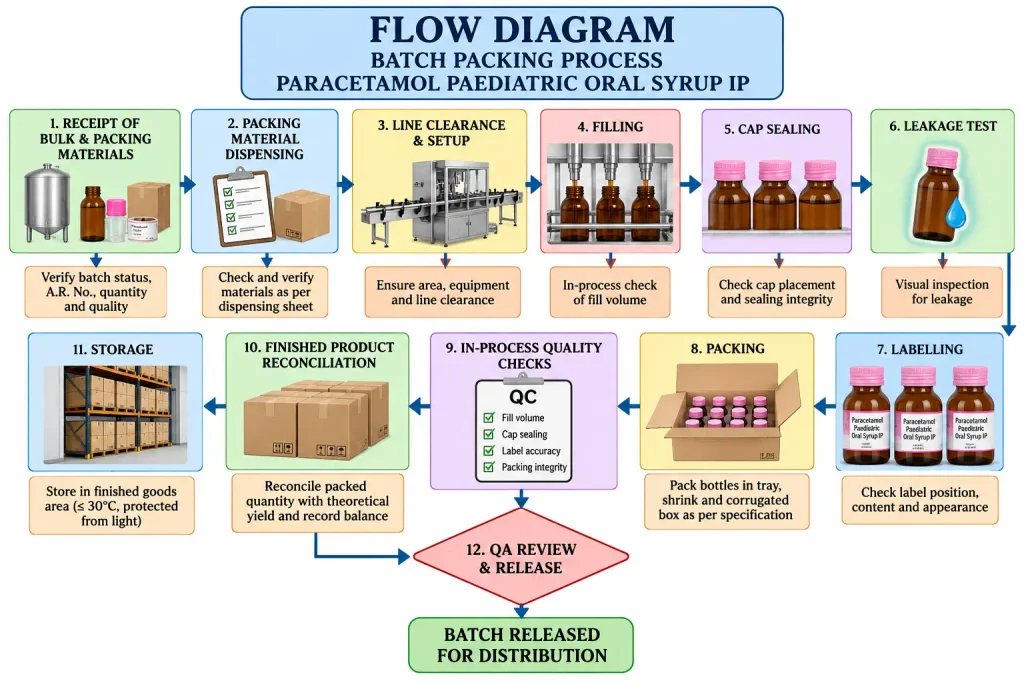
After filling, the bottles undergo cap sealing, leakage testing, and visual inspection to ensure container closure integrity and product quality. The approved bottles are labelled with essential product information, including batch number, manufacturing date, expiry date, and applicable regulatory details. The labelled bottles are subsequently packed using trays, shrink-wrapping materials, and corrugated boxes according to approved packing specifications. In-process quality checks are conducted to verify labelling accuracy, sealing quality, and packaging integrity. Finally, finished product reconciliation is performed to account for packed quantities, rejected units, and packaging materials. The completed Batch Packing Record is reviewed by Quality Assurance before batch release.
2. Critical Process Parameters (CPP) and Critical Quality Attributes (CQA) of Paracetamol Paediatric Oral Syrup IP (BPR):
Critical Process Parameters (CPPs) and Critical Quality Attributes (CQAs) are essential elements of pharmaceutical quality assurance that help ensure the consistent filling, sealing, labelling, and packaging of Paracetamol Paediatric Oral Syrup IP, containing Paracetamol IP 125 mg per 5 mL. Critical Process Parameters (CPPs) are process variables that require monitoring and control because their variability may affect the quality of the finished product. During the batch packing process, important parameters include bottle washing conditions, filling volume, filling machine settings, cap sealing performance, leakage testing, labelling accuracy, and packing line operation. According to the Batch Packing Record, bottle washing involves monitoring purified water temperature, washing jet pressure, and washing effectiveness. Filling volume checks are performed hourly, while sealing integrity, cap perforation, leakage, and labelling quality are checked at specified intervals. These controls help minimize packaging defects, product loss, and contamination risks.
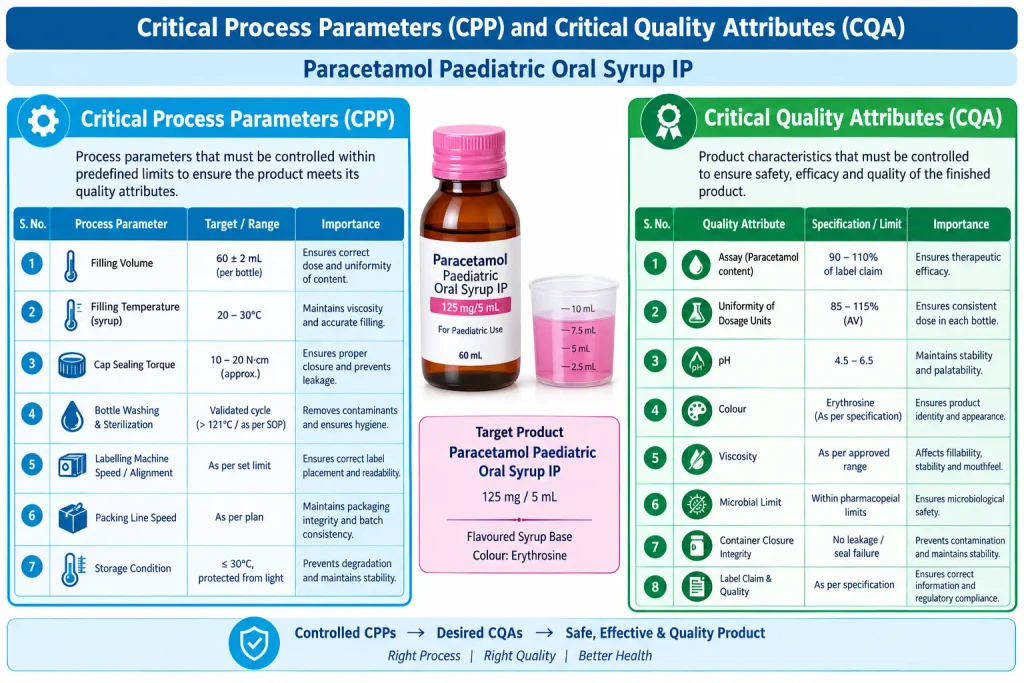
Critical Quality Attributes (CQAs) are physical, chemical, biological, or microbiological characteristics that must meet predefined specifications to ensure product quality and suitability for use. Relevant attributes include product appearance, Paracetamol identification and assay, pH, microbial quality, fill volume, container closure integrity, and correct product labelling. Effective control of process parameters helps maintain consistent product quality, accurate dosing, adequate sealing, and packaging integrity. In-process inspections, rejection analysis, material reconciliation, and Quality Assurance review provide additional assurance that packaging operations comply with Good Manufacturing Practices (GMP).
Conclusion: Proper monitoring of CPPs and verification of CQAs support batch consistency, patient safety, product traceability, and regulatory compliance.