







1. Introduction to Batch Packing Record (BPR) of Paracetamol Tablets IP 500 mg:
The Batch Packing Record (BPR) of Paracetamol Tablets IP 500 mg is an essential pharmaceutical documentation system designed to ensure accurate, consistent, and controlled packaging operations in accordance with Good Manufacturing Practices (GMP). Each uncoated tablet contains Paracetamol IP 500 mg, commonly used as an analgesic and antipyretic for the relief of pain and fever. The BPR provides comprehensive documentation of packaging activities, including packaging material dispensing, line clearance, equipment setup, blister packing, overprinting verification, in-process quality checks, finished product reconciliation, and batch release procedures. During packaging, critical parameters such as sealing temperature, machine speed, blister integrity, leak testing, environmental conditions, carton filling, and shipper quantities are monitored and documented to maintain product quality and packaging integrity. The record also includes material reconciliation, rejection analysis, destruction records, packing yield calculations, and verification by Production and Quality Assurance personnel. Proper documentation ensures complete batch traceability, minimizes packaging errors, prevents product mix-ups, and supports regulatory compliance. The Paracetamol Tablets IP 500 mg BPR serves as an important reference for pharmaceutical manufacturing personnel, quality assurance professionals, auditors, and regulatory inspectors, ensuring that every packaging operation is performed systematically, verified appropriately, and documented before finished product release.
Skip to PDF content2. Flow Diagram of Batch Packing Process for Paracetamol Tablets IP 500 mg (BPR):
The flow diagram of the Batch Packing Record (BPR) for Paracetamol Tablets IP 500 mg illustrates the systematic sequence of pharmaceutical packaging operations performed under Good Manufacturing Practices (GMP). It provides a structured overview of essential activities required to maintain product quality, packaging integrity, traceability, and regulatory compliance. The process begins with the transfer of inspected tablets from the manufacturing department to the packing section, followed by dispensing and verification of packaging materials, including printed aluminium foil, PVC film, cartons, and corrugated shippers.
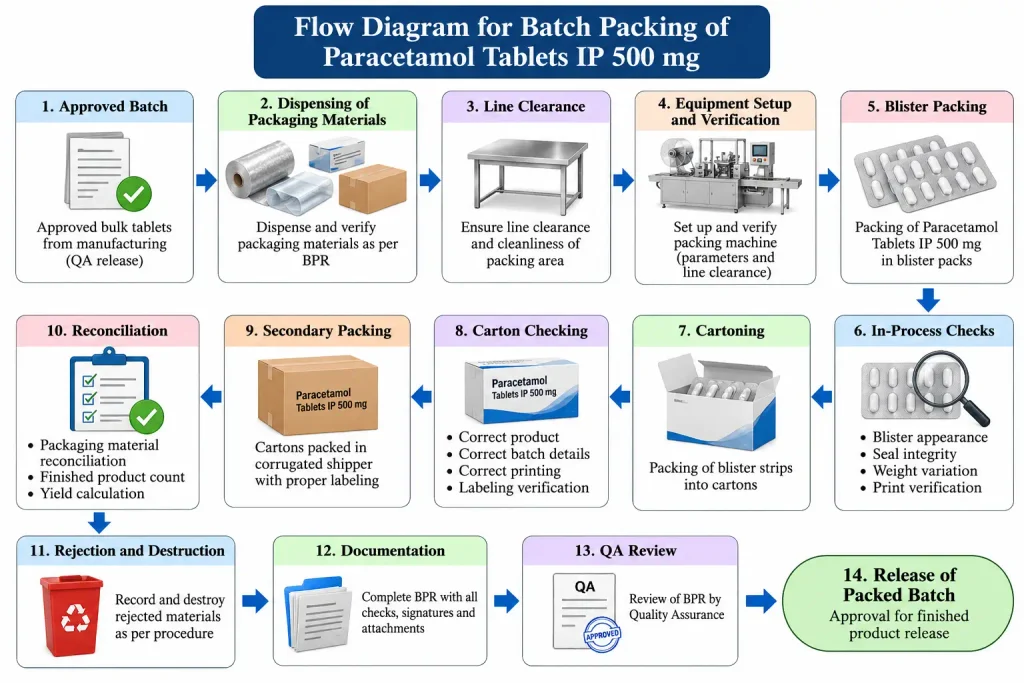
After Production and Quality Assurance personnel complete line clearance, packaging equipment is prepared and verified. Blister packing operations are then performed under controlled conditions, with monitoring of sealing temperature, machine speed, leak testing, and environmental parameters. The packed blister strips undergo in-process quality checks before being placed into cartons and subsequently packed into labelled shippers. Product identification, batch number, manufacturing date, expiry date, and overprinting details are verified throughout the operation. Finally, packaging material reconciliation, rejection analysis, destruction records, and yield calculations are completed. The BPR is reviewed by authorized personnel to ensure documentation accuracy, accountability, and compliance before finished product release. This flow diagram supports operational consistency, minimizes packaging errors, and facilitates pharmaceutical audits and inspections.
3. Critical Process Parameters (CPP) and Critical Quality Attributes (CQA) of Paracetamol Tablets IP 500 mg – Batch Packing Record (BPR):
The Critical Process Parameters (CPP) and Critical Quality Attributes (CQA) of Paracetamol Tablets IP 500 mg play an essential role in maintaining product quality, packaging integrity, patient safety, and compliance with Good Manufacturing Practices (GMP). During the batch packing process, important process parameters include blister forming temperature, sealing roller temperature, machine speed, sealing pressure, overprinting settings, environmental conditions, and in-process inspection frequency. These parameters require appropriate monitoring and control to ensure consistent packaging performance and prevent defects. The key quality attributes include blister appearance, seal integrity, absence of leakage, correct tablet count, accurate overprinting, proper product identification, and carton and shipper integrity. Tablet identity, assay, and weight variation are additional product quality attributes established during manufacturing and verified through applicable quality controls.
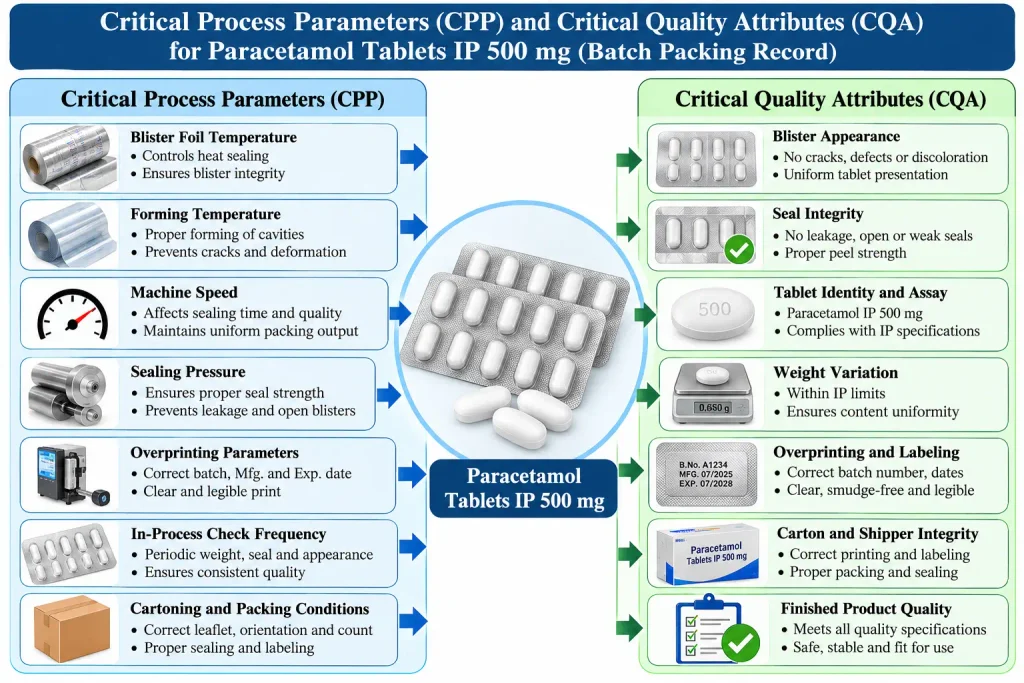
Routine in-process checks, including blister leak testing, packaging inspection, carton verification, and reconciliation, help identify potential defects and prevent packaging mix-ups. The Batch Packing Record provides documented evidence of equipment setup, process monitoring, quality verification, rejection handling, material reconciliation, and authorized review. Effective monitoring of CPPs and verification of CQAs help ensure that Paracetamol Tablets IP 500 mg are correctly packed, adequately protected, accurately labelled, and suitable for release in accordance with approved specifications.
Note: The illustrated parameters are educational examples. Actual CPP classification, acceptance limits, and CQA requirements must be established through approved specifications, qualification, validation, and quality risk assessment.