






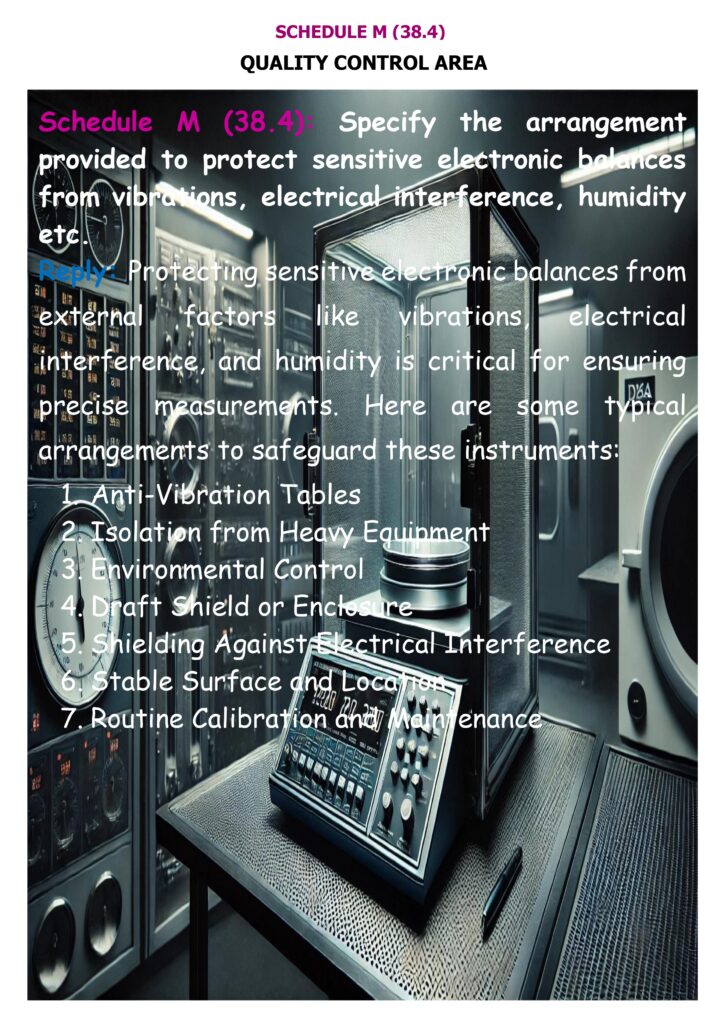
In a risk-based inspection (RBI), Schedule L1 – Point 38.4 checks whether the QC laboratory has effective arrangements to protect sensitive electronic balances from vibrations, electrical interference, and humidity, because these factors can silently bias weighing results and cause wrong assay, blend errors, OOS/OOT events, and data integrity issues. The RBI checklist wording is: “Specify the arrangement provided to protect sensitive electronic balances from vibrations, electrical interference, humidity etc.”
What inspectors expect to see (risk-based evidence)
1) Vibration control (highest practical impact)
- Dedicated balance room or low-traffic weighing zone; no nearby compressors, granulators, centrifuges, or heavy footsteps.
- Anti-vibration table / granite slab with isolators; balance leveled and protected from door slams and drafts.
- Defined housekeeping: no tapping benches, no placing items on the same table during weighing.
2) Electrical / EMI protection
- Dedicated power line, proper earthing/grounding, and (where needed) UPS/voltage stabilizer to prevent drift and interruptions.
- Separation from high-current cables, VFD motors, RF sources; controlled use of mobile phones near balances.
- Power cables kept away from moisture and liquid spills (basic electrical protection).
3) Temperature & humidity control
- Controlled HVAC to maintain stable temperature/RH; monitoring with calibrated devices and recorded trends.
- Schedule L1 expects instruments to be housed in a dust-free environment and, where required, temperature and humidity maintained with periodic checks recorded.
4) Operational controls
- Daily balance verification (check weights), calibration schedule, “out of order” labeling, and investigation of abnormal drift.
- Analyst training on equilibration time, static control, door closing, and minimizing air currents.
Common RBI red flags
Balances placed on vibrating benches, fluctuating RH without records, shared sockets with high-load equipment, repeated weight-check failures without CAPA, and no documented rationale that the environment is suitable for the required readability.