






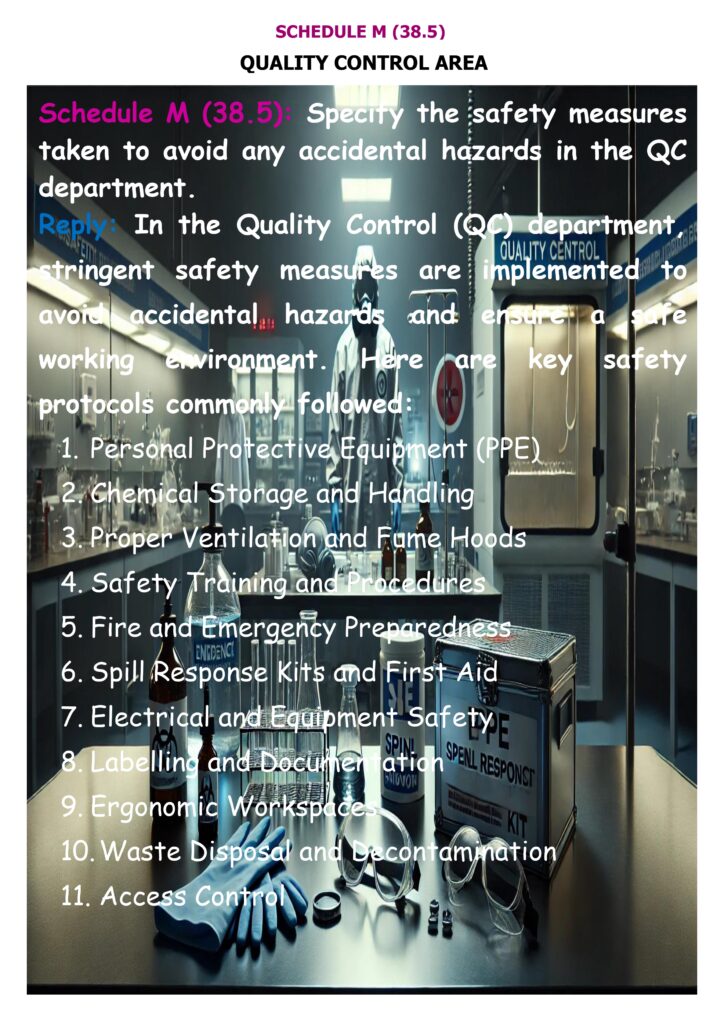
Risk-Based Inspection (RBI) – Schedule L1 Point 38.5 (QC Department Safety) asks: “Specify the safety measures taken to avoid any accidental hazards in the QC department.”
Under RBI, this is treated as a high-impact, high-likelihood control because QC labs routinely handle flammable solvents, corrosives, toxic reagents, compressed gases, hot equipment (ovens/autoclaves), electrical instruments, glassware, and (where applicable) microbiological materials—so unsafe conditions can harm people, damage critical instruments, and trigger contamination, data loss, or testing delays that affect batch release decisions.
What inspectors expect you to demonstrate (risk controls)
1) Written safety system (GLP/GMP aligned)
Schedule L1 expects general and specific safety instructions circulated to staff and periodically revised, and an SOP for safety, housekeeping and loss prevention aligned to applicable Government rules.
Inspectors check that SDS/MSDS are available before testing, and that rules like no eating/drinking/smoking in laboratories are implemented.
2) Engineering controls (first line of defense)
- Certified fume hoods for harmful vapors; ventilation checks and logs (hood face velocity where applicable).
- Safety showers/eye wash stations (accessible, tested), spill kits, fire detection/alarms, and appropriate extinguishers.
- Safe storage: flammable cabinets, acid/alkali segregation, gas cylinders chained with caps, controlled solvent dispensing.
3) Administrative controls and competence
- Risk assessment for lab activities (chemical compatibility, pressure/vacuum work, heating).
- Training records on chemical handling, glassware safety, first aid, and emergency response.
- Incident/near-miss reporting with CAPA and effectiveness checks.
4) PPE and behavior controls
Schedule L1 expects staff to wear lab coats/protective clothing, including gloves, masks, and eye protection wherever required.
RBI “red flags” that expand inspection depth
Missing/expired SDS, poor segregation of incompatible chemicals, non-functional fume hood/exhaust, blocked emergency exits, weak spill response, repeated minor accidents, or training-only-on-paper—these indicate weak safety governance and often lead inspectors to review broader QC controls, data integrity risk, and management oversight.