






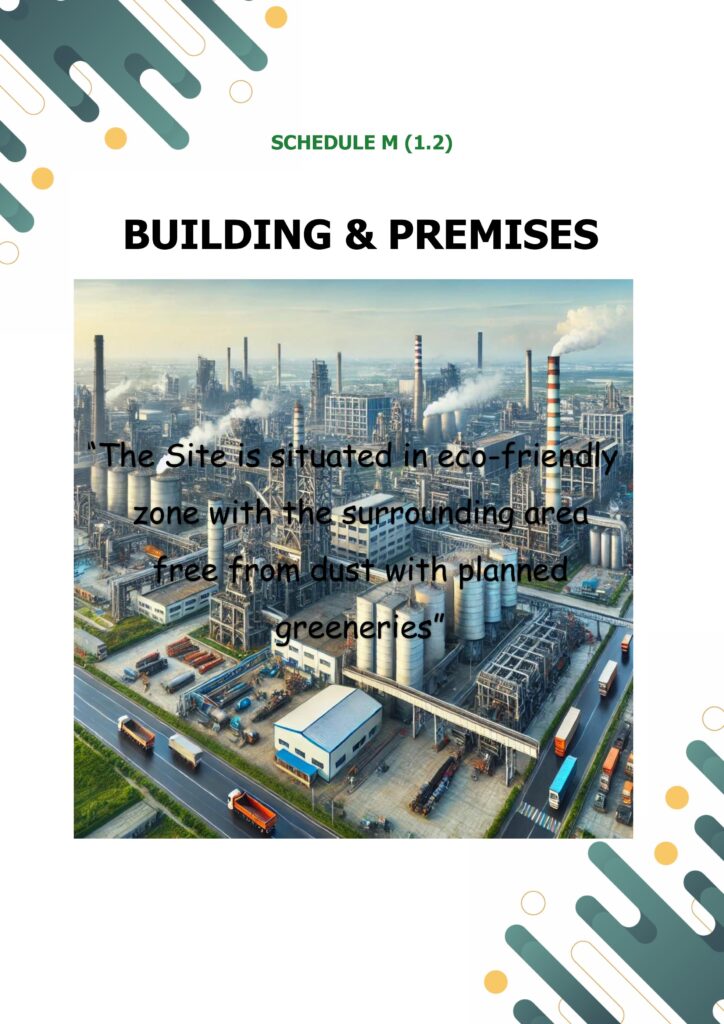
In a risk-based inspection (RBI) of Schedule M – Point 1.2 (Building and premises), inspectors treat facility design as a primary barrier against mix-ups, cross-contamination, microbial/particulate contamination, and pest ingress. Schedule M requires that buildings be designed/constructed/adapted/maintained to suit operations and enable manufacture under hygienic conditions, including compliance with the Factories Act, 1948. IPA Pharma
What RBI checks first (highest patient risk): inspectors start where a premises failure can most directly affect product—dispensing, open processing, sampling, primary packing, and any area handling potent/sensitising products or multiple products. They verify the premises are compatible with other operations in the same/adjacent sections and that space and flow support orderly equipment placement and movement to avoid mix-ups with raw materials, intermediates, and in-process materials.
Cross-contamination controls: RBI confirms layout supports segregation (physical/temporal), controlled movement of personnel/materials, and defined changeover/line-clearance. Inspectors look for evidence that contamination controls are “built-in” (e.g., dedicated rooms/airlocks where needed, defined entry/exit routes) rather than depending only on SOPs.
Pest and structural integrity: Schedule M expects premises to prevent entry of insects/pests/birds/vermin/rodents and requires interior surfaces (walls/floors/ceilings) to be smooth, crack-free, and easy to clean/disinfect. RBI therefore reviews pest-control trending, facility gaps/penetrations, and maintenance effectiveness.
Environmental control & monitoring: Where required, areas should be air-conditioned with ventilation/air control (AHUs where applicable) to maintain defined temperature/humidity, and the areas should be regularly monitored. Inspectors check qualification, sensor calibration, alarm handling, and trend reviews.
Utilities influencing hygiene (drains & surfaces): RBI verifies drainage design prevents backflow and avoids open channels in manufacturing areas; surfaces should be washable and not shed particles, with records of periodic cleaning/painting.