






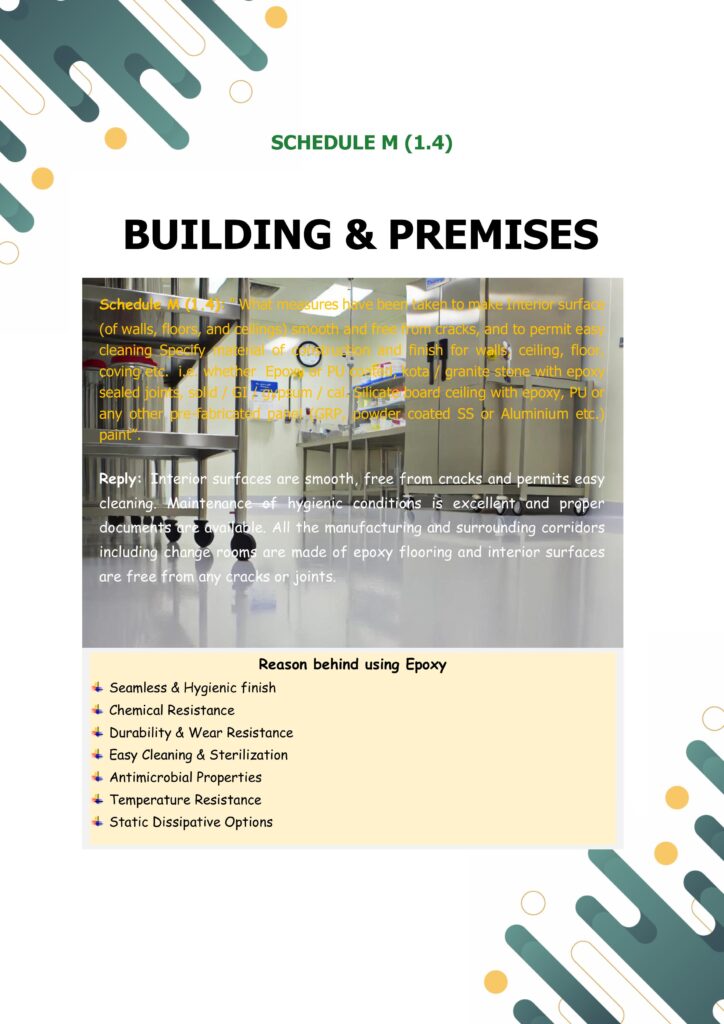
Risk Based Inspection (RBI) – Schedule M Point 1.4 (as captured in the CDSCO RBI checklist) checks what measures your site has taken to ensure interior surfaces—walls, floors, ceilings and coving—are smooth, free from cracks/open joints, and permit easy cleaning. The checklist specifically expects you to state the construction material and finish (e.g., epoxy/PU coating, kota/granite with epoxy-sealed joints, GI/gypsum/cal-silicate board ceiling, or prefabricated panels such as GRP/powder-coated SS/aluminium). CDSCO
Why this is “risk-based”
Interior surface condition directly influences:
- Contamination control: cracks, chipped plaster, flaking paint and open joints can harbor dust/microbes and are hard to sanitize.
- Cross-contamination control: porous or damaged surfaces can trap residues and spread particulates between campaigns/areas.
- Pest prevention: damaged surfaces and gaps support pest ingress and nesting.
Schedule M therefore requires premises to be designed/maintained so interior surfaces are smooth and crack-free, enabling effective cleaning/painting/disinfection, and also states walls/floors should be free from cracks/open joints to prevent dust accumulation and should not shed particles, with periodic cleaning/painting records maintained.
What inspectors typically verify
1) Physical condition (walk-through evidence)
- No visible cracks, peeling paint, powdering, damp patches, fungal growth
- Proper coving at floor–wall junctions; sealed penetrations (pipes, conduits)
- Ceilings intact (no open grids in critical zones unless justified)
2) “Material of construction” justification
- Floors: epoxy/PU or equivalent non-porous finish; joints sealed
- Walls: smooth, washable coating; impact-resistant where trolleys move
- Ceilings: sealed, cleanable panels; no particle shedding
3) System evidence
- Preventive maintenance program for repair of cracks/chips
- Cleaning SOPs + area cleaning records; periodic painting/repair logs
- Change control for any civil modifications affecting cleanability
Typical non-compliances: cracks in corridors/non-critical areas, unsealed joints, flaking paint, porous surfaces, missing repair records—because these are early indicators of loss of contamination control.