






Risk-Based Inspection (RBI) plans the frequency, depth and breadth of GMP inspections based on estimated risk to patients/product quality, using Quality Risk Management. CDSCO
Schedule M (RBI checklist) Point 11.12 – what it is about
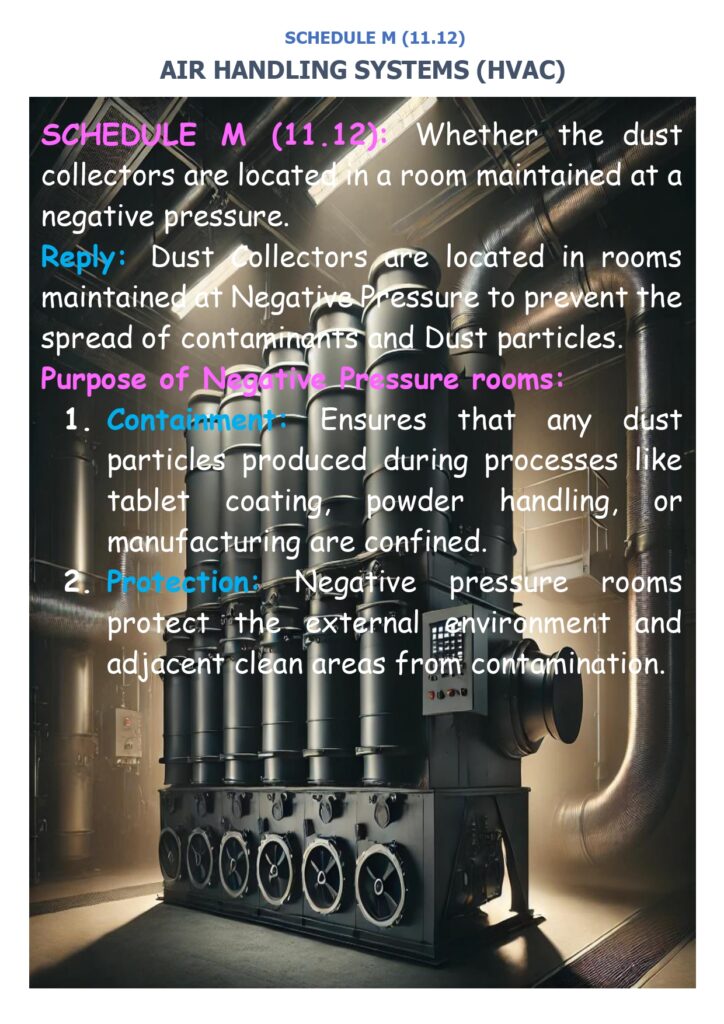
In the CDSCO Risk Based Joint Inspection checklist under the HVAC/building controls, the Schedule M item is: “Whether the dust collectors are located in a room maintained at a negative pressure.”
Immediately after that, the checklist also includes a WHO TRS-986 item about keeping the filter-cleaning facility at negative pressure. (Many teams refer to this whole block informally as “11.12”; hence the common numbering confusion.)
Why negative pressure is a high-risk focus in RBI
Dust from granulation, compression, coating, and powder filling can carry API residues. If a dust collector room is not under negative pressure, dust can escape into corridors or adjacent rooms, increasing the risk of:
- Cross-contamination (especially with potent/low-dose products)
- Mix-ups and housekeeping failures
- Operator exposure and unsafe maintenance
Because these risks have direct patient impact, RBI typically samples this area deeply (walkdowns + record review) and links findings to contamination-control strategy.
What inspectors verify (evidence expected)
- Engineering design & segregation
- Dedicated dust collector room (or enclosure) with negative pressure versus adjacent areas (defined DP setpoint, e.g., −5 to −15 Pa depending on design).
- No recirculation of dust-laden air into production; exhaust routed appropriately with required filtration.
- Monitoring and alarms
- Differential pressure gauges/sensors with routine checks, calibration status, and alarm/action response when DP is lost.
- Trend review to detect gradual loss of containment (filter loading, duct leaks, fan issues).
- Safe maintenance and filter handling
- SOPs for filter change (preferably safe-change / bag-in-bag-out where applicable), cleaning methods, PPE, and decontamination steps.
- Maintenance records showing the negative-pressure condition is maintained during interventions.
- Dust and filter waste control
- Documented collection, labeling, and disposal of dust and contaminated filters as per procedure (and investigation/CAPA if spills or leaks occur).
Common RBI gaps: dust collectors installed in open/neutral-pressure spaces, unverified DP, repeated dust deposits around ducts, and “maintenance done” without containment or disposal records.