






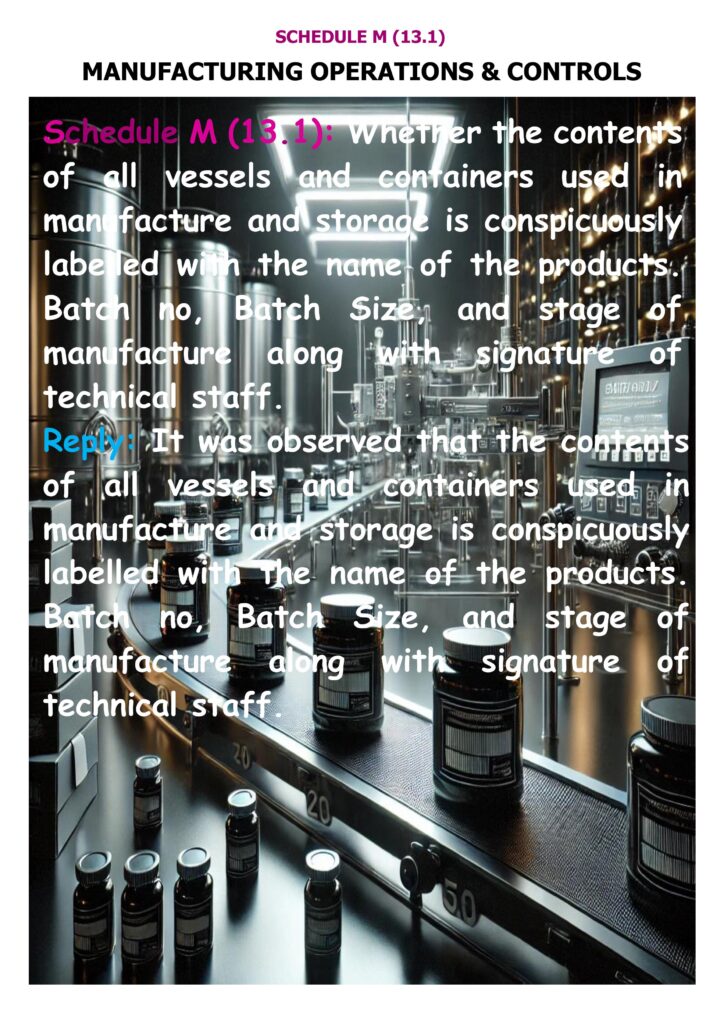
In a risk-based inspection (RBI), Schedule M point 13.1 is assessed as a mix-up prevention control because incorrect status identification of containers/equipment can lead to wrong material use, cross-batch contamination, and release of unapproved product.
What 13.1 requires: All containers and equipment shall bear appropriate labels, and different colour-coded labels/tablets should be used to indicate product status (e.g., under test, approved/passed, rejected).
How inspectors apply RBI (what they test on the floor)
- Visibility and correctness at point of use: Inspectors walk through dispensing, processing, hold areas, and packing to confirm every relevant container (RM/PM bins, IPC containers, bulk drums, rejected bins) and equipment (blenders, FBD, transfer bins, compression tools, change parts) is labelled, legible, and current—not faded, handwritten loosely, or missing.
- Status control is unambiguous: The colour code must be defined in SOPs and consistently applied across departments. Inspectors check whether “under test” materials are physically and visually prevented from being used like “approved.”
- Link to QA/QC release: Labels should tie to documented status (quarantine/testing/released/rejected) and match the system status (stock card/ERP/WMS). Any mismatch is treated as high risk.
- Line clearance/changeover discipline: RBI focuses on whether old labels are removed during cleaning/changeover and whether equipment status labels (e.g., “cleaned”, “to be cleaned”, “under maintenance”) are controlled and not reused incorrectly.
- Data integrity: Inspectors verify who can create/issue labels, how revisions are controlled, and whether label issuance is recorded (prepared by/checked by/date/time).
Common RBI red flags
Unlabeled transfer containers, mixed colour codes between areas, “approved” labels on quarantined items, temporary handwritten tags without traceability, and equipment used with “under cleaning/maintenance” status still displayed.