






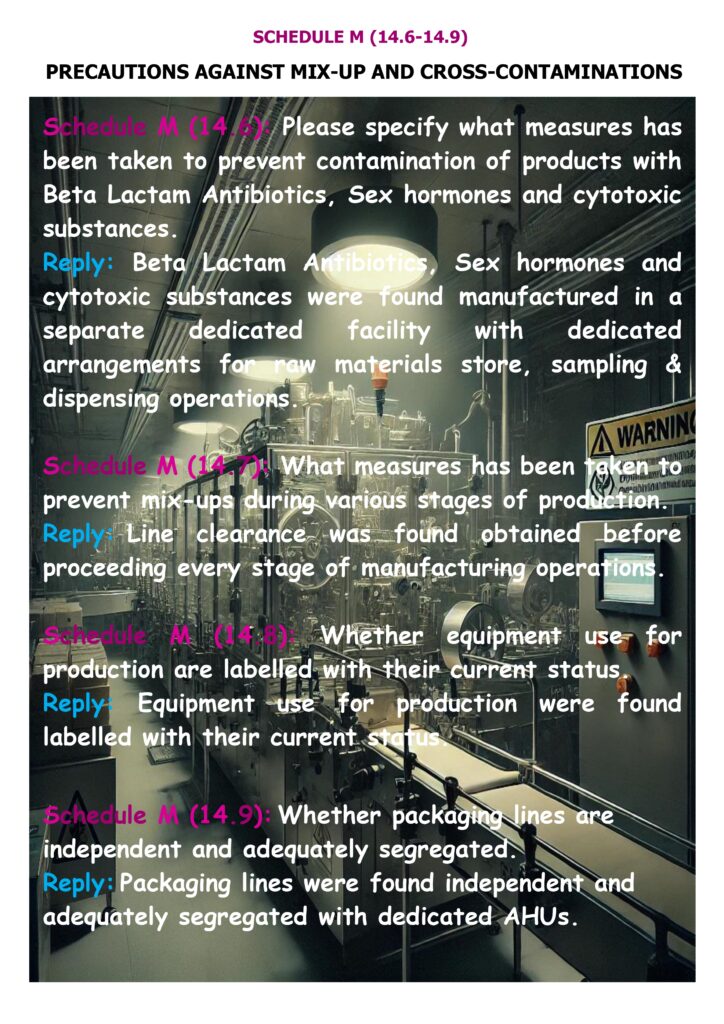
Risk Based Inspection (RBI) – Schedule M Points 14.6 to 14.9 are assessed under “Precautions against mix-up and cross-contamination” and check whether your facility has practical, documented controls to prevent cross contamination and packing mix-ups. CDSCO+1
14.6 – Prevent contamination with sensitive drugs (β-lactams, sex hormones, cytotoxics)
Inspectors ask what measures prevent these high-risk materials contaminating other products. The expected control is segregated or isolated production areas with independent AHU and proper pressure differentials, plus records proving segregation is maintained (maintenance, services, monitoring).
Evidence: dedicated blocks/rooms, independent HVAC/AHU, pressure cascade records, material/personnel flow control, validated cleaning where applicable, and change control for any shared utilities.
14.7 – Prevent mix-ups during production stages
This checks whether you prevent mix-ups through status labeling, segregation, air handling/pressure differential, cleaning, SOPs and records.
Evidence: line clearance at each stage (as applicable), labeled in-process containers, batch segregation, controlled issuance and reconciliation, and documented checks.
14.8 – Equipment status labeling
Inspectors verify that all equipment used for production is labeled with its current status (e.g., “Cleaned”, “To be cleaned”, “Under maintenance”, product/batch details where required).
Evidence: equipment logbooks, cleaning status labels, maintenance status, calibration status for instruments impacting quality.
14.9 – Independent and adequately segregated packaging lines
This confirms packaging lines are independent/segregated and that leftovers from previous packing (labels, cartons, caps, foils) are fully cleared to prevent mislabeling.
Evidence: physical segregation or campaign controls, strong line clearance, printed material control, reconciliation/yield records, and QA/IPQA verification.
Typical RBI gaps: shared AHU for sensitive products, weak pressure control, missing/unclear equipment labels, and incomplete line-clearance/reconciliation records.