






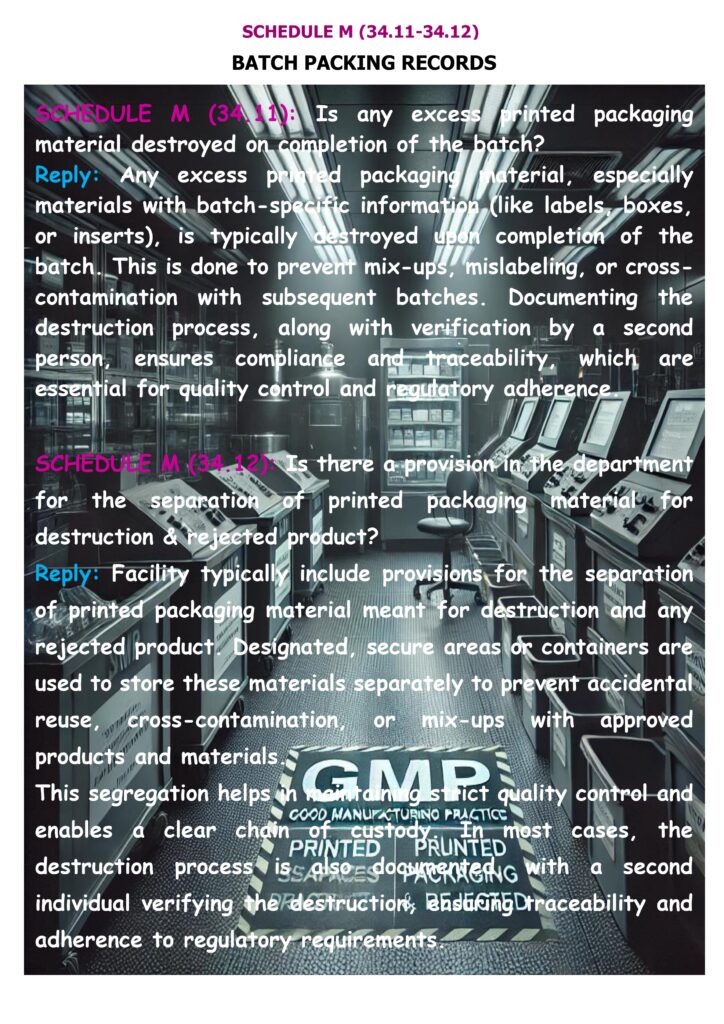
In a risk-based inspection (RBI), Schedule M points 34.11–34.12 focus on preventing one of the most serious packaging failures: printed component misuse (wrong label/carton/foil/leaflet), which can cause mislabelling, mix-ups, and recalls.
34.11 – Destruction of excess printed packaging material (on completion of the batch)
Inspectors verify whether any excess printed packaging material is destroyed after the batch is completed (not carried forward informally). CDSCO+1
RBI intent: leftover printed components are a direct “mix-up fuel” for the next batch/shift, especially for look-alike artworks, multiple strengths, and shared lines. Inspectors therefore check:
- Label/foil/carton reconciliation: issued vs used vs returned vs destroyed, and investigation of any significant discrepancy before release.
- Controlled destruction process: QA-approved SOP, defined timing (“end of batch”), method (shredding/pulping/incineration through authorised agency), and witnessing (often Production + QA).
- Traceable records: destruction log linking item code/artwork version, batch number, quantity destroyed, date/time, and signatures.
- Status control: excess printed items are not stored as “unidentified loose components” and are not accessible to operators after line clearance.
34.12 – Provision for separation of printed packaging material for destruction & rejected product
Inspectors confirm there is a dedicated provision/area/containers to segregate (a) printed packaging material awaiting destruction and (b) rejected product, to prevent accidental reintroduction into good stock. CDSCO+1
RBI checks include: clearly labelled, locked bins; physical separation from “returned-to-store” items; restricted access; defined flow to disposal; and periodic reconciliation so rejects don’t accumulate without closure.
Common RBI red flags: destruction done “later”, no witness, mixed reject bins, unclear segregation, and repeated reconciliation variances without CAPA.