






Risk-Based Inspection (RBI) is an inspection planning approach where regulators priorities what to inspect and how deeply based on risk to patient safety and product quality, using Quality Risk Management to decide inspection frequency and scope.
Schedule M – Point 34.15 (What it means)
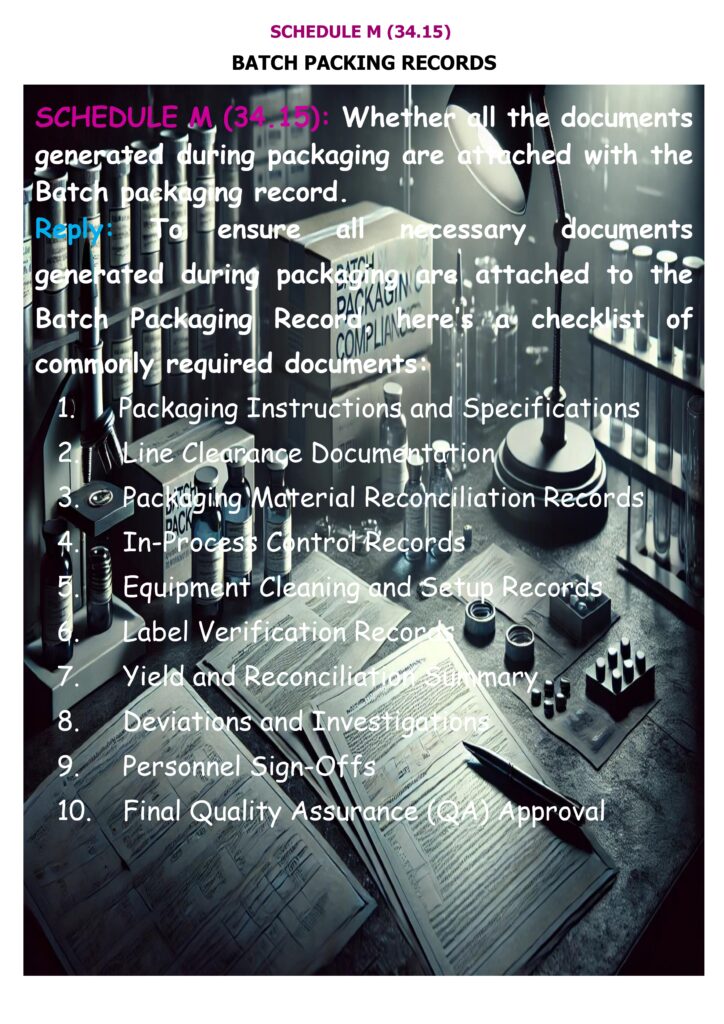
In the Schedule M inspection checklist, Point 34.15 checks: “Whether all the documents generated during packaging are attached with the Batch Packaging Record (BPR).” CDSCO
This is a data integrity + traceability control. Packaging is a high-risk stage because errors can create wrong product / wrong strength / wrong batch / wrong expiry / wrong label, even if manufacturing was correct.
Why 34.15 is “high-risk” in RBI
Under RBI, inspectors go deeper where a failure can directly cause mix-ups or mislabelling (patient-impacting defects) or where the site history shows packaging-related issues (complaints, returns, recalls, label reconciliation deviations). Ensuring every packaging-generated document is attached to the BPR provides end-to-end evidence that:
- the right materials were issued and reconciled,
- line clearance and start-up checks were done,
- in-process and online checks met acceptance criteria,
- deviations were captured and assessed before release.
What “documents generated during packaging” typically includes (evidence set)
Inspectors usually expect the BPR file to contain, as applicable:
- Line clearance records (before/after batch, area/equipment checks)
- Packaging material issue & reconciliation (printed foils, labels, cartons, leaflets; destruction records for excess/obsolete prints)
- In-process packaging checks (overprinting, barcodes/2D codes, embossing, seal integrity checks, leak tests where relevant)
- Yield calculations and independent verification (the checklist around 34.xx also checks yield/reconciliation logic) CDSCO
- Equipment logs/printouts (coding machine settings, counters, alarms, machine parameters, stoppages)
- Environmental/cleanliness records where required (especially for sterile/controlled packaging areas)
- Deviation reports, investigations and QA dispositions linked to that batch.
How RBI verifies compliance (practical)
RBI sampling typically includes:
- selecting high-risk products (look-alike packs, multiple strengths, high volume, recent artwork change),
- checking whether missing attachments exist (loose papers, separate files),
- verifying ALCOA+ behaviours: contemporaneous entries, signatures, traceability, and no unexplained overwriting,
- confirming QA release is based on a complete, reviewable BPR package.
A gap in 34.15 is often treated as a major documentation control weakness, and RBI usually expands review into batch release, deviation/CAPA effectiveness, and label control governance.