






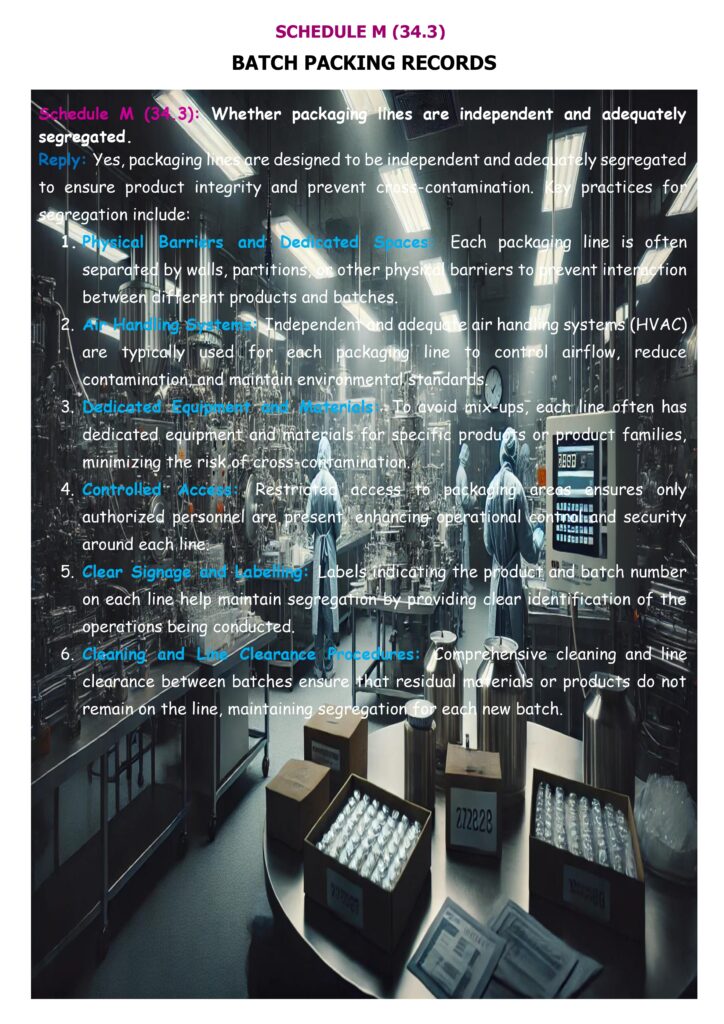
In a risk-based inspection (RBI), Schedule M point 34.3 evaluates a high-severity packaging risk: “Whether packaging lines are independent and adequately segregated.” CDSCO+1
Packaging is a final, patient-facing control point, so poor line segregation can lead to mix-ups (wrong product/strength/expiry), label interchange, leaflet/carton mix, and commingling of rejected packs—often with direct patient harm and recalls. RBI therefore prioritizes segregation for look-alike/sound-alike products, multiple strengths, common pack sizes, high-volume SKUs, and any line with a history of label reconciliation discrepancies or deviations.
Inspectors typically verify independence at three levels:
- Physical independence: separate rooms or clearly separated zones with barriers/partitions, dedicated entry/exit routes, controlled access, and enough space to prevent “spillover” of materials and personnel between lines. Where multiple lines exist in one hall, inspectors check defined line boundaries, demarcation, and prevention of crossover of trolleys, cartons, and WIP. CDSCO+1
- Operational segregation: controlled material issue to one line at a time, controlled returns, status labeling of line/materials, and robust line-clearance discipline (RBI links 34.3 performance to how well 34.4 line clearance works in practice). CDSCO
- System segregation: prevention of mix-ups via dedicated/segregated printers and overprinting controls, barcode/vision verification where used, segregation of “to be destroyed” printed components and rejects, and independent reconciliation of labels/foils/cartons against issued quantities.
Evidence reviewers expect: layout drawings and people/material flow, line SOPs, batch packaging records, label issuance/reconciliation sheets, deviation/complaint trends, and on-floor verification (observe changeover, check whether adjacent lines can “see/share” components).
Common RBI red flags: shared staging areas, interchanging trolleys between lines, open bins of printed components, unclear line boundaries, and repeated reconciliation variances—indicating segregation exists on paper but not in operation.