






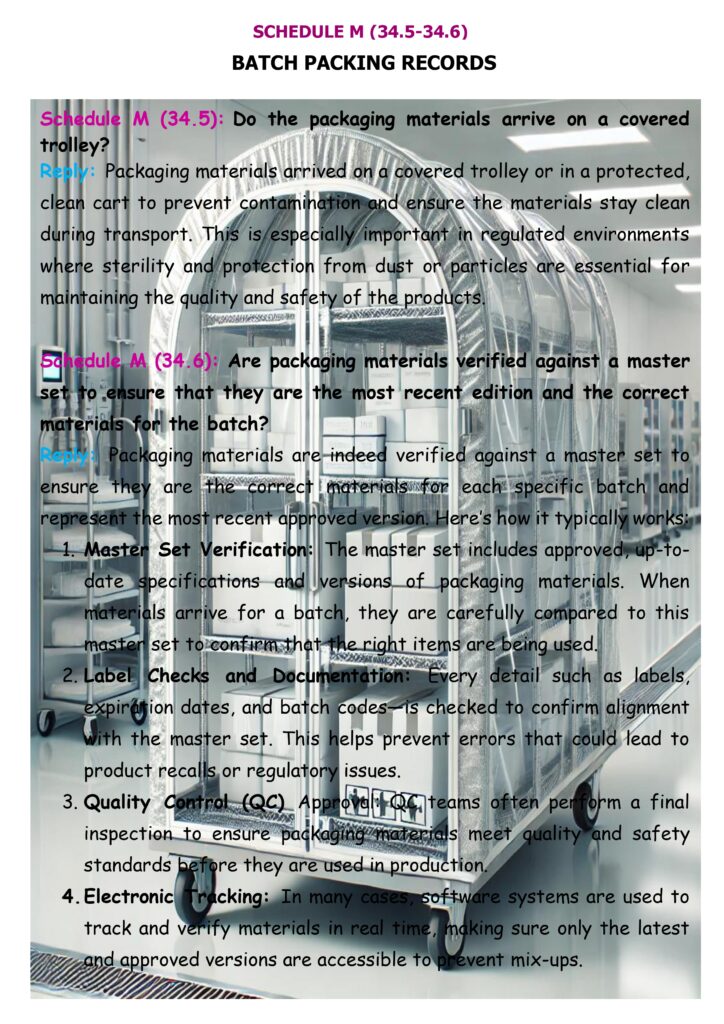
Risk-Based Inspection (RBI) – Schedule M Points 34.5–34.6 focus on preventing packaging mix-ups and contamination—high patient-risk failures because a correct tablet in a wrong pack is still a serious defect.
34.5: Packaging materials arrive on a covered trolley
The RBI checklist asks whether packaging materials arrive on a covered trolley. CDSCO
Inspectors verify that movement from warehouse → packaging hall is protected, controlled, and traceable, typically checking:
- Physical protection: trolley is covered/closed, clean, dry, and prevents dust, water, or physical damage to cartons/foils/labels/leaflets.
- Mix-up prevention during transfer: only one batch/SKU per trolley (or strong segregation), with clear identification (product, strength, pack, batch/pack order, status).
- Controlled route & handling: defined material transfer route (no exposure to waste/dirty corridors), and a transfer SOP with responsibilities.
- Security for printed items: tamper-evident outer packing or sealed cartons, with checks for broken seals and documented action if damage is found.
- Record linkage: issue note / dispensing record matches what reaches the line (often cross-checked with the Batch Packaging Record and later reconciliation).
If this control is weak, RBI typically expands into warehouse issuance, line clearance discipline, and printed-material reconciliation because unprotected transfer increases both contamination and mix-up probability.
34.6: Verify packaging materials against a master set
The checklist asks whether packaging materials are verified against a master set to ensure they are the most recent edition and the correct materials for the batch. CDSCO
This aligns with Schedule M expectations that approved packaging instructions include a complete list of packaging materials with codes, specimens/reproductions of printed materials, and special precautions including line clearance.
RBI evidence inspectors expect:
- A controlled “master set / golden sample” maintained by QA (current artwork/version, approved text, correct barcode/2D code, coding location for batch/expiry).
- Two-person verification (or validated electronic verification) at line receipt/line set-up: component code, version/edition, market pack, language, leaflet revision, overprint/coding details.
- Links to approved packaging instructions/BPR and change control so obsolete packs cannot be issued or used.
Common RBI findings: uncovered trolleys, mixed SKUs on one trolley, master set not controlled/updated, or “checked” without evidence—each treated as high risk due to direct mislabeling potential.