






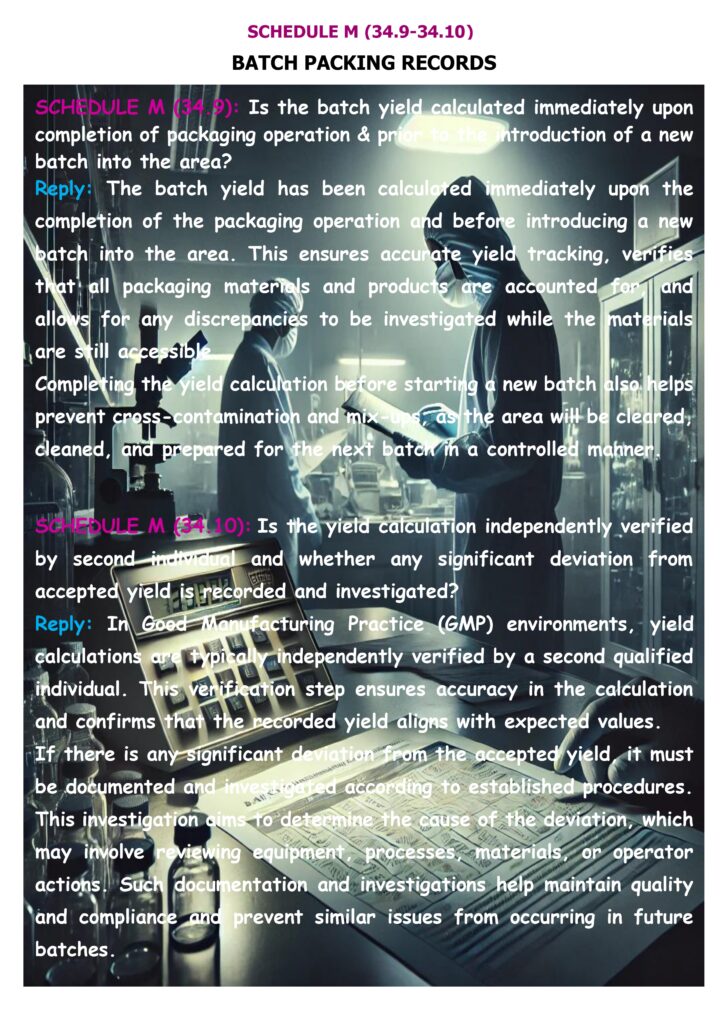
Risk Based Inspection (RBI) – Schedule M Points 34.9–34.10 focus on packaging yield control and reconciliation, because packaging is one of the highest-risk stages for mix-ups, mislabeling, and undocumented losses.
Point 34.9 (Immediate batch yield calculation)
Inspectors verify whether batch yield is calculated immediately after completion of the packaging operation and before a new batch is introduced into the same area. CDSCO
Intent: prevent carrying forward unresolved discrepancies (missing packs/labels/components) into the next batch and reduce the chance of mix-ups.
What compliance looks like
- At the end of packing, calculate and record:
- Input: issued bulk quantity, issued printed components (labels, cartons, foils), PM quantities.
- Output: finished packs, rejects, samples, rework (if permitted), returns, destruction.
- Perform component reconciliation (especially printed materials) and attach supporting records (counter printouts, destruction records, reject counts).
- Ensure the area is not released for the next batch until yield/reconciliation is completed and reviewed.
Point 34.10 (Independent verification + investigation)
Inspectors verify whether the yield calculation is independently checked by a second individual, and whether any significant deviation from accepted yield is recorded and investigated. CDSCO
Intent: reduce human error and ensure unexplained losses are treated as potential quality events.
What compliance looks like
- A second person (supervisor/QA/IPQA) re-checks the math and reconciliation and signs/date-times the check.
- Predefined criteria for “significant deviation” (site SOP-based) triggers:
- deviation entry, impact/risk assessment, search for missing units/labels, check for line clearance weaknesses, and CAPA.
- Link the outcome to batch disposition (hold/release decision).
These points align with WHO GMP expectations that batch packaging records capture planned vs actual quantities and reconciliation, strengthening traceability and error prevention.