






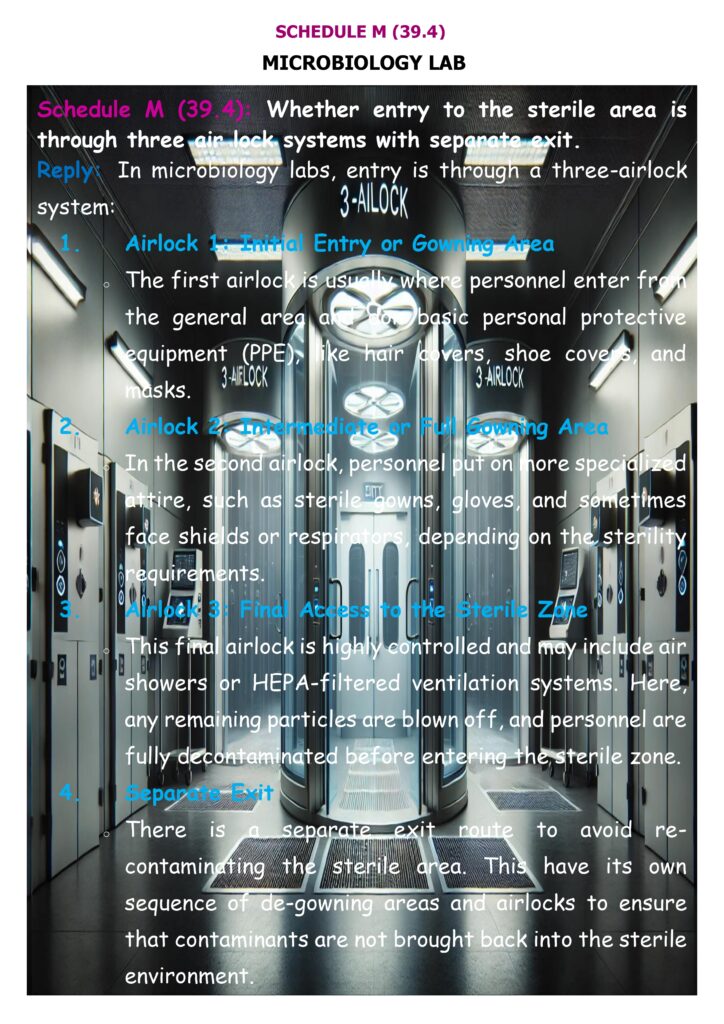
In a risk-based inspection (RBI), Schedule M point 39.4 verifies a key sterility barrier: entry to the sterile area is through a three–airlock system with a separate exit. CDSCO
Why this is high-risk: Personnel are the biggest contamination source in aseptic operations. A properly designed, three-stage airlock entry (with a dedicated exit route) supports unidirectional flow, reduces airborne transfer of particles/microbes, and prevents mixing of “unclean” and “clean” traffic, which can otherwise compromise Grade B/A conditions and increase sterility failure risk.
What inspectors check (RBI depth):
- Design intent and actual layout: presence of three sequential entry stages (commonly “black/grey/white” change rooms or equivalent) leading to the sterile area, and a separate exit that does not cross the entry path. Inspectors physically walk the flow to confirm people cannot shortcut between stages.
- Pressure cascade performance: documented differential pressures between stages and recovery after door opening; alarms for low differential; trending and deviation handling.
- Door controls/interlocks: interlocking logic (where applicable), door-closure discipline, signage, and prevention of simultaneous door opening that could collapse the pressure cascade.
- Gowning and behaviour controls: SOPs that match the 3-stage layout (hand hygiene, gown sequence, sterile glove disinfection), with training and periodic gowning qualification.
- Access control and records: entry/exit authorization (badge/biometric/logbook), visitor controls, and reconciliation with production and environmental monitoring excursions.
- Environmental monitoring linkage: higher scrutiny if the site has repeated personnel-related EM failures; inspectors expect CAPA that strengthens airlock discipline (flow redesign, retraining, door alarm upgrades).
Common RBI red flags: shared entry/exit, missing or poorly defined stages, doors propped open, frequent pressure alarms without CAPA, and uncontrolled personnel movement during interventions/maintenance.