






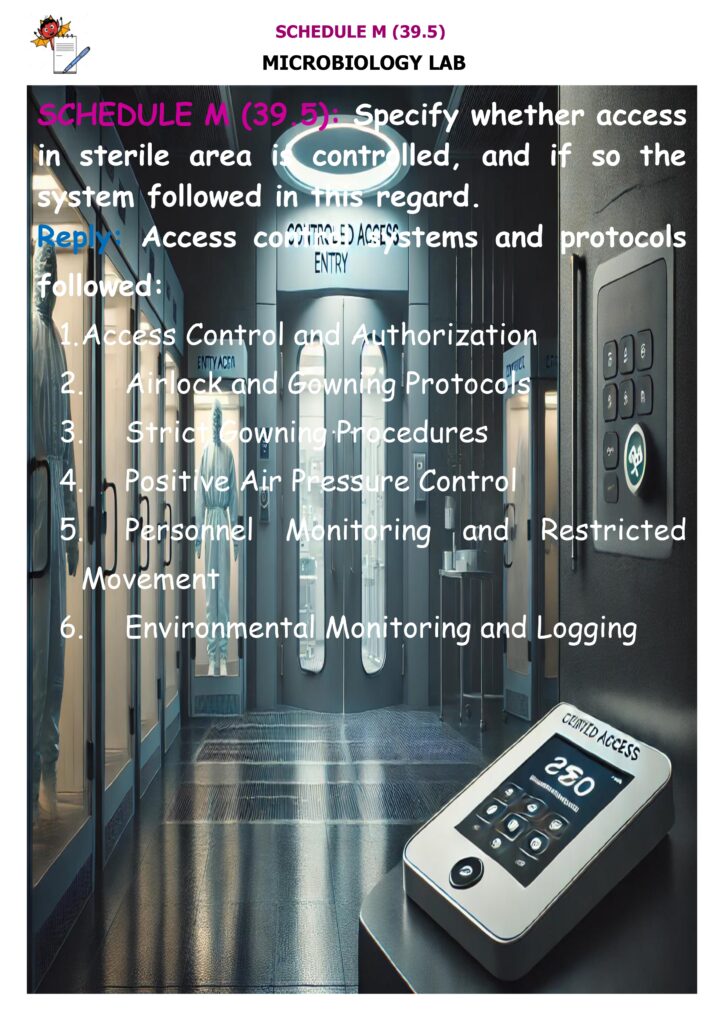
Risk Based Inspection (RBI) – “Schedule M Point 39.5” in the CDSCO RBI checklist (mapped to WHO TRS 986) asks inspectors to verify: whether access to the sterile area is controlled, and if yes, what system is followed. CDSCO+1
Why this point matters (risk intent)
Uncontrolled entry is a major driver of microbial and particulate contamination in sterile manufacturing. Every unnecessary or unqualified entry increases risk to sterility assurance, especially during aseptic operations.
What inspectors expect to see (practical compliance)
1) Written system (SOP + roles)
- An approved SOP describing: who can enter which sterile zones (Grade A/B/C/D), authorization levels, and supervision rules. CDSCO
- Defined responsibility for access approval (Production/QA/Micro/EHS as applicable).
2) Physical access controls
- Controlled doors: key-card/biometric/lock-and-key with restricted permissions.
- Interlocked airlocks for personnel and materials so two doors cannot open together (where designed).
- Clear signage for room grade, gowning requirement, and entry restrictions.
3) Personnel qualification
- Entry only for trained and qualified personnel (gowning qualification records, aseptic behavior training, periodic re-qualification). This aligns with WHO GMP expectations for competent personnel and controlled operations. World Health Organization
4) Entry/exit discipline and records
- Entry logbooks/electronic logs capturing name/ID, time in/out, purpose, and area entered; special controls for visitors/maintenance.
- Control of items brought in (no personal items; approved sterile tools only).
- Procedures for planned and unplanned interventions, including documentation and QA/Micro review when critical.
5) Material transfer controls
- Pass box/material airlock procedure: cleaning/disinfection, transfer staging, and “clean-to-sterile” flow.
Typical RBI observations under 39.5
- Access doors left open, shared keys, missing entry logs, unqualified visitors/contractors, or “bypassed” airlocks—showing the access system exists on paper but is not enforced.