






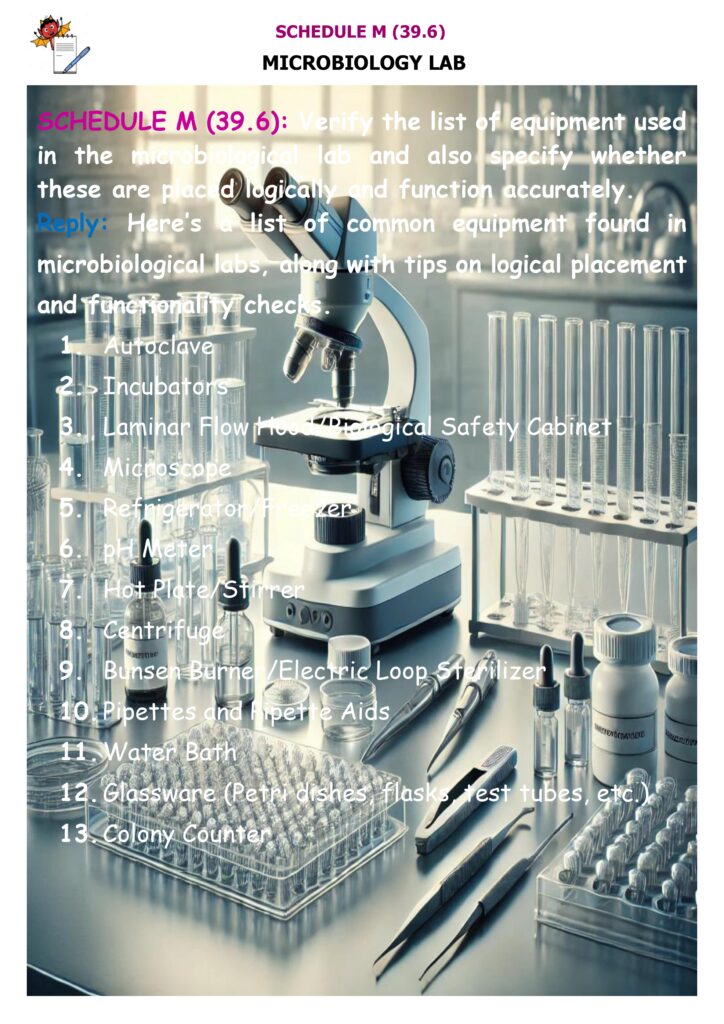
Risk Based Inspection (RBI) – Schedule M Point 39.6 (as in the CDSCO RBI checklist) requires the inspector to verify the list of equipment used in the microbiological laboratory and to confirm that the equipment is placed logically and functions accurately. CDSCO
What “logical placement” means (risk intent)
The microbiology lab layout and equipment arrangement should support unidirectional flow and contamination control—i.e., work should move from clean to dirty (or controlled to less controlled), with segregation to prevent cross-contamination of cultures and samples. Practically, inspectors expect distinct, well-placed zones such as:
- sample receipt and logging
- media preparation and sterilization
- aseptic work area (LAF/BSC for sterility/MLT handling)
- incubation rooms/areas (with controlled access)
- washing and waste handling (kept separate from aseptic work)
Poor placement (e.g., incubators next to sample receipt, wash area opening into aseptic work) increases mix-ups and contamination risk, so it is flagged during RBI.
What “function accurately” means (evidence expected)
Inspectors typically check that critical microbiology instruments are qualified/calibrated, maintained, and usable. Common equipment includes: BSC/LAF, incubators, autoclave, hot air oven, refrigerator, colony counter, microscope, air sampler, balances, pH meter, water bath, and timers/data loggers (as applicable). The site should present:
- a controlled equipment master list (ID, location, status)
- IQ/OQ/PQ (or qualification records per VMP), calibration status, preventive maintenance logs
- usage logbooks and breakdown/deviation handling
- SOPs available for instruments/equipment, placed close to the equipment as required by Schedule M.
Typical RBI gaps under 39.6
Missing/obsolete equipment list, expired calibration stickers, unqualified incubators/autoclaves, poor zoning/flows, lack of SOP’s near instruments, and weak documentation showing routine functional checks.