






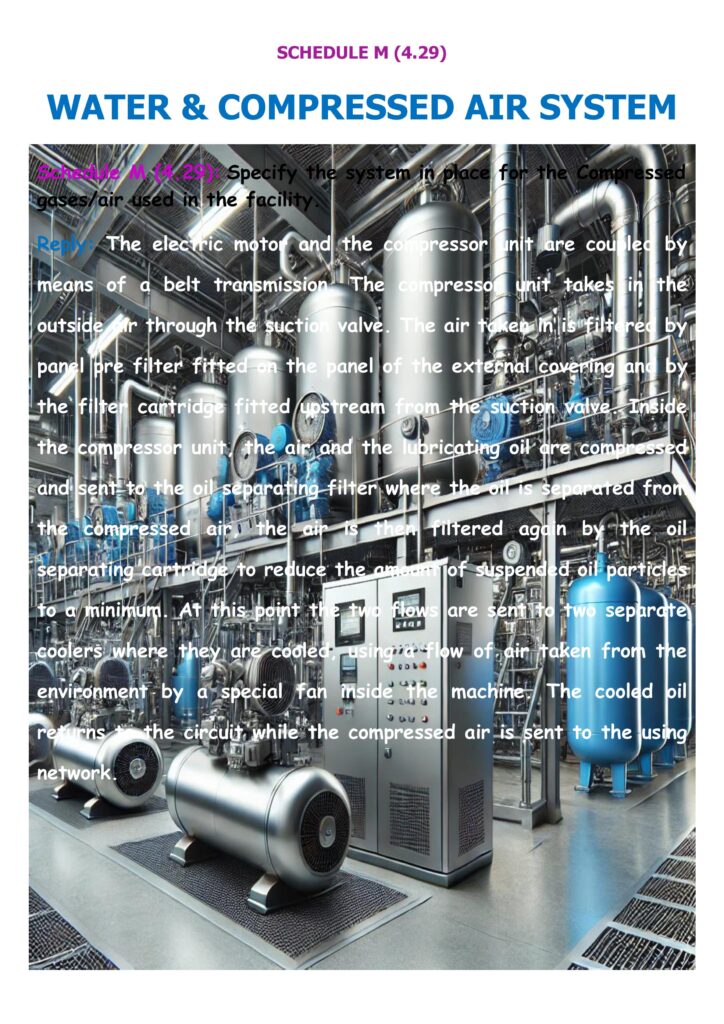
In a risk-based inspection (RBI), Schedule M point 4.29 expects you to “specify the system in place for the compressed gases / air used in the facility.” CDSCO RBI treats this as high risk because compressed air/gases can introduce oil, water, particles and microorganisms into product-contact equipment (e.g., pneumatic transfer, fluid-bed drying, filter blowback, stopper bowl air, product overlay gases), leading to contamination or batch failures.
What inspectors verify (evidence, not claims):
- System design & segregation
- P&ID/layout showing compressors, receivers, dryers, filters, distribution loops, drains, and point-of-use filters.
- Segregation between process-contact air/gases and non-product-contact utilities, with clear labelling and no cross-connections.
- Defined quality specifications
- Written specifications for each gas/air grade (particles, water/dew point, oil). Many firms align these to ISO 8573-1 classes and define fit-for-use limits.
- For sterile/aseptic use, specifications should also address microbial quality and monitoring expectations.
- Control measures
- Oil-free or oil-controlled compressors; effective water removal (dryers), automatic condensate drains, and final filtration at the point of use.
- If gas is used for sterile processing/overlay/venting: sterilizing-grade filtration with integrity testing and sterilization of downstream tubing/pipework after the final sterilizing filter.
- Qualification, monitoring, trending
- Qualification package (IQ/OQ/PQ) and periodic requalification focused on worst-case points.
- Routine testing program for contaminants and periodic microbial monitoring at point of use when gases are used in the process, with trend review and documented investigations.
- Sampling design and aseptic sampling practices for microbiological assessment.
Common RBI red flags: unfiltered air used for product-contact operations, wet lines/poor drains, missing test data, no microbial program for process gases, and recurring failures without CAPA.