






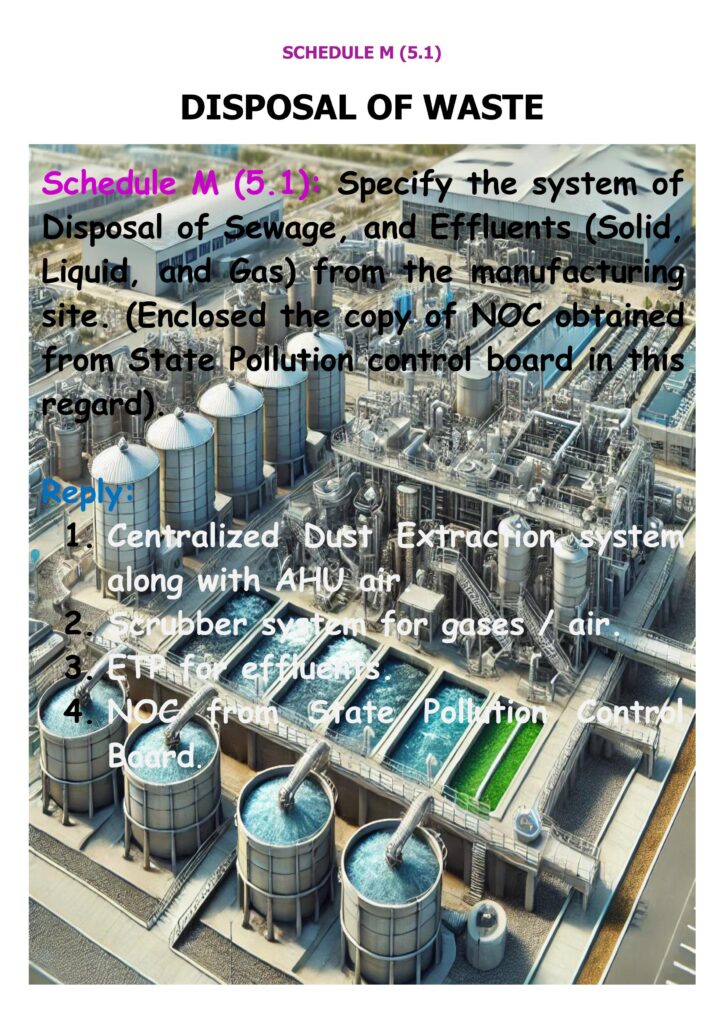
In a risk-based inspection (RBI), Schedule M point 5.1 (Disposal of waste / environmental protection) is treated as a high-impact compliance and contamination-control checkpoint, because poor waste handling can create cross-contamination risks, attract pests, generate mix-ups (rejected/returned materials), and trigger regulatory action from pollution-control authorities.
What 5.1 requires (core expectation): the site must have a defined system for disposal of sewage and effluents (solid, liquid and gas) and it must be in conformity with Pollution Control Board requirements, with supporting approvals/consents (often referenced in RBI checklists as NOC/consent from the State Pollution Control Board). CDSCO+2
How RBI is assessed (what inspectors actually verify)
1) Waste stream identification & segregation
Inspectors map all waste streams: domestic sewage, process wastewater (CIP/cleaning, wash water), solvent waste, chemical waste, bio-medical waste, gaseous emissions (HVAC exhaust, scrubbers), and rejected drugs. Segregation and clear labeling reduce mix-ups and accidental reuse.
2) Treatment and disposal controls (ETP/STP/air)
They review the effluent treatment plant (ETP) / sewage treatment plant (STP) design capacity, operating logs, calibration of pH/flow meters, maintenance, and sludge handling. For air emissions, they check stacks/scrubbers, capture systems, and monitoring records where applicable.
3) Legal compliance evidence
RBI expects current pollution-control consents/authorizations, waste vendor agreements, manifests, and disposal certificates. Any expired consent or disposal without authorization is treated as high risk. CDSCO+1
4) Bio-medical waste & rejected drugs
Schedule M expects bio-medical waste disposal per applicable rules, and additional precautions for storage and disposal of rejected drugs, with records maintained for all waste disposal.
Common RBI red flags: drains/effluent lines leaking near production, unlabeled waste drums, mixing rejected drugs with saleable stock, missing disposal records, and lapsed PCB consents.