






In Risk-Based Inspection (RBI), warehouse and sampling controls are treated as high-impact because a single mix-up, contamination event, or wrong status release in materials can affect multiple batches.
Schedule M / WHO checklist intent for 8.10–8.12
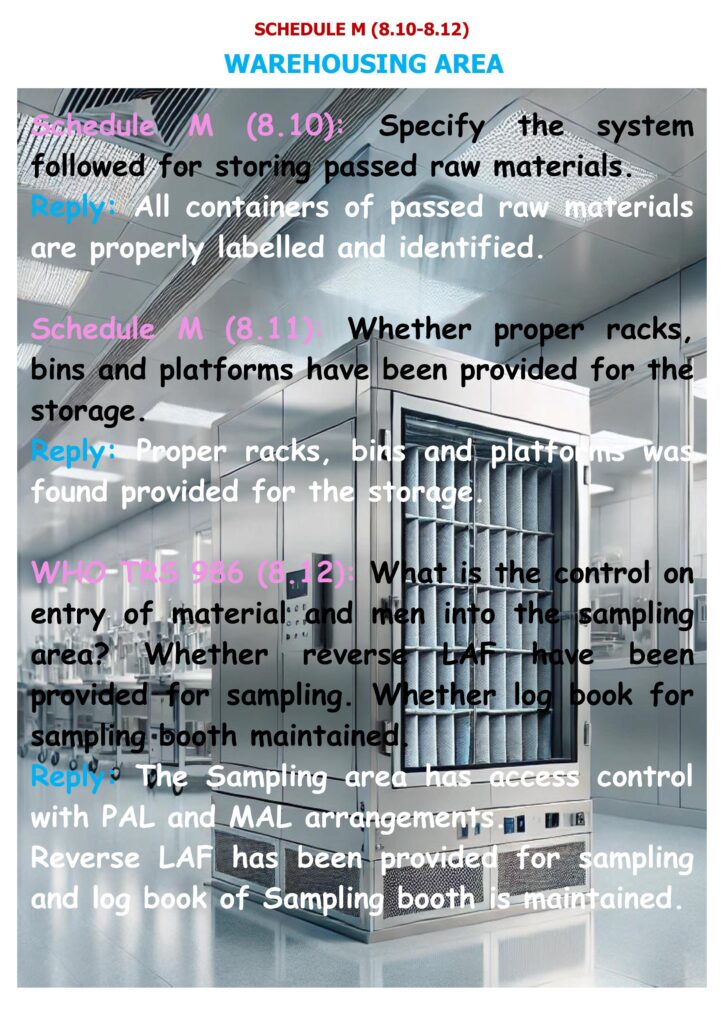
8.10 (Schedule M): “System followed for storing passed raw materials.”
RBI verifies that “passed/released” materials are stored under a clearly defined status system (Released/Quarantine/Rejected/Returned) with physical and/or electronic controls that prevent unintended issue. Inspectors expect:
- QA release linkage (no “released” label without QC disposition).
- Location control (bin cards/ERP location mapping) to prevent mix-ups between similar names/grades.
- FIFO/FEFO issuance logic and documented exceptions.
- Traceability from receipt → sampling → testing → release → dispensing (including partial containers and returns).
- Environmental suitability (temperature/humidity where critical) and deviation handling when excursions occur.
8.11 (Schedule M): “Proper racks, bins and platforms for storage.”
RBI checks whether the physical storage infrastructure prevents damage/contamination:
- Materials kept off the floor on cleanable pallets/platforms; no direct wall contact where moisture/pests can hide.
- Segregated bins/racks for different statuses and material families (odorous/volatile, allergens, potent materials).
- Defined stacking limits to avoid container deformation and label loss.
- Housekeeping and pest-control effectiveness (no dust build-up, spills, or broken containers stored “temporarily”).
8.12 (WHO TRS 986): Sampling area entry control + reverse LAF + logbook.
Even though it is referenced as WHO in the checklist, RBI reviews it with Schedule M material control because sampling is a major contamination/mix-up risk point. Inspectors verify:
- Controlled entry of persons and materials into the sampling area (gowning, cleaning of outer containers, restricted access).
- Use of a reverse LAF / downflow sampling booth to contain dust and protect both product and operator.
- Sampling booth logbook: who sampled, what material/lot, date/time, booth cleaning status, and any deviations.
Typical RBI “red flags”
Released materials stored near quarantine stock, missing location control, damaged containers on floors, sampling without containment, or “logbook-only” practices without real adherence—all trigger deeper sampling of records, deviations, and CAPA effectiveness.