






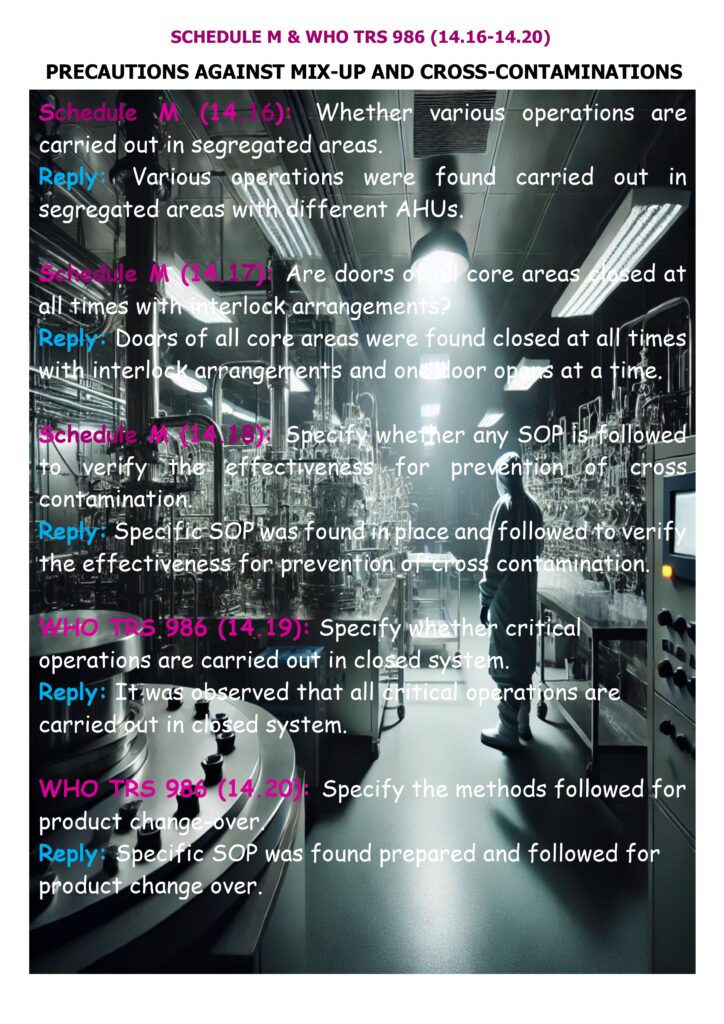
Risk-Based Inspection (RBI) – Schedule M & WHO TRS 986 (14.16–14.20) concentrates on dispensing controls and mix-up prevention, because a single wrong weighment or wrong component can affect every unit in the batch.
What these points require (combined intent)
Identity assurance of containers (Schedule M 14.16; aligned to WHO “container identity” controls): The site must have procedures/measures to ensure the identity of contents of each starting-material container, and bulk containers from which samples are drawn are identified.
Controlled dispensing by authorized persons (Schedule M 14.18 / WHO 14.16): Starting materials must be dispensed only by designated persons, following a written procedure, ensuring correct materials are accurately weighed/measured into clean, properly labelled containers.
Independent verification (Schedule M 14.19 / WHO 14.17): Each dispensed material and its weight/volume must be independently checked, and the check must be recorded.
Batch segregation after dispensing (Schedule M 14.20 / WHO 14.18): Materials dispensed for a batch must be kept together and conspicuously labelled to prevent mix-ups between batches/products/strengths.
Packaging material control interface (WHO 14.19–14.20; Schedule M continues immediately after): Primary/printed packaging materials must be controlled similarly to starting materials, with special security for printed components to prevent unauthorized access and mix-ups; issuance should be only by designated personnel via an approved procedure.
How RBI verifies compliance (typical evidence)
- Walkthrough of dispensing flow: receipt → status → dispensing → labeling → batch staging; inspectors check real practices match the SOP.
- Sampling of dispensing records for double-check signatures/timestamps, container labels, balance use, and reconciliation of issued vs returned materials.
- “Red flags” that increase RBI depth: repeated dispensing deviations, shared/unclear labels, weak independent checks, poor batch segregation, or insecure printed-material handling (high mislabeling risk).