





Risk-based inspection (RBI) of “Labels and Other Printed Materials” under Schedule M and the CDSCO/WHO-aligned checklist (WHO TRS 986 points 31.1–31.4) treats labelling as a high-impact risk area because mix-ups and mislabelling can directly harm patients and trigger recalls. Inspectors therefore verify not only the presence of documents, but the strength of controls that prevent an incorrect label from reaching a pack line. CDSCO
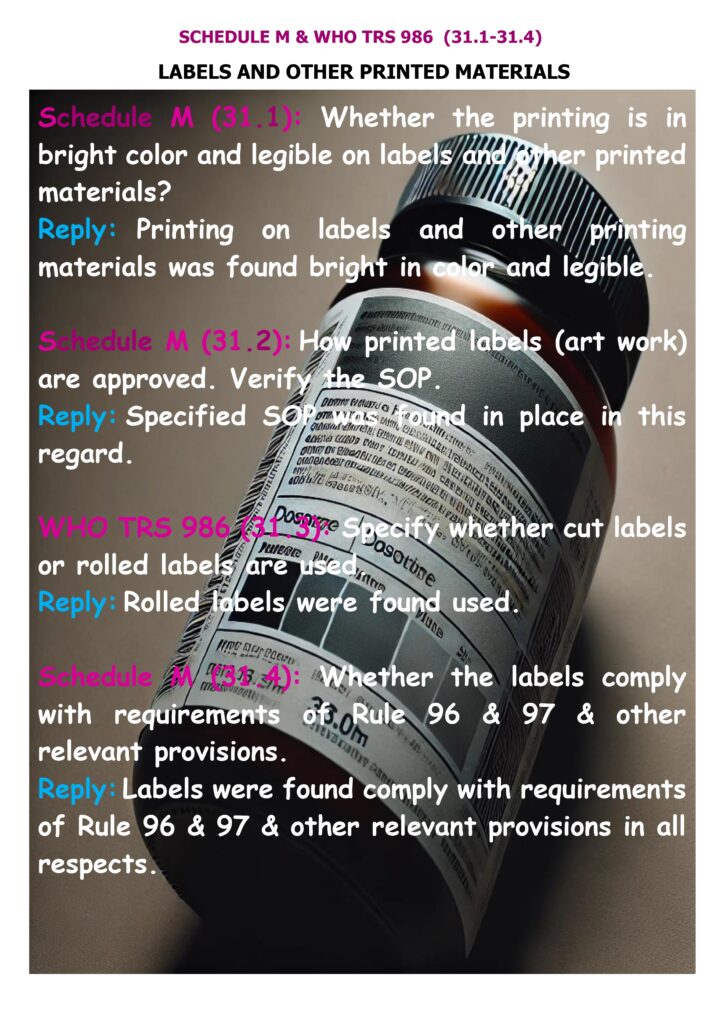
31.1 (Schedule M): Bright, legible printing. Inspectors check whether printing is bright and legible on labels and other printed materials. The checklist explicitly asks this, and Schedule M expects printing “in bright colours and in a legible manner,” with all prescribed product details present. Evidence includes approved artwork masters, printer proofs, retained label samples, and in-process packs.
31.2 (Schedule M): Artwork approval system. Inspectors evaluate how printed labels (artwork) are approved and whether an SOP exists and is followed. RBI focuses on QA ownership, version/part-number control, change control, authorised sign-offs, control of electronic files, and traceability from approved artwork → print order → receipt → issuance to line.
31.3 (WHO TRS 986 reference): Cut vs roll labels. The checklist asks whether cut labels or rolled labels are used. From a risk perspective, cut/loose labels increase mix-up potential. Revised Schedule M prefers roll-feed labels where possible and requires secure storage, segregated closed containers for cut labels, controlled issuance by designated personnel, and documented reconciliation to prevent mix-ups.
31.4 (Schedule M): Compliance with Rule 96 & 97. Inspectors confirm labels comply with the Drugs Rules, 1945: Rule 96 (mandatory particulars like name, batch, manufacturer, dates, etc.) and Rule 97 (required cautionary statements/symbols such as Schedule G/H warnings, Rx/NRx, red boxed cautions). In RBI, regulators sample marketed packs, review label issuance/return/destruction records, verify line-clearance and overprinting controls, check printer/vendor qualification, and assess investigations/CAPA for any label discrepancies or near-misses and prevent future recurrence.