




In a Risk-Based Inspection (RBI), dispensing/weighing of starting materials is treated as a high-risk step because open handling of powders can drive cross-contamination, mix-ups, and operator exposure. WHO GMP therefore expects separate weighing areas designed for the purpose with dust-control provisions, and (ideally) a separate sampling area to prevent contamination/cross-contamination.
Schedule M & WHO TRS 986 – Points 8.25–8.28 (Dispensing area controls)
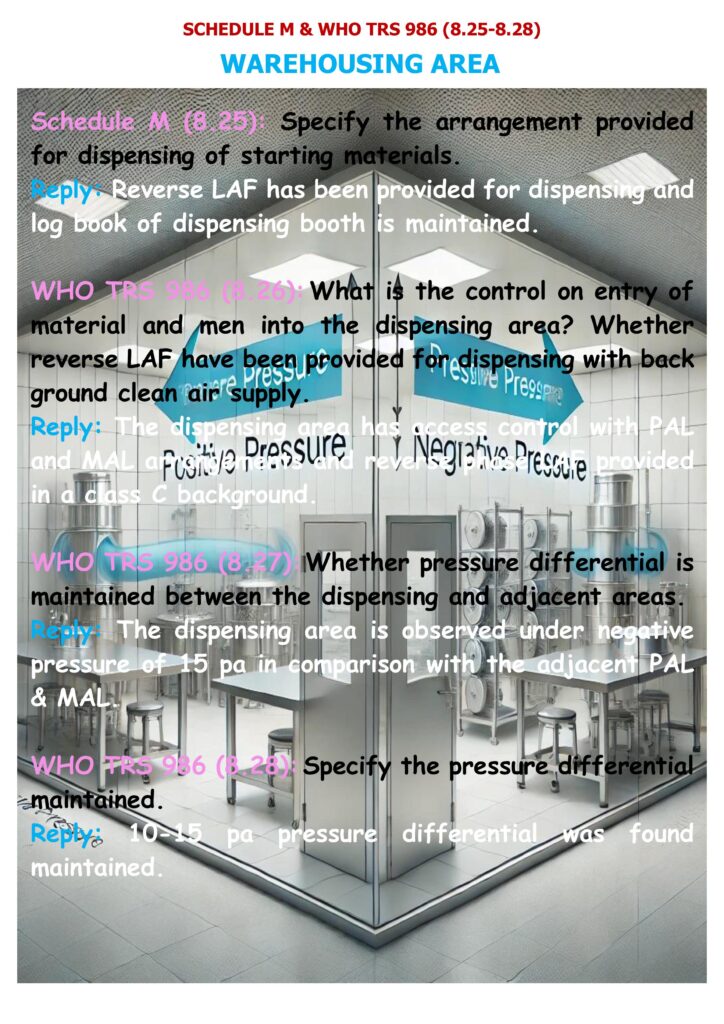
8.25 (Schedule M): Arrangement for dispensing of starting materials
Inspectors ask you to describe the dispensing set-up: dedicated dispensing room/booth, material and personnel flow, segregation for different product classes, cleaning/line clearance, and how you prevent mix-ups (status labels, bin identification, issued vs returned quantities). The RBI intent is to confirm the area is designed for weighing/dispensing and supports dust control and orderly operations.
8.26 (WHO TRS 986 in the RBI checklist): Control on entry + reverse LAF
This point checks control of entry of men and materials into the dispensing area and whether reverse LAF (downflow/dispensing booth) with background clean air supply is provided.
RBI verification typically includes: access restrictions, gowning steps, cleaning status before entry, controlled transfer of containers, and booth logbooks/usage discipline. Technically, inspectors expect qualification evidence that the booth provides effective dust capture and does not compromise weighing accuracy.
8.27–8.28 (WHO TRS 986 in the RBI checklist): Pressure differential containment
These points require confirming pressure differential is maintained between dispensing and adjacent areas and documenting the differential actually maintained (setpoint/range).
RBI checks include: DP gauges/sensors, calibration, alarms, daily logs/trends, investigation of DP excursions, and whether the pressure cascade matches the contamination-control strategy (e.g., containment for dusty/potent materials).
Common RBI “red flags”
- Dispensing done in open store areas (no controlled zone).
- Reverse LAF installed but not qualified/maintained (HEPA integrity, airflow checks).
- DP specified but not monitored/trended, or repeated excursions without CAPA.