




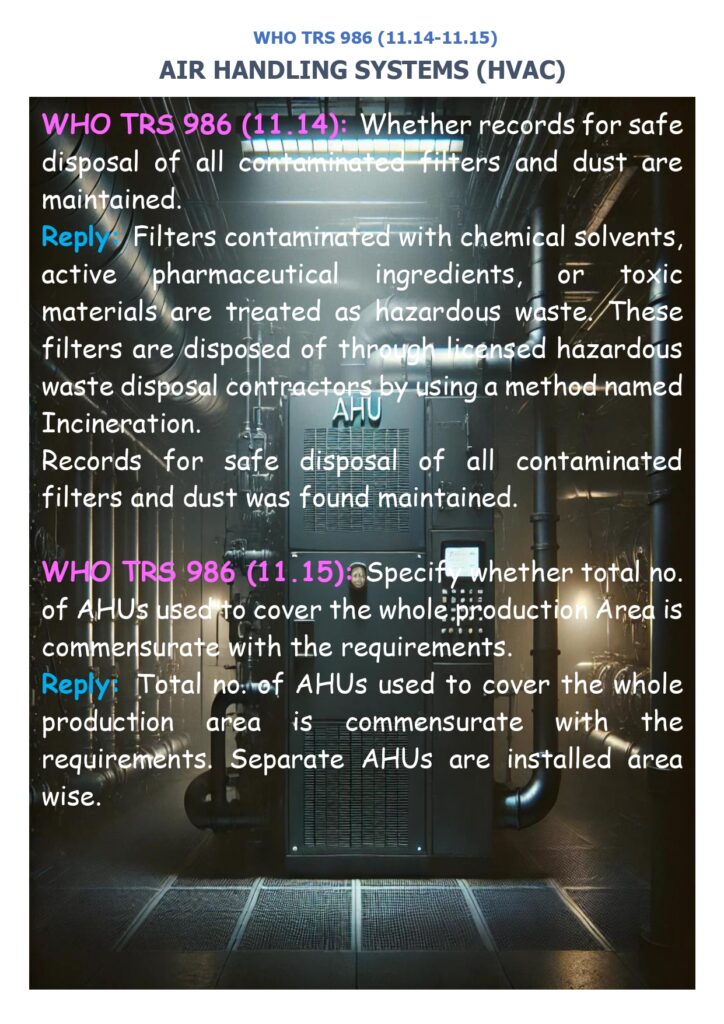
In WHO TRS 986 (Annex 2: WHO GMP – Main Principles), Section 11 is “Personal hygiene” and runs from 11.1 to 11.8 in the official text; clauses 11.14–11.15 do not appear in this edition. World Health Organization
Many organizations, when they say “11.14–11.15”, are actually referring to the two high-impact personal-hygiene controls in this section that inspectors commonly target under a risk-based inspection (RBI): 11.4 and 11.5.
What the clauses require (TRS 986 – Section 11)
- 11.4 (Hygiene culture & escalation): Employees must be instructed and encouraged to report to their supervisor any conditions related to plant, equipment, or personnel that may adversely affect the product.
- 11.5 (Prevent contamination by contact): Direct contact between the operator’s hands and starting materials, primary packaging materials, and intermediate/bulk product should be avoided.
How RBI inspects these (what evidence is “high risk / high value”)
RBI applies Quality Risk Management (QRM)—effort and controls should be commensurate with risk and linked to patient protection. In practice, inspectors focus on whether personal hygiene controls are designed, implemented, and effective, not just written.
For 11.4 (reporting conditions):
- A clear GMP escalation path (who to notify, how fast, what to record) and no-blame reporting culture.
- Records showing reported issues become deviations/near-misses, investigated with appropriate CAPA, and trended for recurrence.
- Shop-floor interviews: operators can explain what to report (e.g., damaged gloves, peeling paint, water leaks, pest sightings, equipment oiling, illness symptoms).
For 11.5 (no direct hand contact):
- SOPs defining glove policy, handwashing/sanitization, and when to change gloves (breaks, touching non-product surfaces, tears).
- Use of tools/utensils (scoops, forceps, liners) and controls preventing bare-hand handling of primary packs (especially during sampling/dispensing/packing line interventions).
- Gemba checks: real-time behaviour matches the SOP; discrepancies trigger documented action.
Because human hygiene failures can rapidly translate into contamination and mix-ups, weak control here typically expands RBI scope into training effectiveness, sanitation controls, deviation management, and management oversight.