



In a risk-based inspection, points 11.16–11.20 of the WHO TRS 986-based checklist focus on HVAC/air handling controls, because failures here can directly increase the risk of mix-ups, particulate contamination, microbial contamination, and cross-contamination—especially during product changeover and in critical/core areas. CDSCO
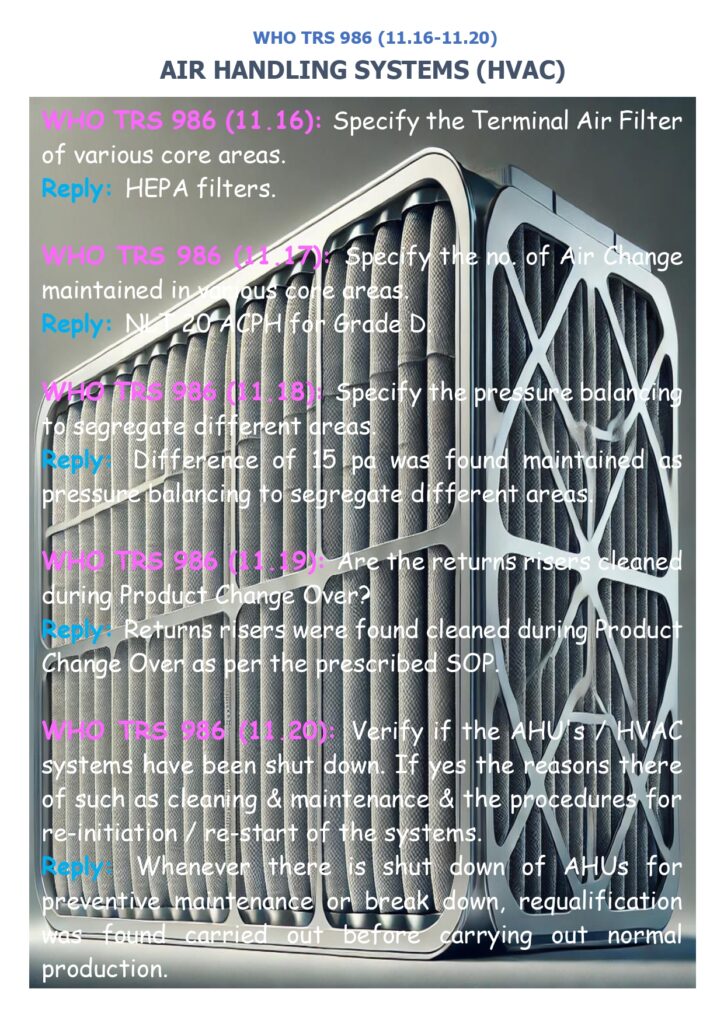
11.16 – Terminal air filters (core areas): Inspectors verify that terminal filtration for critical rooms is clearly specified and appropriate (commonly HEPA for core areas), and that filter grades, locations, integrity testing/leak testing, installation, and replacement/maintenance records are controlled. This confirms the facility can consistently remove particles at the point of air delivery.
11.17 – Air changes (core areas): Inspectors check the defined air change rate (e.g., checklist expectation such as NLT 20 ACPH) and whether it is achieved in operation through qualification data, airflow measurements, and ongoing monitoring/trending. Adequate air changes dilute contamination and support area classification.
11.18 – Pressure balancing/segregation: Inspectors confirm the pressure cascade is designed and maintained to segregate clean vs. less-clean areas (example differential values like 15 Pa may be used per site standard) and that alarms, excursions, and corrective actions are documented. Pressure control prevents backflow of contaminated air.
11.19 – Return riser cleaning during changeover: Inspectors verify whether return risers/duct paths are cleaned during product changeover, since residues can recirculate and contaminate subsequent batches. Evidence includes SOPs, cleaning records, and changeover line-clearance checks. CDSCO
11.20 – AHU/HVAC shutdown and restart: Inspectors verify if systems were shut down; if yes, they review reasons (cleaning/maintenance) and validated restart/re-initiation procedures (requalification checks, differential recovery, environmental monitoring requirements) before production resumes.