




In a risk-based inspection (RBI), WHO TRS 986 checklist points 11.5–11.8 are reviewed under HVAC/air handling risk control, because failures here can rapidly affect area classification, contamination control, and cross-contamination during routine operation, maintenance, and abnormal events.
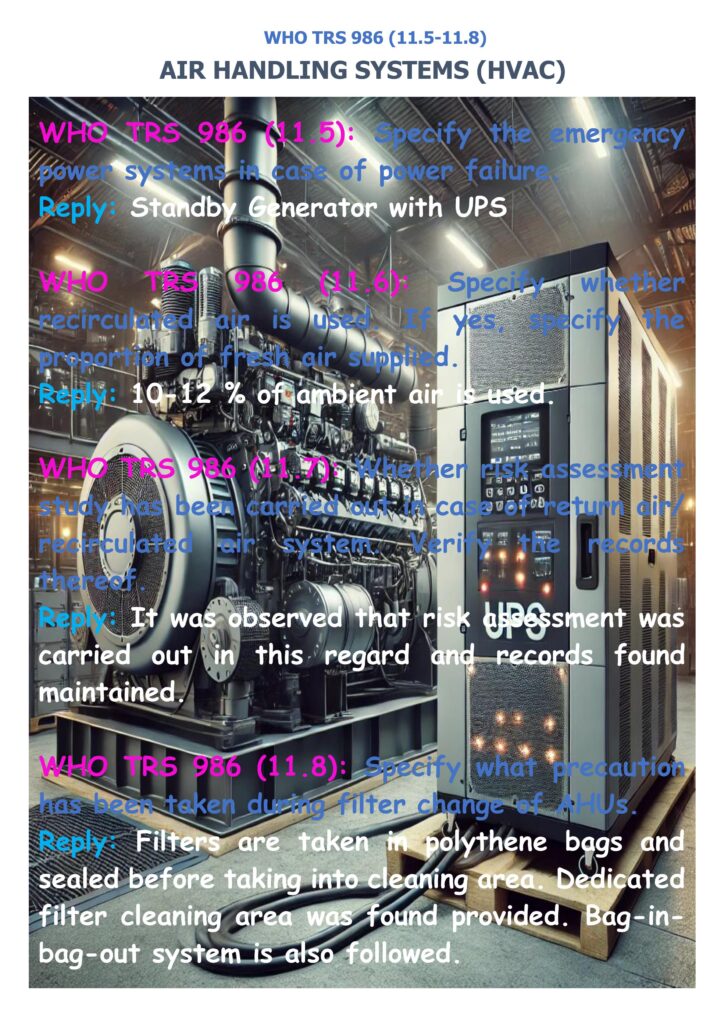
11.5 – Emergency power during power failure: Inspectors verify the site can maintain (or safely restore) critical HVAC functions during outages by specifying emergency power systems (e.g., standby generator/UPS) and defining what loads are supported (critical AHUs, BMS, pressure monitors, alarms). RBI checks blackout scenarios: what happens to pressure cascade, critical differentials, and product-at-risk decisions. Evidence: SOP for power-failure response, load list, qualification tests, alarm logs, deviation investigations. CDSCO
11.6 – Use of recirculated/return air: Inspectors confirm whether recirculated air is used, and if yes, the percentage of fresh air supplied is defined and justified. RBI emphasizes higher-risk operations (sterile areas, potent products, sensitizers, dusty processes) where recirculation can increase cross-contamination risk if design/controls are weak. Evidence: HVAC design documents, BMS setpoints, balancing reports, AHU schematics, and rationale for fresh-air proportion.
11.7 – Risk assessment for return/recirculated systems: Inspectors verify a documented risk assessment study exists for return/recirculated air and review records. RBI expects hazards identified (product carryover, HEPA failure, duct contamination), controls defined (filtration strategy, pressure cascade, monitoring, shutdown triggers), and periodic review linked to change control and deviations.
11.8 – Precautions during AHU filter change: Inspectors check what precautions are taken during filter change to prevent release of trapped contaminants (dust, microbes, potent residues) and to avoid recontamination. RBI looks for safe-change practices (isolation, bag-in/bag-out or safe-change housings where applicable), PPE, controlled waste handling, post-change cleaning, integrity/leak testing where required, and documented restart/requalification checks before production resumes.