







Brief Description
The Sampling Plan SOP establishes the requirements for systematic sampling of materials and products intended for Quality Control laboratory testing. Its scope covers materials used in production and packaging as well as finished products. Responsibility for implementation is assigned to designated QC personnel and the Head QA/QC.The SOP defines sampling considerations for raw materials, including bulk materials, single or multiple batches, multiple containers, and situations where materials may be blended or layered. It also describes sampling considerations for packaging components, taking into account the production process, manufacturing lines, containers, and inspection groups. Work-in-process sampling should consider the manufacturing stage and storage container type.For finished goods, the plan includes routine QC samples, annual-review samples, samples reflecting process or packaging changes, and stability samples. The procedure also addresses resampling decisions and evaluation of original, resampled, and combined analytical data.
Skip to PDF content1. Flow Diagram:
The flow diagram presents the Sampling Plan SOP in a simple step-by-step sequence for Quality Control activities. It begins with identification of the material or product to be sampled, followed by selection of the appropriate sampling approach for raw materials, packaging components, work-in-process materials, and finished products. Raw-material sampling considers bulk materials, single or multiple batches, multiple containers, and blended or layered materials.
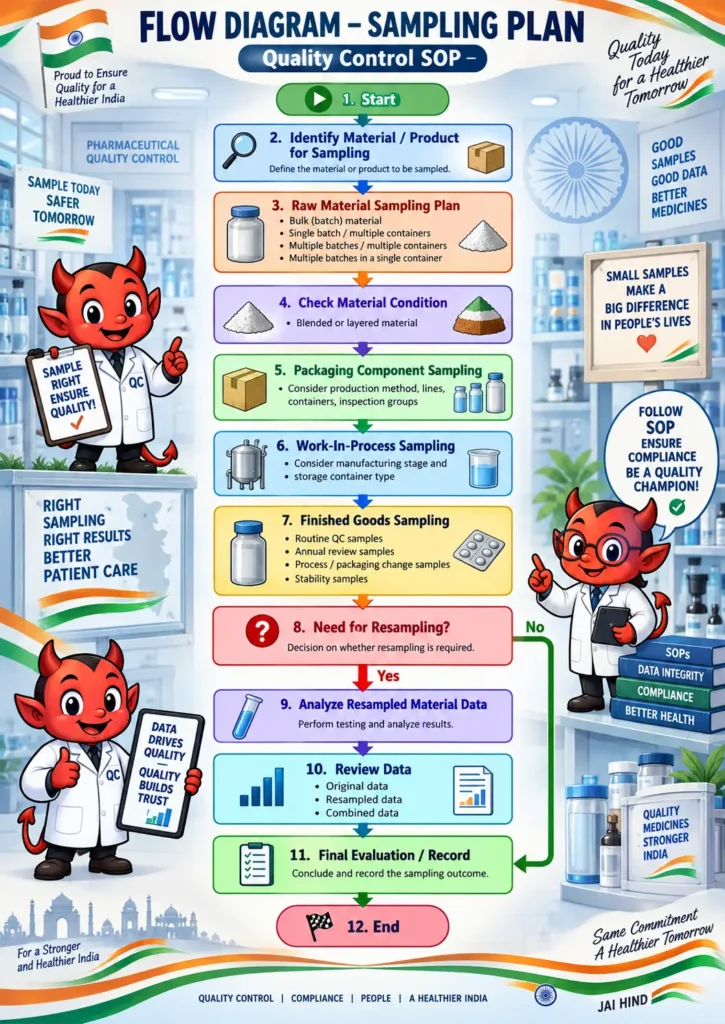
Finished-product sampling includes routine QC samples, annual-review samples, samples representing process or packaging changes, and stability samples. The flow also includes a decision point for resampling, followed by analysis of resampled material and comparison of original, resampled, and combined data before final evaluation and documentation.The PharmaDevils characters and Indian tricolour theme make the diagram engaging and suitable for GMP training, awareness boards, and SOP understanding.
2. Brainstorming for SOP Failure:
The brainstorming diagram identifies possible reasons why the Sampling Plan SOP may not be followed effectively. The central problem is explored through multiple sticky-note causes, including lack of training, unclear sampling steps, wrong container selection, improper raw-material sampling, inadequate packaging-component sampling, ignored work-in-process stages, missed finished-goods or stability samples, poor documentation, delayed resampling decisions, incomplete data review, unclear responsibilities, workload pressure, communication gaps, and lack of SOP availability at the point of use.
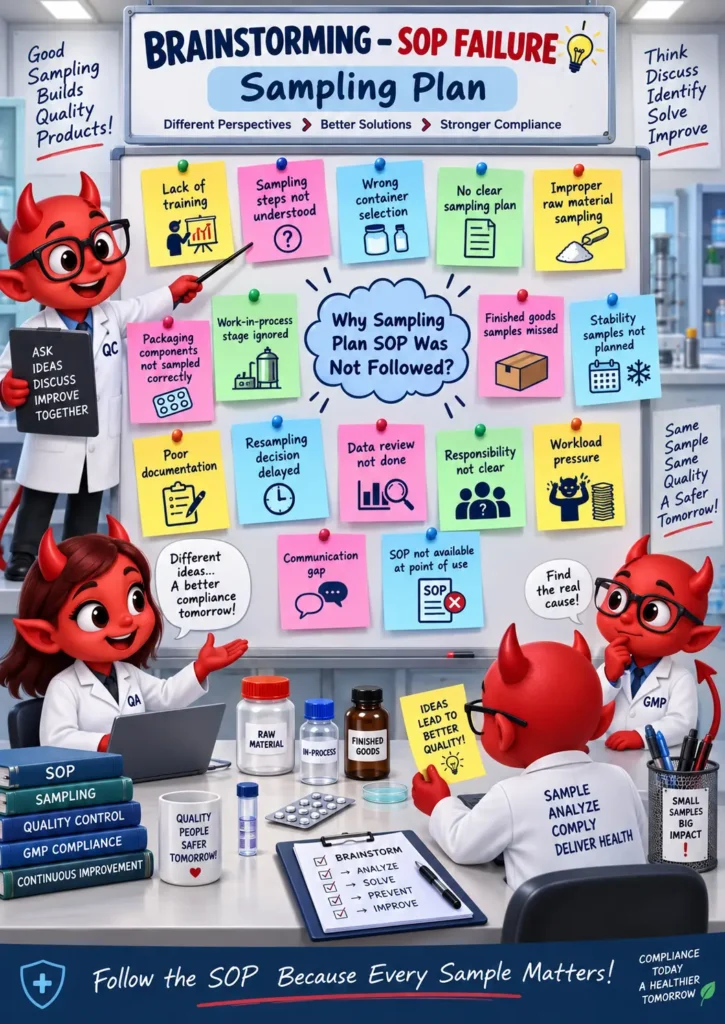
The diagram supports a team-based approach to identifying potential causes before selecting corrective and preventive actions. The SOP itself requires defined sampling approaches for raw materials, packaging components, work-in-process materials, finished goods, and resampling/data review activities.The Devils characters and colorful sticky-note format make the brainstorming process easy to understand and suitable for GMP training, deviation investigation, CAPA discussions, and continuous improvement activities.
3. 5-Why Analysis for SOP Failure:
The 5-Why diagram illustrates a simple root-cause analysis for the failure to follow the Sampling Plan SOP. It starts with the problem of incorrect or missed sampling and progressively examines possible reasons such as unclear sampling steps, insufficient training, poor SOP accessibility, unclear responsibilities, and weak supervision or compliance review.
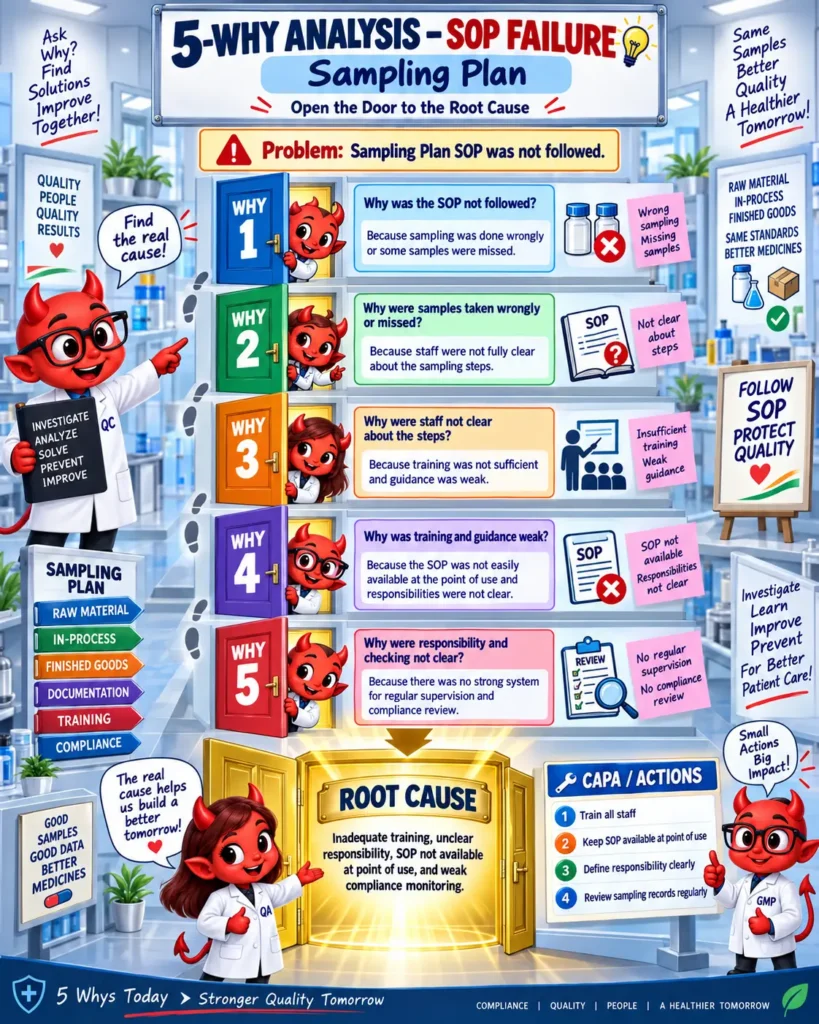
The original SOP requires defined sampling approaches for raw materials, packaging components, work-in-process materials, finished goods, resampling, and review of original and resampled data.The diagram uses Devils opening five doors to visually represent each “Why,” making the root-cause investigation easy to understand. The final door highlights proposed root causes and CAPA actions such as staff training, clear responsibility, SOP availability at the point of use, and regular review of sampling records. These root causes are analytical possibilities shown in the diagram, not causes stated directly in the SOP.
4. Fishbone Analysis for SOP Failure:
The fishbone diagram presents possible causes for failure to follow the Sampling Plan SOP using six major categories: Man/People, Method, Material, Machine/Tools, Measurement/Data, and Environment/System. The diagram highlights potential issues such as inadequate training, unclear sampling steps, improper material sampling, wrong container selection, incomplete documentation, delayed resampling decisions, poor communication, weak supervision, and irregular compliance review.
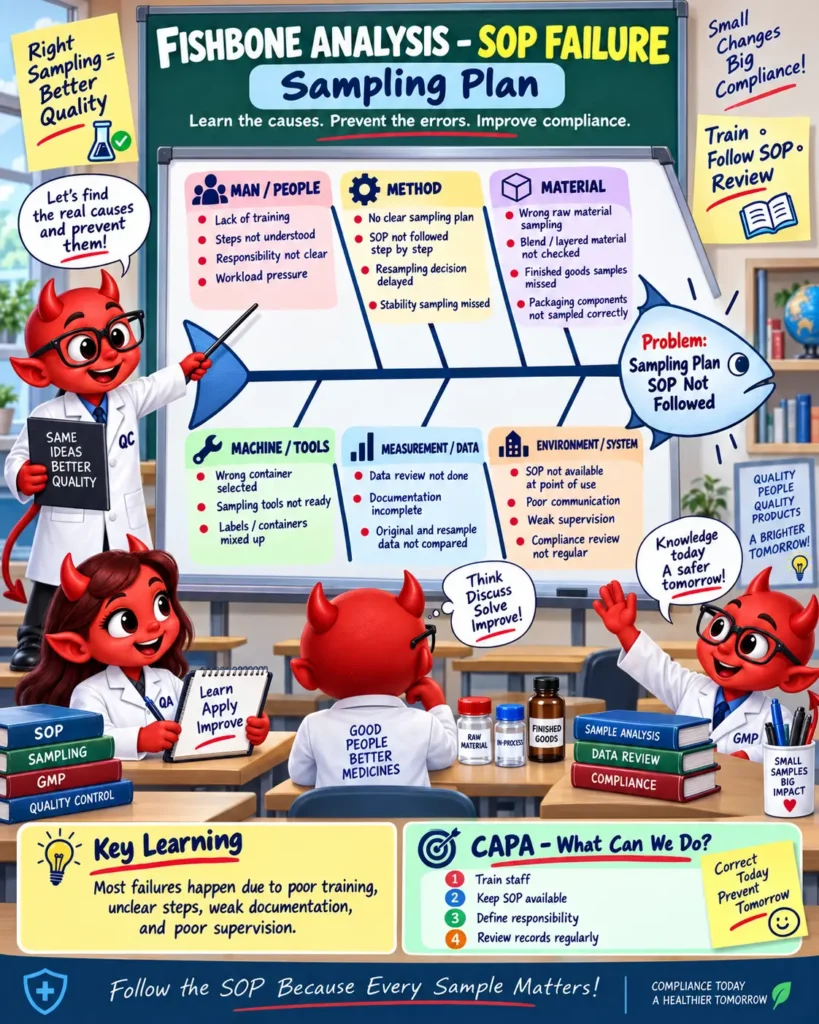
The SOP itself requires defined sampling approaches for raw materials, packaging components, work-in-process materials, finished goods, resampling, and data review.The school-classroom theme with Devils teaching the fishbone analysis makes the investigation easy to understand and suitable for GMP training. The diagram also supports CAPA planning through actions such as staff training, keeping the SOP available at the point of use, defining responsibilities clearly, and reviewing sampling records regularly.
5. Fault Tree Analysis for SOP Failure:
The Fault Tree Analysis (FTA) diagram illustrates the possible causes that can lead to failure in following the Sampling Plan SOP. The SOP is intended to define sampling requirements for QC laboratory test articles and covers raw materials, packaging components, work-in-process materials, finished goods, resampling, and evaluation of sampling data.
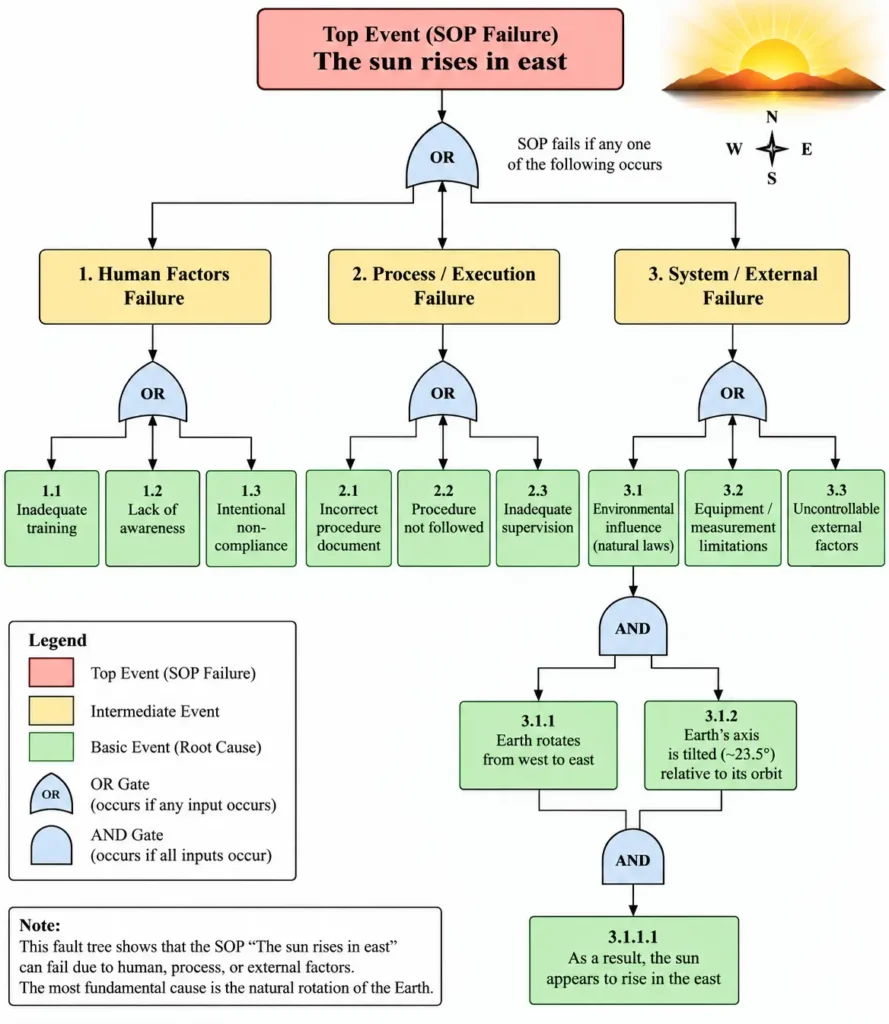
The fault tree places “SOP Failure” as the top event and breaks it into major contributing areas such as inadequate SOP understanding, insufficient training, poor implementation, weak supervision, and lack of periodic review. OR/AND gates visually show how individual or combined causes may contribute to the failure. The sunrise-in-the-east theme represents clarity, direction, and identification of root causes. The analysis helps management identify weaknesses, implement corrective actions, strengthen training, improve SOP compliance, and reduce the possibility of sampling errors or inconsistent QC practices.
Questions & Answers – Sampling Plan SOP
- Q: What is the objective of the Sampling Plan SOP?
A: To define requirements for sampling plans for QC laboratory test articles. - Q: What is the scope of this SOP?
A: It covers sampling plans for materials used in production, packaging, and finished products. - Q: Who is responsible for implementation of the sampling plan?
A: Sr. Executive QC, Assistant Manager QC, and Head QA/QC. - Q: What types of raw material sampling situations are covered?
A: Bulk batch material, single batch/multiple container lots, multiple batch/multiple container batches, and multiple batches in a single container. - Q: What should be considered when multiple batches are present in a container?
A: The material may be blended or layered, and the sampling plan should consider this condition. - Q: How should packaging components be sampled?
A: Sampling should consider how the components are produced, such as batch, continuous process, or individual items. - Q: What should be considered for work-in-process sampling?
A: The manufacturing stage and the type of containers in which batches or mixtures are stored. - Q: What samples are included in finished goods sampling plans?
A: Routine QC samples, annual review samples, samples reflecting process or packaging changes, and stability samples. - Q: Why are stability samples included in the sampling plan?
A: The SOP specifically identifies stability samples as one category required under finished goods sampling plans. - Q: What should a resampling procedure address?
A: It should define whether resampling is necessary and how data from resampled material will be analyzed. - Q: What data should be considered during resampling evaluation?
A: Original batch data, resampling data, and the combination of original and resampled data. - Q: Does the SOP specify any reference document?
A: No. The reference section is stated as “Nil.” - Q: Are there any enclosures with this SOP?
A: No. The enclosures section is stated as “Nil.” - Q: What does SOP stand for?
A: Standard Operating Procedure. - Q: Why is a defined sampling plan important?
A: It helps ensure that sampling requirements are systematically applied across raw materials, packaging components, work-in-process materials, finished goods, and resampling activities as described in the SOP.