







1. Introduction – SOP for Access Control on Overprinting Machine:
The SOP for Access Control on Overprinting Machine establishes a controlled procedure for the handling, operation, password protection, and user-access management of overprinting machines used for printing information on cartons and labels. The SOP is intended to ensure that only trained and authorized personnel operate the equipment and associated software according to defined user roles and privileges. The procedure defines responsibilities and access privileges for Operators, QA Chemists, and IT Administrators, covering machine operation, preparation of printing templates, password control, software administration, and management of overprinting activities. Users are required to maintain password confidentiality, remain accountable for activities performed under their credentials, and lock or log off the system when leaving the workstation. The SOP also restricts deletion privileges for audit-trail and sequence files, supporting data integrity, traceability, security, and controlled operation of the overprinting system.
Skip to PDF content2. Flow Diagram – SOP for Access Control on Overprinting Machine:
The SOP for Access Control on Overprinting Machine defines a controlled system for handling, operating, and protecting overprinting machines through authorized user access and password management. It ensures that only trained and approved personnel can operate the machine or associated software according to their assigned roles and privileges.
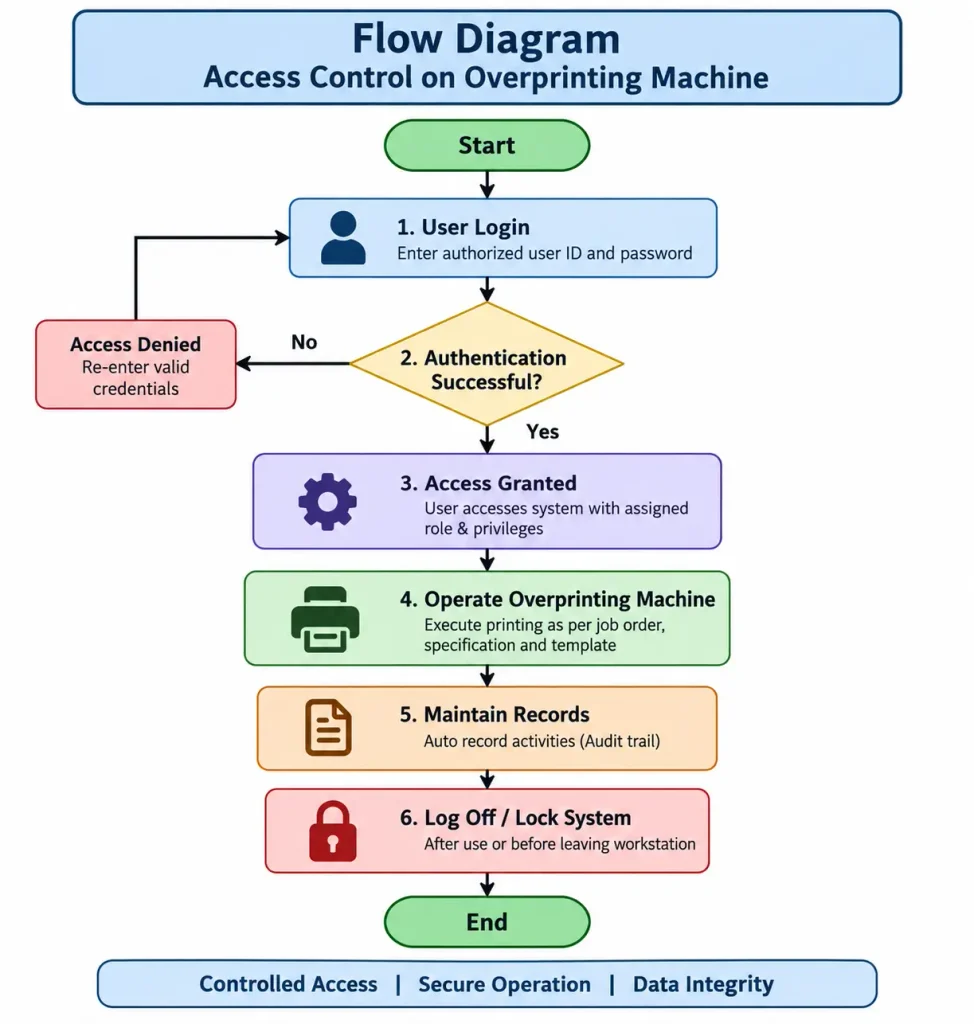
The SOP establishes separate responsibilities for Operators, QA Chemists, and IT Administrators, including machine operation, preparation of printing templates, password protection, system administration, and control of printing activities. It also requires users to maintain password secrecy, remain accountable for activities performed under their credentials, and lock or log off the system before leaving the workstation. Following this SOP supports controlled access, data integrity, traceability, prevention of unauthorized changes, and secure overprinting operations for cartons and labels.
3. Benefits of Following SOP – SOP for Access Control on Overprinting Machine:
The SOP for Access Control on Overprinting Machine provides a structured system for controlling user access, password protection, machine operation, and software privileges associated with pharmaceutical overprinting activities. It ensures that only qualified and authorized personnel operate the machine according to assigned responsibilities, job orders, approved specifications, and printing templates.
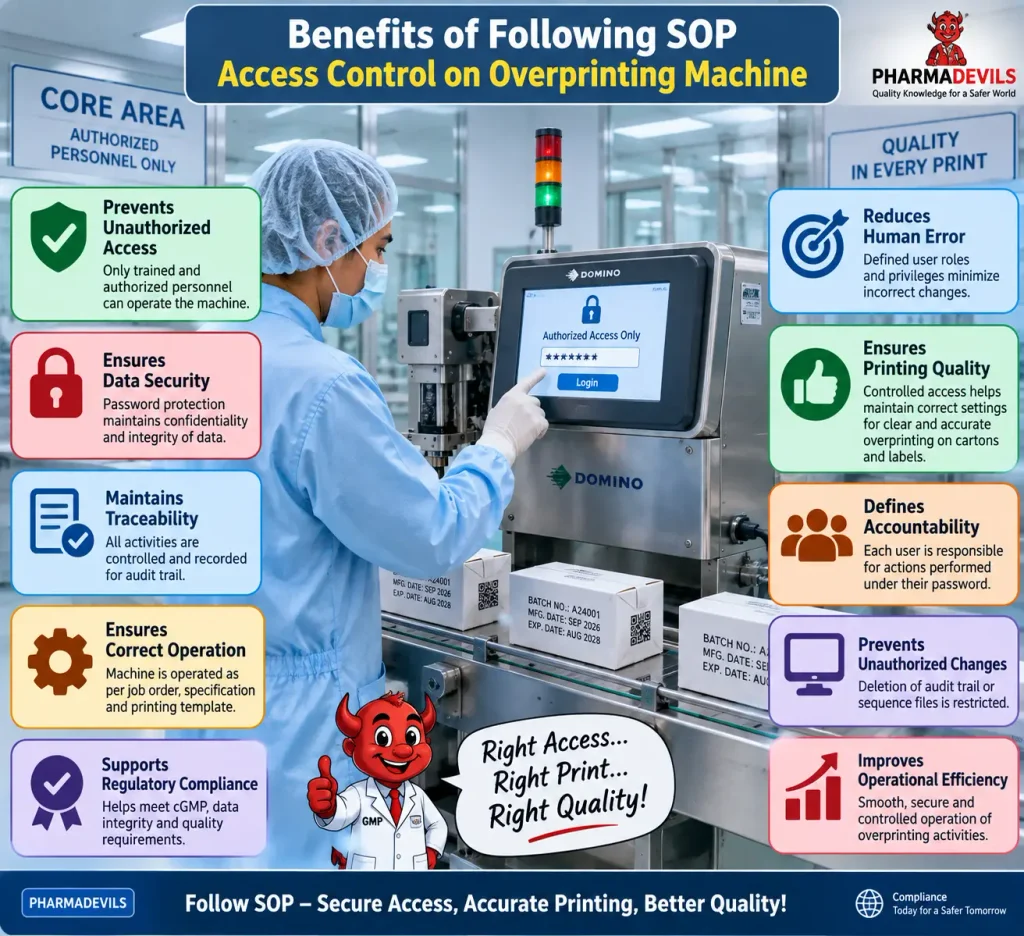
Following this SOP helps prevent unauthorized access and unintended changes, strengthens password security, improves traceability, and establishes clear accountability for every user. Operators, QA personnel, and IT administrators are assigned defined privileges to maintain controlled and secure machine operation. The procedure also requires users to maintain password confidentiality, remain responsible for activities performed under their credentials, and lock or log off the system when leaving the workstation. These controls support secure overprinting, consistent printing quality, data integrity, and reliable documentation of activities performed on cartons and labels.
4. Brainstorming for SOP Failure – SOP for Access Control on Overprinting Machine:
The SOP for Access Control on Overprinting Machine establishes controls to prevent failures related to unauthorized access, improper password use, incorrect user privileges, and uncontrolled operation of the overprinting system. The SOP requires that only qualified and authorized personnel use the machine and its software according to defined roles and privileges.
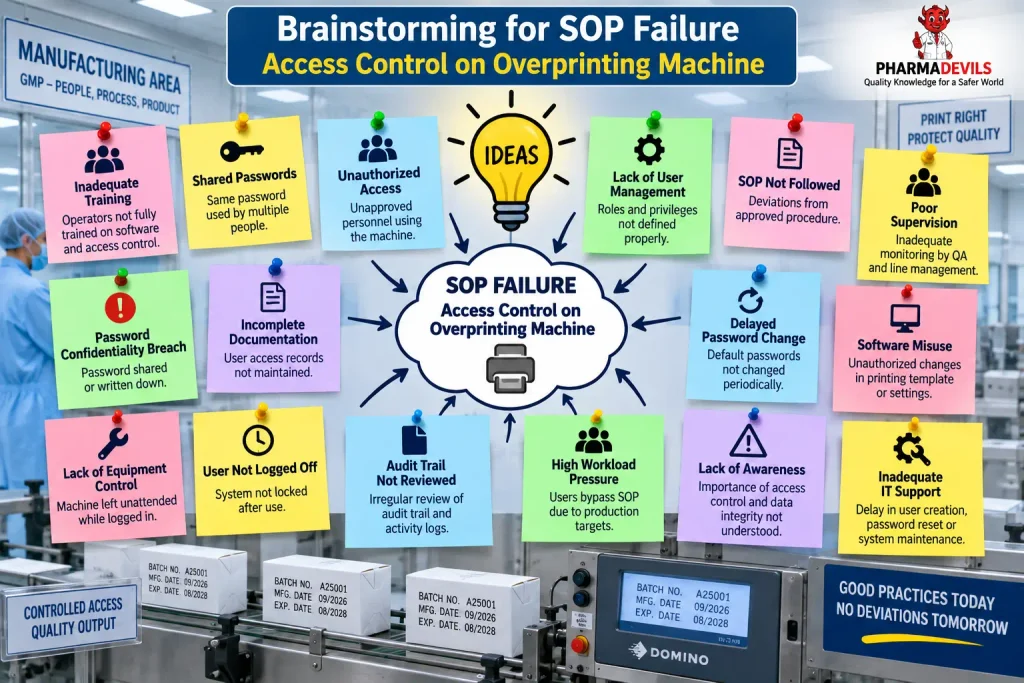
Brainstorming for potential SOP failure highlights causes such as inadequate training, shared or disclosed passwords, users not logging off the system, poor control of software privileges, incomplete access records, and unauthorized changes. These risks are significant because each user is responsible for activities performed under their own password, while password confidentiality and proper system lockout must be maintained. Effective implementation of this SOP supports secure machine operation, traceability, accountability, data integrity, and consistent overprinting quality for cartons and labels.
5. 5-Why Analysis for SOP Failure – SOP for Access Control on Overprinting Machine:
The SOP for Access Control on Overprinting Machine defines a controlled procedure for operating the overprinting system through authorized users, password protection, defined privileges, and proper user accountability. The 5-Why analysis of SOP failure shows that unauthorized or incorrect operation may result from weak access control, shared or improperly protected passwords, insufficient user management, inadequate training, and poor supervision. The SOP specifically requires users to be qualified for their assigned activities and to understand their respective privileges. It also states that users are responsible for actions performed under their passwords and must maintain password secrecy, lock or log off the workstation when leaving, and prevent disclosure of credentials.
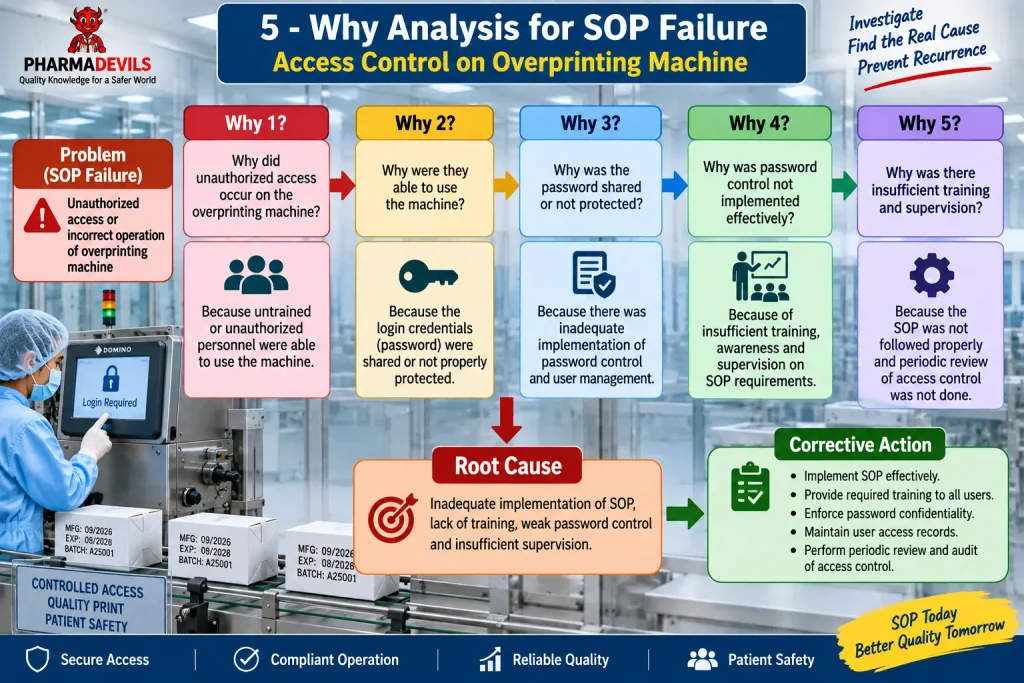
Effective implementation, regular training, proper password control, maintenance of authorized-user records, and periodic review of access privileges help address the identified root causes. These measures strengthen data integrity, traceability, accountability, secure machine operation, and consistent overprinting quality.
6. Fishbone Analysis for SOP Failure – SOP for Access Control on Overprinting Machine:
The Fishbone Analysis for SOP Failure – Access Control on Overprinting Machine illustrates potential causes that may lead to ineffective implementation of access-control requirements in the pharmaceutical manufacturing area. The analysis organizes contributing factors under major categories such as People, Machine, Method, Data/Information, Environment, and Monitoring, helping the investigation team systematically identify possible weaknesses.
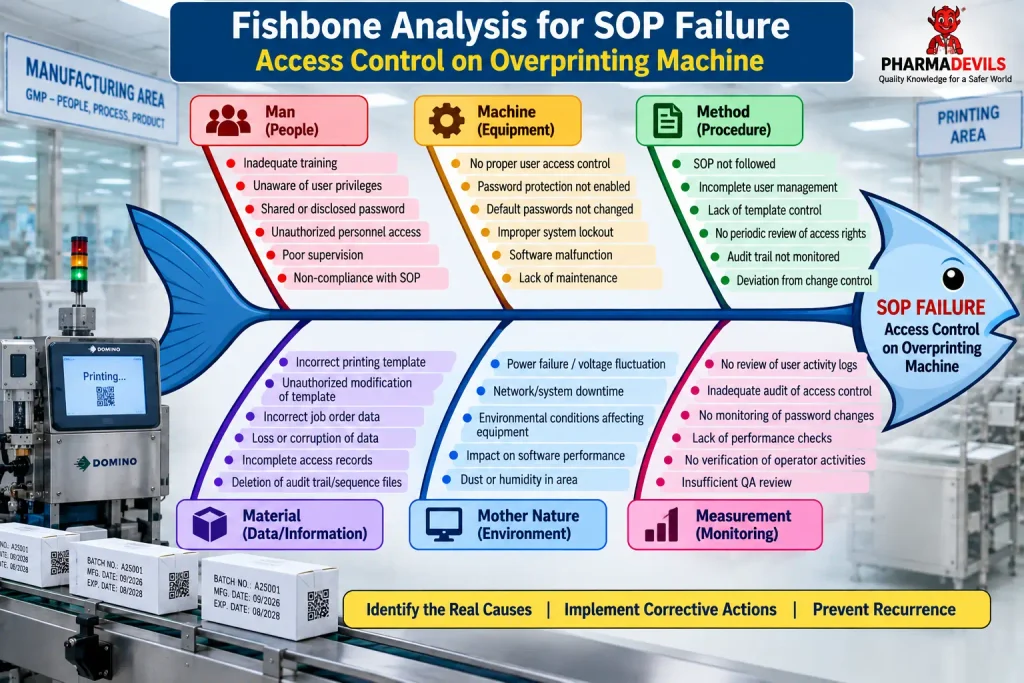
Key source-supported concerns include inadequate qualification or awareness of user privileges, unauthorized use of the equipment, improper password protection, failure to maintain password confidentiality, and insufficient control of user responsibilities. The SOP requires users to be qualified for their respective activities and aware of their assigned privileges. It also requires users to maintain password secrecy, remain accountable for actions performed under their credentials, and lock or log off the system before leaving the workstation. The fishbone approach helps identify root causes so that appropriate training, access control, password management, supervision, and periodic review measures can be strengthened to prevent recurrence and maintain secure overprinting operations.
7. Fault Tree Analysis for SOP Failure – SOP for Access Control on Overprinting Machine:
The Fault Tree Analysis for SOP Failure – Access Control on Overprinting Machine illustrates how breakdowns in access control, password protection, user privileges, and system operation can contribute to unauthorized or incorrect use of the overprinting machine. The SOP requires that only authorized and qualified personnel operate the equipment and software according to defined roles and privileges.
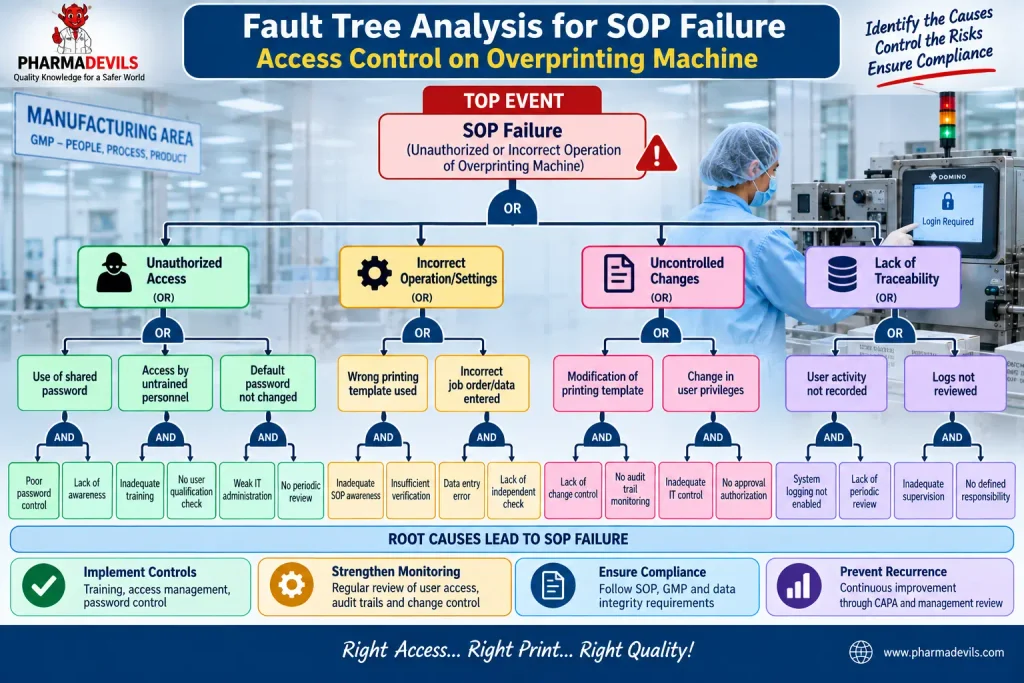
The analysis considers failure pathways such as unauthorized access, improper machine operation, uncontrolled software changes, and poor traceability. These risks are directly related to SOP requirements for password secrecy, user accountability, proper system lock/log-off, and controlled user access. The SOP further requires justification for software changes and prohibits disclosure of passwords to maintain authenticity, confidentiality, and data integrity. Using Fault Tree Analysis helps identify potential root causes and supports corrective controls such as user training, controlled access, password management, defined privileges, and periodic review, thereby reducing the likelihood of SOP failure and improving secure overprinting operations.
8. Impact Assessment for SOP Failure – SOP for Access Control on Overprinting Machine:
The Impact Assessment for SOP Failure – Access Control on Overprinting Machine evaluates the consequences of inadequate control over user access, passwords, privileges, and operation of the overprinting system. Failure to follow the SOP may increase the risk of unauthorized machine use, improper software access, uncontrolled activities, weak accountability, and loss of traceability. The SOP requires that only authorized personnel operate the machine and software according to defined roles and assigned privileges.
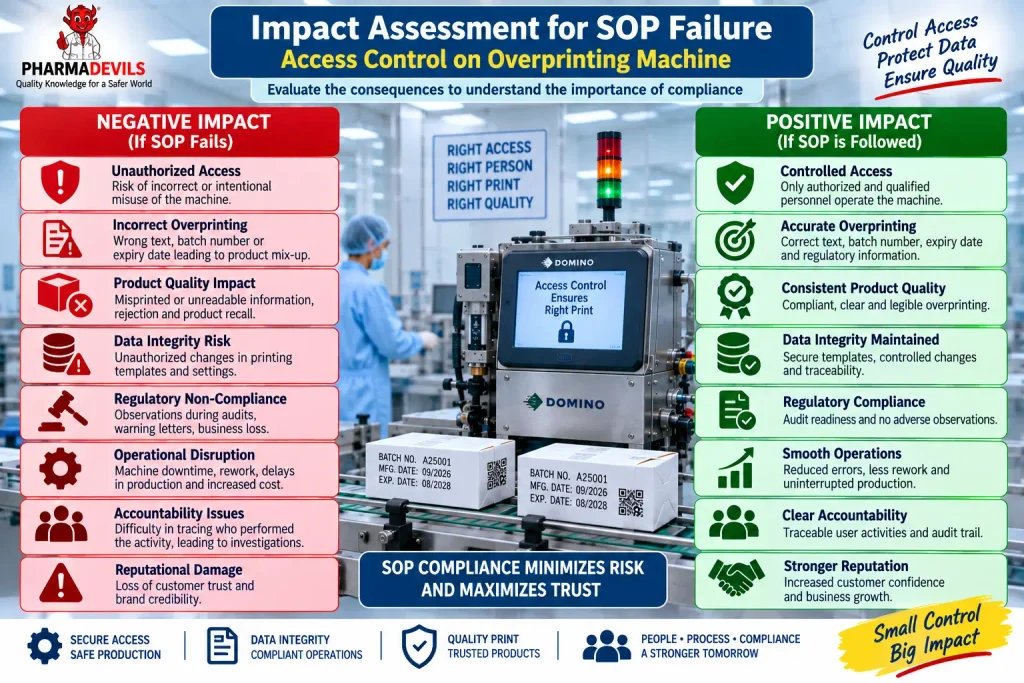
Proper implementation of the SOP strengthens controlled access, password confidentiality, user accountability, secure operation, and data integrity. Users are responsible for actions performed under their passwords and must lock or log off the system before leaving the workstation. The procedure also restricts deletion of audit-trail and sequence files and requires justification for software changes, supporting reliable records and traceability.
Question & Answer – SOP for Access Control on Overprinting Machine:
- Q: What is the objective of this SOP?
A: To establish a procedure for handling, operation, and password protection of the overprinting machine. - Q: What is the scope of this SOP?
A: It applies to handling, password protection, and access control of the overprinting machine used in the overprinting area. - Q: Who is responsible for execution of the SOP?
A: The QA Chemist and concerned person are responsible for execution of the SOP. - Q: Who is responsible for effective implementation of the SOP?
A: Head-QA/QC is responsible for effective implementation. - Q: Who is permitted to operate the overprinting machine and software?
A: Only authorized and qualified personnel should use the machine and its software according to their assigned privileges. - Q: What is the responsibility of the Operator?
A: The Operator performs machine operation according to the job order, specification, and printing template and checks overprinting quality on cartons and labels. - Q: What is the role of the QA Chemist?
A: The QA Chemist acts as reviewer and password controller, performs defined data-processing activities, prepares printing templates, and controls password-protected machine startup. - Q: What is the responsibility of IT Administration?
A: IT Administration manages new product templates, password changes, manual control as defined, password secrecy, and system administration of the overprinting machine. - Q: How many types of users are defined in the SOP?
A: Three types: Administrator/IT Administrator, Chemist, and Operator. - Q: What should a user do after first login?
A: The user should maintain the secrecy of the password. - Q: Who is responsible for activities performed under a user password?
A: The individual user is accountable and responsible for actions initiated under their password. - Q: What should a user do before leaving the workstation?
A: The user must lock or log off the system before leaving the workstation. - Q: Can users disclose their passwords to another person?
A: No. Passwords must not be disclosed in order to maintain authenticity, confidentiality, and integrity of data. - Q: Are users allowed to delete audit-trail or sequence files?
A: No. The privilege of deleting audit-trail and sequence files should not be provided to any user. - Q: What is required when changes are made in the software?
A: Proper justification should be provided for software changes for manual checking. - Q: What happens if a user password becomes locked?
A: The administrator may unlock the user password, while the IT Administrator may unlock or issue a new password after verifying the reason and training status. - Q: What annexure is provided with this SOP?
A: Annexure-I contains the List of Authorized Persons for Use of Instrument & Software. - Q: What is the main compliance benefit of this SOP?
A: It supports controlled machine access, password confidentiality, user accountability, secure operation, and traceability of activities performed on the overprinting system.
Reference Guidelines – SOP for Access Control on Overprinting Machine:
- EU GMP – EudraLex Volume 4, Annex 11: Computerised Systems – covers access security, authorized users, data management, audit trails, system controls, and computerized-system governance. (Public Health)
- US FDA – 21 CFR Part 11: Electronic Records; Electronic Signatures and FDA guidance on its scope and application – relevant where electronic GMP records/signatures are maintained. (U.S. Food and Drug Administration)
- PIC/S PI 041-1 – Good Practices for Data Management and Integrity in Regulated GMP/GDP Environments – provides expectations for data governance, user access, audit trails, and data integrity controls. (PicScheme)
- MHRA – GxP Data Integrity Guidance and Definitions – addresses data governance, access control, attributable records, audit trails, and protection of GxP data throughout its lifecycle. (GOV.UK)
- Applicable national GMP requirements and internal Data Integrity/Computerized System SOPs should also be considered according to the site’s regulatory market and intended use of the overprinting system.