







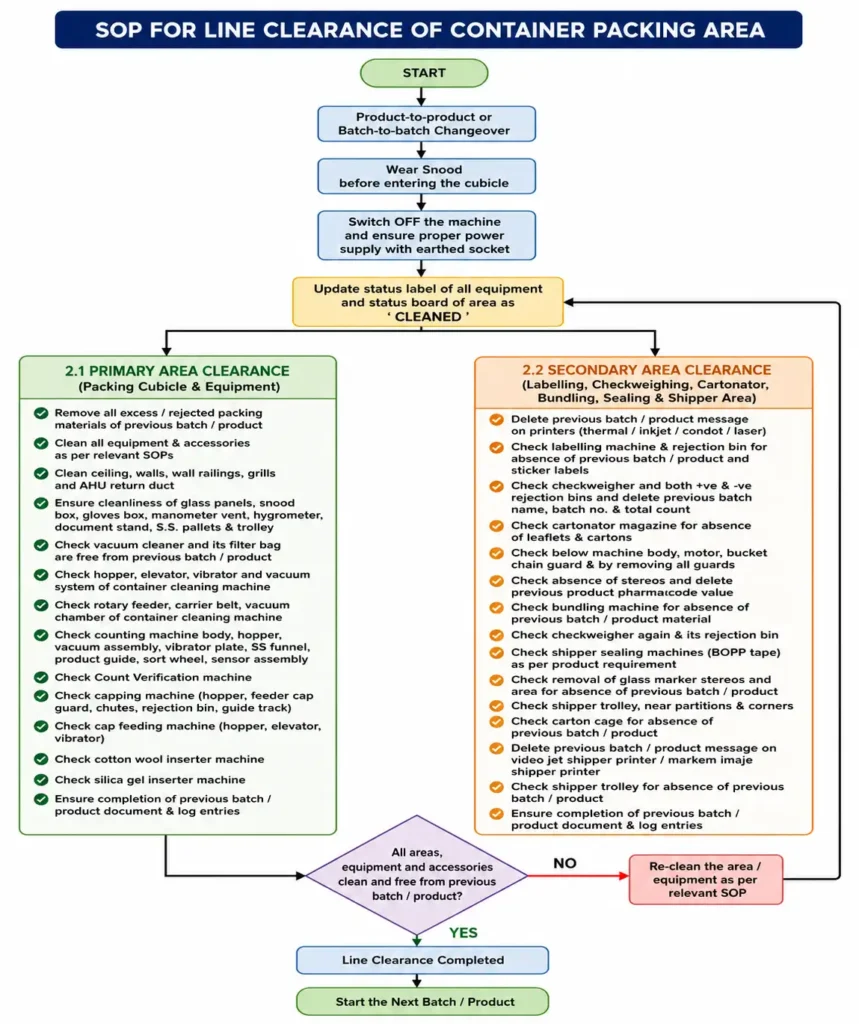
This SOP explains the line clearance procedure for the container packing area before starting a new batch or product. Line clearance is required during batch-to-batch and product-to-product changeover to make sure that no material, label, document, powder, carton, leaflet, cap, or component from the previous batch remains in the area or equipment. Packing and Quality Assurance staff are responsible for checking the area. Equipment such as container cleaning machines, counting machines, capping machines, cotton and silica gel inserters, labelling machines, checkweighers, cartonators, bundling machines, and shipper sealing machines must be inspected carefully. Status labels and area boards should show “CLEANED,” and old printing messages, batch details, pharmacode values, stickers, and stereos must be removed. Floors, walls, AHU returns, trolleys, vacuum cleaners, and accessories should also be clean. Previous batch documents and log entries must be completed before the next packing operation begins. This helps prevent mix-ups and packing contamination risks.
IMPACT ASSESSMENT
The line clearance procedure for the container packing area has a direct impact on product quality, patient safety, and GMP compliance. Proper line clearance ensures that materials, labels, cartons, leaflets, caps, powder traces, and documents from the previous batch are completely removed before the next batch starts. This reduces the risk of mix-ups, cross-contamination, incorrect labelling, and batch identification errors. Cleaning and checking machines, trolleys, floors, AHU returns, vacuum cleaners, printers, checkweighers, cartonators, and other packing equipment help maintain a controlled packing environment. Updating equipment status labels and deleting previous batch information from printers and systems prevents accidental use of old data. Completion of logbooks and batch documents improves traceability and accountability. If line clearance is not performed correctly, it may lead to product rejection, deviation, recall, regulatory observations, or patient risk. Therefore, documented line clearance by Packing and Quality Assurance is essential before starting the next batch or product.
Question and Answers – Line Clearance of Container Packing Area
Q1. What is line clearance in the container packing area?
Answer: Line clearance is a documented check performed to ensure that all materials, products, labels, documents, and residues from the previous batch or product are removed before starting the next batch.
Q2. When is line clearance required?
Answer: It is required during product-to-product changeover and batch-to-batch changeover in the container packing area.
Q3. Who is responsible for performing line clearance?
Answer: Packing staff and Quality Assurance staff are responsible for carrying out and verifying the line clearance activity.
Q4. What should be checked before starting line clearance?
Answer: Personnel should wear a snood, ensure the machine mains are switched OFF, and confirm that the machine is properly connected to an earthed power supply.
Q5. What should be done with the status labels and area status board?
Answer: Equipment status labels and the area status board should be updated properly to show “CLEANED.”
Q6. What materials must be removed from the packing area?
Answer: All excess or rejected packing materials, cartons, leaflets, sticker labels, and other components belonging to the previous batch or product must be removed.
Q7. Which equipment is checked during primary area clearance?
Answer: Equipment such as the container cleaning machine, counting machine, capping machine, cap feeder, cotton wool inserter, and silica gel inserter are checked for cleanliness and absence of previous product.
Q8. What is checked during secondary area line clearance?
Answer: Printers, labelling machines, checkweighers, cartonators, bundling machines, shipper sealing machines, trolleys, and packing materials are checked to ensure that no previous batch information or material remains.
Q9. Why should previous batch data be deleted from printers and machines?
Answer: Previous batch messages, product names, batch numbers, counts, and pharmacode values should be deleted to prevent incorrect printing, labelling, or mix-ups in the next batch.
Q10. What should be confirmed before starting the next batch?
Answer: All previous batch materials must be removed, equipment and the area must be clean, printer data must be cleared, and all previous batch documents and log entries must be completed.